
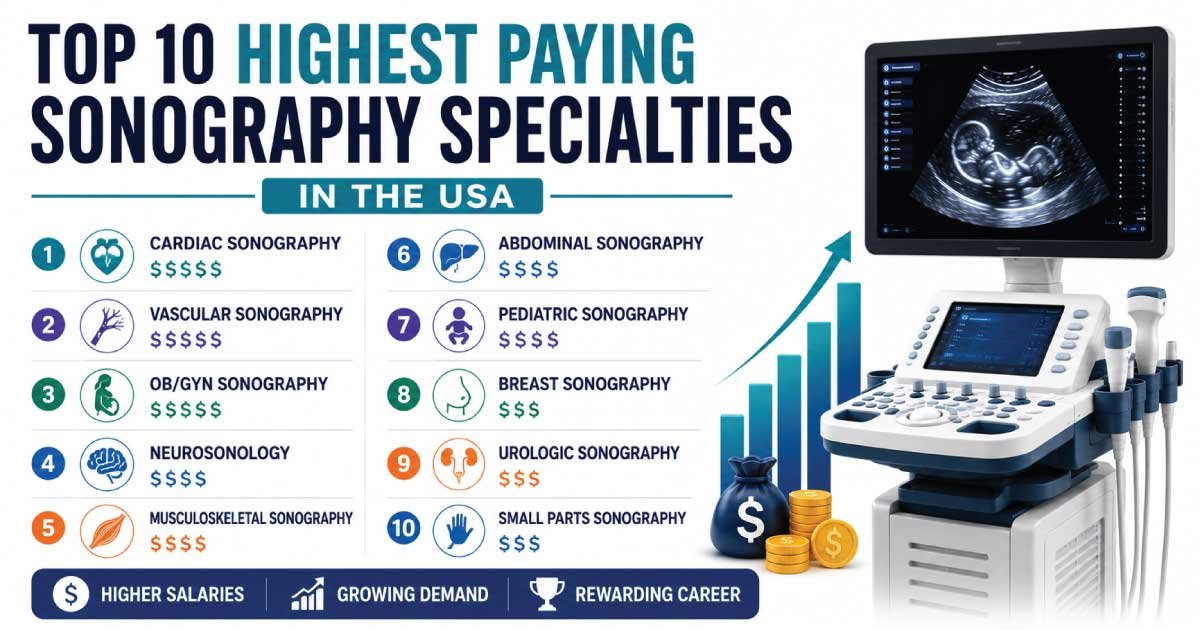
Diagnostic medical sonography is one of the fastest-growing healthcare careers in the United States. With excellent job security, competitive salaries, and multiple areas of specialization, it attracts thousands of students and healthcare professionals every year. However, not all sonography specialties offer the same earning potential. Some fields require advanced clinical expertise, specialized certifications, or work in high-demand medical settings, resulting in significantly higher pay.
If your goal is to maximize your income while building a rewarding healthcare career, choosing the right specialty is essential. Whether you enjoy working with the heart, blood vessels, children, or expectant mothers, there are many high-paying opportunities within diagnostic medical sonography.
This guide highlights the top 10 highest paying sonography specialties in the USA, including their primary responsibilities, why they pay well, and the career opportunities each specialty offers.
What Determines a Sonographer’s Salary?
A sonographer’s salary is influenced by several professional and geographic factors. While specialty choice has a significant impact on earnings, experience, certifications, employer type, and location also play major roles in determining overall compensation throughout a sonography career.
Several factors influence how much a sonographer earns, including:
- Years of experience
- Professional certifications
- Education level
- Geographic location
- Type of healthcare employer
- Shift schedules
- Clinical specialty
- Demand for skilled professionals
Specialties that require advanced knowledge, specialized certifications, and complex diagnostic procedures generally offer the highest salaries. Continuing education and clinical experience can further increase long-term earning potential.
Highest-Paying Sonography Specialties
The following sonography specialties are among the highest-paying career paths in diagnostic medical imaging. Each specialty requires unique technical skills and offers excellent opportunities for career growth and professional advancement.
1. Cardiac Sonographer (Echocardiographer)
Average Salary: $$$$ (Highest Tier)
Cardiac sonographers specialize in performing echocardiograms that evaluate the structure and function of the heart. They work closely with cardiologists to diagnose heart disease, monitor treatment progress, and assess overall cardiovascular health.
Responsibilities
- Perform echocardiograms
- Evaluate heart chambers
- Assess heart valves
- Measure blood flow
- Detect congenital heart abnormalities
Why It Pays Well
Heart disease remains one of the leading causes of hospitalization, creating continuous demand for highly trained cardiac sonographers. Advanced expertise, specialized equipment, and strong nationwide demand contribute to this specialty’s excellent earning potential.
2. Vascular Sonographer
Average Salary: $$$$
Vascular sonographers use Doppler ultrasound technology to examine arteries and veins throughout the body. Their diagnostic studies help physicians evaluate circulation and identify conditions affecting the vascular system before serious complications develop.
Responsibilities
- Evaluate blood circulation
- Detect blood clots
- Examine carotid arteries
- Diagnose peripheral artery disease
- Monitor vascular grafts
Why It Pays Well
The growing number of cardiovascular patients has significantly increased demand for vascular imaging specialists. Their expertise is essential for diagnosing circulatory disorders and supporting effective treatment planning.
3. Pediatric Cardiac Sonographer
Average Salary: $$$$
Pediatric cardiac sonographers perform highly specialized ultrasound examinations on infants and children with congenital or acquired heart conditions. Their work requires advanced training and close collaboration with pediatric cardiologists.
Responsibilities
- Perform pediatric echocardiograms
- Detect congenital heart defects
- Monitor heart development
- Assist pediatric cardiologists
Why It Pays Well
Highly specialized training, complex examinations, and a limited number of qualified professionals make pediatric cardiac sonography one of the highest-paying specialties in diagnostic imaging.
4. Neurosonographer
Average Salary: $$$$
Neurosonographers specialize in ultrasound examinations of the brain and nervous system, particularly in newborn infants. Their diagnostic imaging helps physicians evaluate neurological development and identify abnormalities early.
Responsibilities
- Brain imaging
- Cranial ultrasound
- Blood flow evaluation
- Neurological assessments
Why It Pays Well
Because relatively few sonographers specialize in neurosonography, experienced professionals remain in high demand and often receive competitive salaries for their advanced expertise.
5. Travel Sonographer
Average Salary: $$$$
Travel sonographers accept temporary assignments at hospitals, clinics, and imaging centers across different locations. These positions offer flexibility while allowing professionals to gain experience in a variety of healthcare settings.
Benefits
- Higher hourly pay
- Housing stipends
- Travel reimbursement
- Sign-on bonuses
- Overtime opportunities
Why It Pays Well
Healthcare facilities experiencing staffing shortages frequently offer premium compensation packages to attract experienced travel sonographers who can begin working with minimal additional training.
6. OB/GYN Sonographer
Average Salary: $$$
OB/GYN sonographers specialize in women’s reproductive health and pregnancy imaging. They perform routine and high-risk obstetric examinations while helping physicians monitor fetal development and maternal health.
Responsibilities
- Pregnancy ultrasounds
- Fetal growth monitoring
- Placenta evaluation
- Pelvic imaging
- High-risk pregnancy examinations
Why It Pays Well
Experienced sonographers working in maternal-fetal medicine, fertility centers, or high-risk pregnancy clinics often receive above-average salaries because of their advanced clinical knowledge.
7. Breast Sonographer
Average Salary: $$$
Breast sonographers perform specialized imaging procedures used to evaluate breast abnormalities and assist physicians with early breast cancer detection. They also support image-guided diagnostic and biopsy procedures.
Responsibilities
- Breast ultrasounds
- Imaging suspicious masses
- Assist biopsy procedures
- Monitor treatment progress
Why It Pays Well
Early breast cancer detection depends on accurate imaging and specialized expertise, making skilled breast sonographers highly valuable in dedicated imaging centers and cancer treatment facilities.
8. Musculoskeletal Sonographer
Average Salary: $$$
Musculoskeletal sonographers evaluate muscles, tendons, ligaments, joints, and soft tissues using advanced ultrasound technology. Their work is commonly used in orthopedic clinics, rehabilitation centers, and sports medicine practices.
Responsibilities
- Evaluate sports injuries
- Diagnose tendon tears
- Assess joint disorders
- Guide injections
Why It Pays Well
The increasing use of ultrasound in sports medicine and orthopedic care continues to drive demand for experienced musculoskeletal sonographers with advanced imaging skills.
9. Pediatric Sonographer
Average Salary: $$$
Pediatric sonographers specialize in performing ultrasound examinations on infants, children, and adolescents. Their work requires patience, specialized scanning techniques, and the ability to communicate effectively with young patients and families.
Responsibilities
- Neonatal imaging
- Pediatric abdominal scans
- Congenital abnormality evaluation
- Organ assessments
Why It Pays Well
Working with pediatric patients requires specialized clinical skills and exceptional patient care, making experienced pediatric sonographers valuable members of children’s hospitals and pediatric healthcare teams.
10. Abdominal Sonographer
Average Salary: $$
Abdominal sonographers examine major internal organs using diagnostic ultrasound technology. Their imaging studies help physicians diagnose diseases affecting the digestive, urinary, and abdominal systems while supporting routine and emergency patient care.
Responsibilities
- Liver examinations
- Gallbladder imaging
- Kidney evaluations
- Pancreatic studies
- Spleen assessments
Why It Pays Well
Abdominal sonography remains one of the most widely used diagnostic imaging specialties. Consistent demand across hospitals, outpatient imaging centers, and physician offices provides stable employment opportunities and competitive salaries for experienced professionals.
Also Read:
Salary Comparison Table
| Rank | Sonography Specialty | Earning Potential | Demand |
|---|---|---|---|
| 1 | Cardiac Sonographer | ⭐⭐⭐⭐⭐ | Very High |
| 2 | Vascular Sonographer | ⭐⭐⭐⭐⭐ | Very High |
| 3 | Pediatric Cardiac Sonographer | ⭐⭐⭐⭐⭐ | High |
| 4 | Neurosonographer | ⭐⭐⭐⭐⭐ | Moderate |
| 5 | Travel Sonographer | ⭐⭐⭐⭐⭐ | High |
| 6 | OB/GYN Sonographer | ⭐⭐⭐⭐ | Very High |
| 7 | Breast Sonographer | ⭐⭐⭐⭐ | High |
| 8 | Musculoskeletal Sonographer | ⭐⭐⭐⭐ | Growing |
| 9 | Pediatric Sonographer | ⭐⭐⭐⭐ | High |
| 10 | Abdominal Sonographer | ⭐⭐⭐ | High |
How to Earn More as a Sonographer
Increasing your income as a sonographer requires a combination of education, experience, strategic career planning, and continuous professional development. By expanding your skills and pursuing specialized opportunities, you can improve your earning potential while advancing your career in diagnostic medical sonography.
1. Strategies to Increase Your Salary
If you want to maximize your salary, consider these strategies:
- Earn multiple specialty certifications.
- Gain experience in high-demand imaging fields.
- Work in large hospitals or academic medical centers.
- Consider travel sonography assignments.
- Pursue continuing education and advanced training.
- Develop expertise in emerging ultrasound technologies.
- Be open to relocating to states with higher demand and salaries.
Following these strategies can make you a more competitive candidate in the job market and increase your value to employers. Investing in professional growth often leads to higher salaries, greater career flexibility, and more opportunities for leadership and specialization.
Also Read:
Career Outlook
The future of diagnostic medical sonography remains highly promising as healthcare providers continue expanding the use of ultrasound technology. Growing demand for non-invasive diagnostic imaging, an aging population, and ongoing technological advancements are expected to create excellent employment opportunities across nearly every sonography specialty.
Professionals who earn advanced certifications, gain experience in specialized imaging fields, and stay current with evolving ultrasound technologies are likely to enjoy strong job security, competitive salaries, and long-term career growth. As healthcare organizations continue investing in diagnostic imaging services, skilled sonographers will remain valuable members of the medical team for many years to come.
Conclusion
Choosing one of the top 10 highest paying sonography specialties in the USA can significantly improve your earning potential while providing a rewarding career in healthcare. Cardiac, vascular, pediatric cardiac, neurosonography, and travel sonography consistently rank among the highest-paying options because they require advanced expertise and are in high demand.
While salary is an important consideration, it’s equally important to choose a specialty that matches your interests, strengths, and long-term career goals. By earning professional certifications, gaining hands-on experience, and staying current with the latest ultrasound technologies, you can build a successful and financially rewarding career as a diagnostic medical sonographer.
Also Read:

Zak is a dedicated medical and career writer specializing in sonography, healthcare education, and professional development. Through SonographerSalary.com, he shares in-depth insights on sonographer salaries, education pathways, and career tips to help readers build successful futures in medical imaging. His content combines accuracy with practical, easy-to-understand guidance, empowering students and professionals to make confident, informed career decisions.