

Magnetic Resonance Imaging (MRI) technologists are vital professionals in modern healthcare. They play a key role in diagnosing and monitoring medical conditions through advanced imaging technology. If you are drawn to the intersection of technology, anatomy, and patient care, a career as an MRI technologist can be both fulfilling and financially rewarding.
In this guide, we will explore:
-
What an MRI technologist does
-
Education and training required
-
Certifications and licensure
-
Salary expectations
-
Career outlook and advancement
-
Day-to-day responsibilities
-
Pros and cons of the profession
What Is an MRI Technologist?
An MRI Technologist, also called an MRI Technician, is a healthcare professional trained to operate Magnetic Resonance Imaging scanners. These machines use powerful magnets, radio waves, and computers to produce detailed images of organs, tissues, and structures inside the body.
MRI technologists work closely with radiologists—physicians who interpret imaging studies—to help diagnose medical conditions such as tumors, strokes, spinal injuries, and musculoskeletal disorders.
Key Responsibilities
MRI technologists play a vital role in diagnostic imaging by ensuring scans are performed accurately, safely, and comfortably. Their daily duties combine technical expertise, patient care, and strict safety awareness to support physicians in diagnosing medical conditions effectively and reliably.
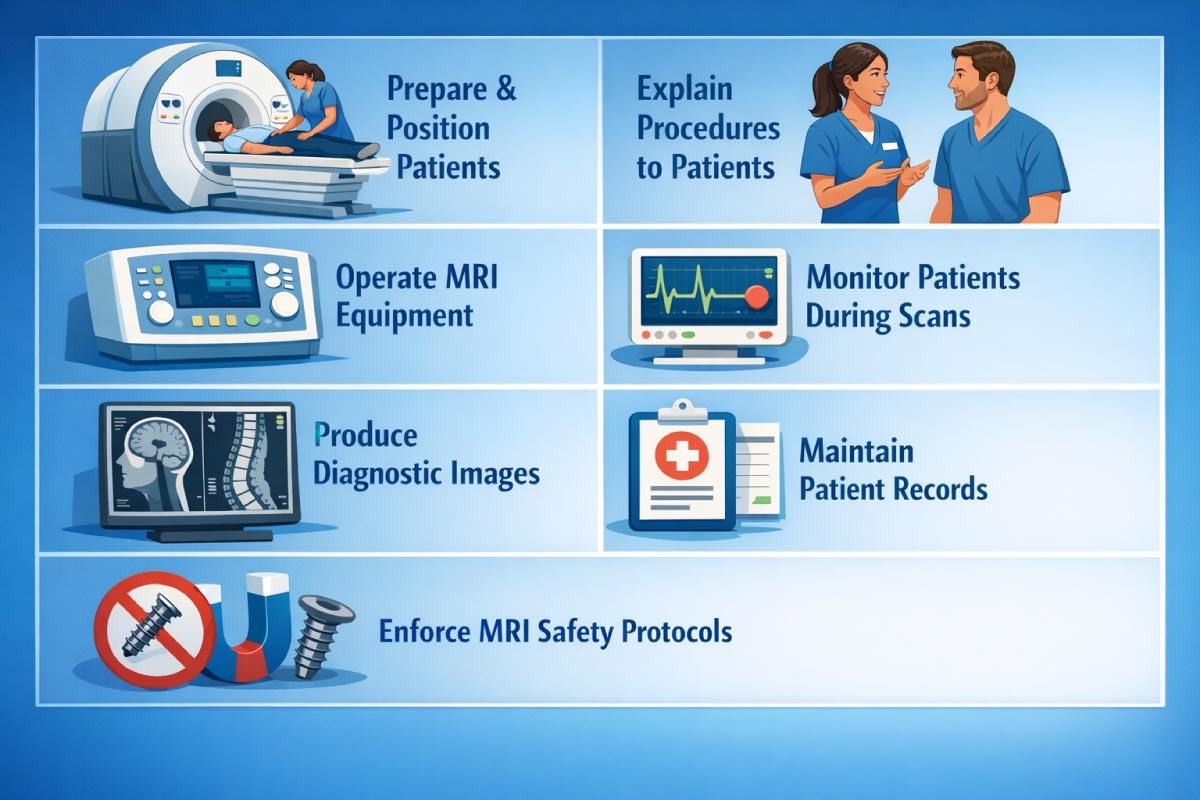
An MRI technologist’s responsibilities include:
-
Preparing and positioning patients for MRI scans
-
Explaining procedures to patients to ensure comfort and cooperation
-
Operating MRI machines safely and efficiently
-
Monitoring patients during scans
-
Producing clear, accurate diagnostic images
-
Maintaining patient records and imaging documentation
-
Ensuring equipment safety and performing basic troubleshooting
Because these scans involve powerful magnets, MRI technologists must enforce strict safety protocols, especially regarding nearby metal objects and implants.
Education & Training Requirements
Becoming an MRI technologist requires focused academic study and supervised clinical experience. Proper education ensures professionals understand imaging physics, anatomy, patient safety, and advanced MRI technology, preparing them to perform accurate scans while maintaining strict safety standards in clinical healthcare environments.
Pathways to Becoming an MRI Technologist
Becoming an MRI technologist involves choosing the right educational and professional pathway based on your background and career goals. Several options are available, ranging from entry-level degree programs to advanced certification routes, each offering structured training to develop technical expertise in magnetic resonance imaging.
| Pathway | Typical Duration | Description |
|---|---|---|
| Associate’s Degree in Radiologic Technology | 2–3 years | A foundational radiology program that may include MRI coursework or allow specialization later. |
| Bachelor’s Degree in Radiologic Sciences | 4 years | A more in-depth academic track that can offer broader clinical knowledge and leadership skills. |
| Post-Primary MRI Certificate Program | 12–24 months | Designed for radiologic technologists who already hold credentials in another imaging modality and want to specialize in MRI. |
What You will Study
MRI education combines classroom instruction with clinical learning to build strong technical and patient-care skills. Students gain knowledge of human anatomy, imaging principles, safety standards, and practical scanning techniques needed to produce accurate diagnostic images while working confidently within real medical environments.
Core academic topics often include:
-
Anatomy and physiology
-
Patient care and communication
-
MRI physics and instrumentation
-
Safety procedures and radiation protection
-
Clinical imaging practices
-
Pathology and image interpretation fundamentals
Clinical rotations in hospitals or imaging centers are a required part of most programs, allowing you to practice MRI scanning under supervision.
Certifications & Licensure
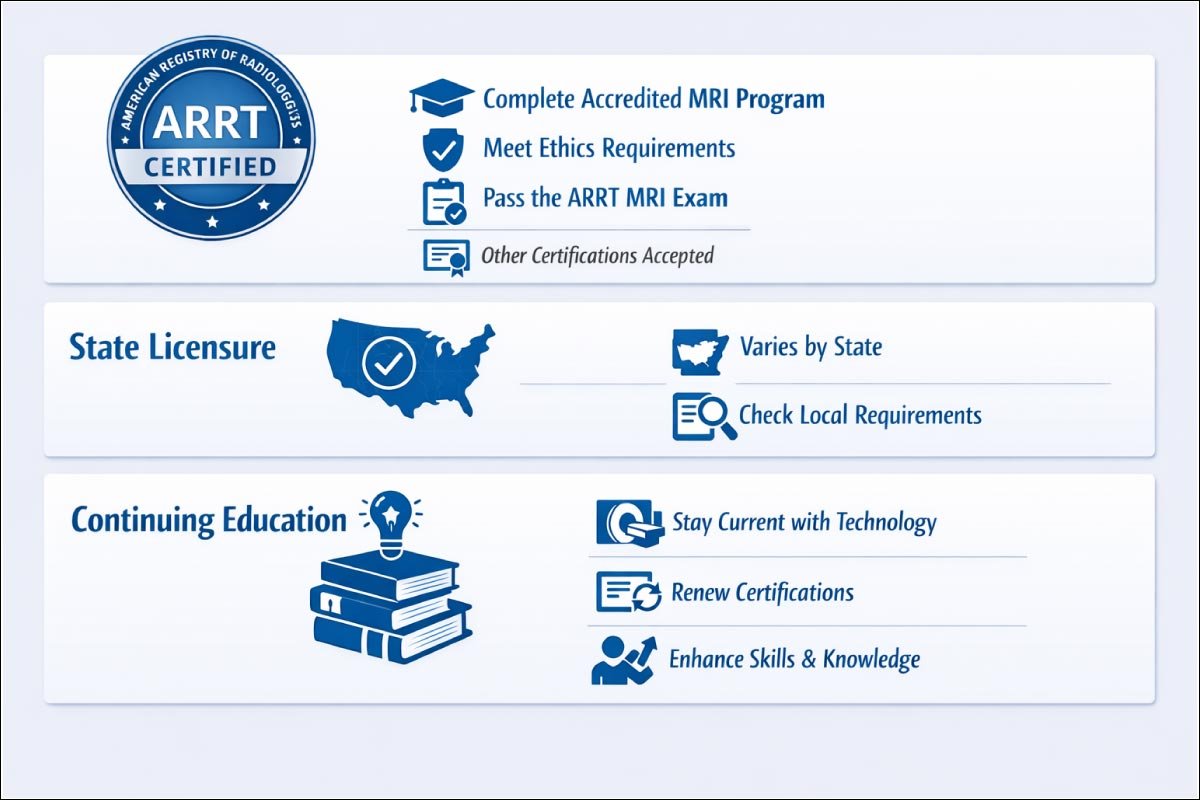
After completing formal education and clinical training, MRI technologists must meet professional certification and licensing requirements. These credentials demonstrate technical competence, safety knowledge, and adherence to industry standards, helping employers trust your ability to perform advanced imaging procedures responsibly and accurately in clinical environments. In the United States, the most recognized certification is from:
-
The American Registry of Radiologic Technologists (ARRT)
To sit for the ARRT MRI certification exam, candidates must:
-
Complete an accredited MRI educational program
-
Meet ethics requirements
-
Pass the ARRT MRI exam
Additional certifications or registry through other organizations may also be accepted in certain states or employers.
State Licensure
Licensing requirements vary by state. Some states require licensure specifically for MRI technologists, others require a general radiologic technologist license or no state licensure at all. It’s important to check the rules in the state where you plan to work.
Continuing Education
Continuing education is essential for MRI technologists to maintain professional competence and certification status. Ongoing learning helps practitioners stay updated with evolving imaging technology, revised safety standards, and improved patient-care techniques, ensuring high-quality diagnostic results throughout their careers.
What Does an MRI Technologist Do? (Daily Duties)
An MRI technologist’s daily responsibilities require a balance of technical precision and compassionate patient interaction. Each workday involves preparing patients, operating advanced imaging equipment, following safety procedures, and recording accurate data to support physicians in diagnosing medical conditions effectively and safely.
1- Patient Interaction
Patient interaction is a critical part of an MRI technologist’s role. Clear communication, empathy, and attention to detail help reduce patient anxiety, ensure safety, and improve image quality. Building trust allows technologists to guide patients smoothly through the scanning process.
-
Reviewing patient history and imaging orders
-
Explaining what to expect during the MRI procedure
-
Ensuring patients remove metal objects
-
Positioning patients properly for accurate imaging
2- Technical Responsibilities
MRI technologists handle complex imaging equipment to capture precise diagnostic images. Their technical duties include configuring machines, adjusting imaging parameters, and continuously monitoring scan quality. This ensures accurate results while maintaining patient comfort and safety throughout the procedure.
-
Setting up the MRI scanner and selecting appropriate imaging parameters
-
Monitoring scan quality in real time
-
Communicating with patients through intercom systems
-
Responding to patient needs while scans are running
3- Documentation & Reporting
Accurate documentation and reporting are essential for MRI technologists to ensure proper patient records and reliable diagnostic results. This involves organizing imaging data, recording patient information, and delivering images to radiologists efficiently, all while maintaining attention to detail and adhering to clinical and legal standards.
-
Saving and labeling images correctly
-
Recording patient data and scan details
-
Relaying scans to radiologists for interpretation
MRI technologists must balance technical precision with patient comfort and safety.
Salary & Compensation
MRI technologists are compensated for their specialized skills, technical expertise, and patient-care responsibilities. Earnings can vary depending on geographic location, years of experience, level of certification, and type of healthcare facility. Competitive salaries often reflect the advanced training and critical role technologists play in medical diagnostics.
Average Salary (U.S.)
MRI technologist salaries vary based on experience, location, and workplace setting. Entry-level professionals start with competitive pay, while mid-career and experienced technologists can earn significantly more. Additional benefits, including shift differentials and specialized center incentives, can further enhance overall compensation, making this a financially rewarding healthcare career.
| Experience Level | Typical Annual Salary |
|---|---|
| Entry-Level (0–2 years) | $55,000 – $65,000 |
| Mid-Career (3–7 years) | $65,000 – $80,000 |
| Experienced (8+ years) | $80,000 – $95,000+ |
Note: Salaries in major metropolitan areas and specialized outpatient centers may be higher. Some employers also offer shift differentials for nights, weekends, or on-call coverage.
Other Compensation Components
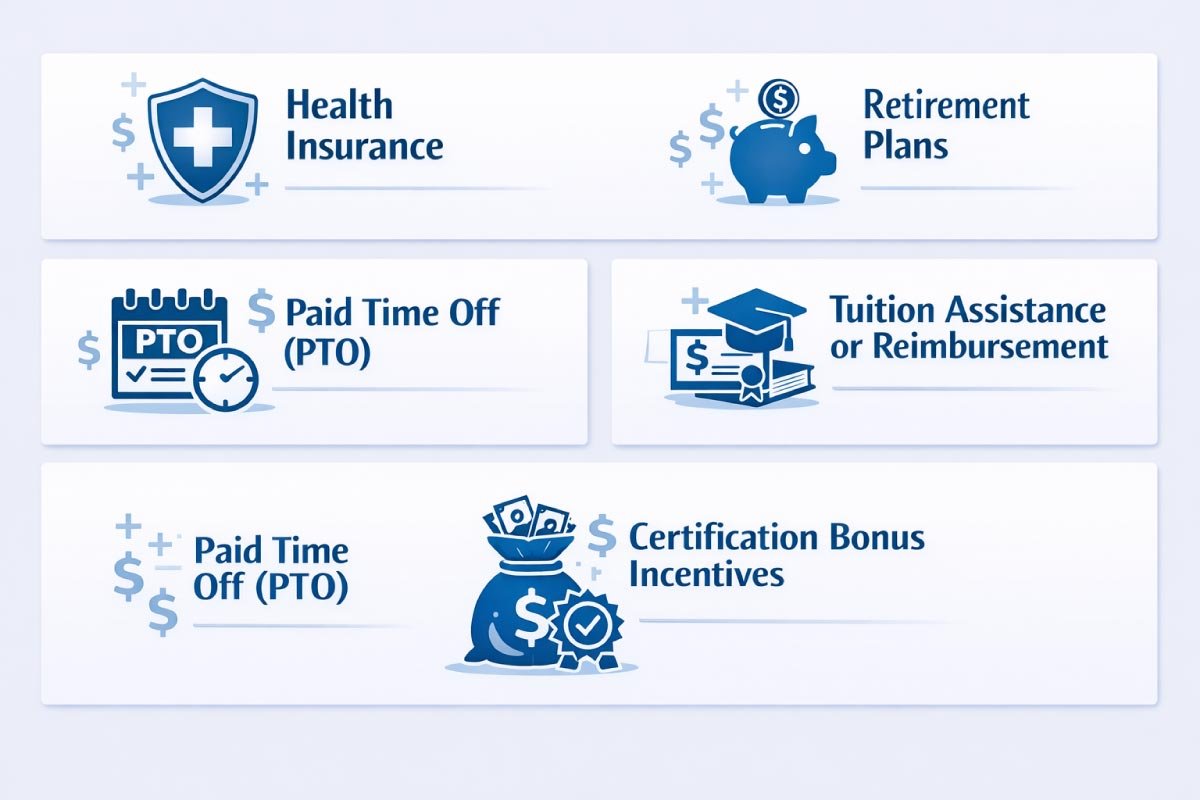
In addition to base salary, MRI technologists often receive a variety of benefits and perks that enhance overall compensation. These can include health coverage, retirement savings plans, paid leave, educational support, and performance-based bonuses, all of which contribute to job satisfaction and long-term career stability.
-
Health insurance
-
Retirement plans
-
Paid time off (PTO)
-
Tuition assistance or reimbursement
-
Certification bonus incentives
Career Outlook & Opportunities
MRI technologists enjoy strong career prospects due to the growing demand for advanced medical imaging. With aging populations, expanding healthcare services, and technological advancements, opportunities continue to increase across hospitals, outpatient centers, and specialty clinics. Career growth may include specialization, leadership roles, and advanced imaging modalities.
Where MRI Technologists Work
MRI technologists can find employment across a wide range of healthcare and research environments. Their expertise is valuable wherever imaging services are needed, from large hospitals to outpatient clinics, specialty offices, and mobile units. Work settings may vary in pace, patient volume, and technological resources.
-
Hospitals and health systems
-
Diagnostic imaging centers
-
Outpatient clinics
-
Physician offices
-
Research facilities
-
Mobile MRI services
Projected Job Growth
The demand for MRI technologists is expected to grow above average, driven by an aging population and expanding use of medical imaging. Opportunities are strong in both urban and rural areas, with advancement potential for those pursuing specialization, advanced education, or leadership in this evolving, high-tech field.
| Factor | Outlook |
|---|---|
| Industry Growth | Above average due to aging population and increasing use of medical imaging |
| Job Availability | Strong, especially in urban and underserved rural areas |
| Advancement Potential | Good for technologists who pursue specialization, education, or leadership |
MRI technology is continually evolving with higher-field magnets, faster sequences, and artificial intelligence image enhancement—making skilled technologists valuable.
Specializations & Career Advancement
MRI technologists have opportunities to expand their careers by pursuing specialized imaging areas, advanced certifications, or leadership roles. Specialization allows for mastery of complex procedures, increased responsibility, and higher earning potential, while career advancement can include supervisory positions, education roles, or work in cutting-edge imaging research and technology.
1- Advanced Imaging Modalities
MRI technologists can enhance their expertise and career prospects by training in additional imaging modalities. Cross-training in complementary areas broadens skill sets, increases employability, and allows technologists to contribute to a wider range of diagnostic procedures, making them more versatile and valuable within healthcare settings.
-
CT (Computed Tomography)
-
Ultrasound
-
PET (Positron Emission Tomography)
-
Mammography
2- Leadership & Education
Experienced MRI technologists can advance into leadership or educational roles, guiding teams, managing departments, and training new technologists. These positions leverage clinical expertise and communication skills, allowing professionals to influence workflow, uphold quality standards, and contribute to the professional development of others within healthcare and academic settings.
-
Lead technologist or supervisor roles
-
MRI department management
-
Clinical instructor or educator positions
3- Sales & Technical Support
MRI technologists with strong technical knowledge may pursue careers in sales or support for imaging equipment. These roles combine clinical expertise with communication skills, helping healthcare providers select, implement, and optimize imaging technologies while providing training, troubleshooting, and guidance on advanced MRI systems and related products.
-
MRI equipment sales
-
Technical support and application specialist roles
-
Product trainer for medical imaging technologies
Discover More:
Skills & Qualities of a Successful MRI Technologist
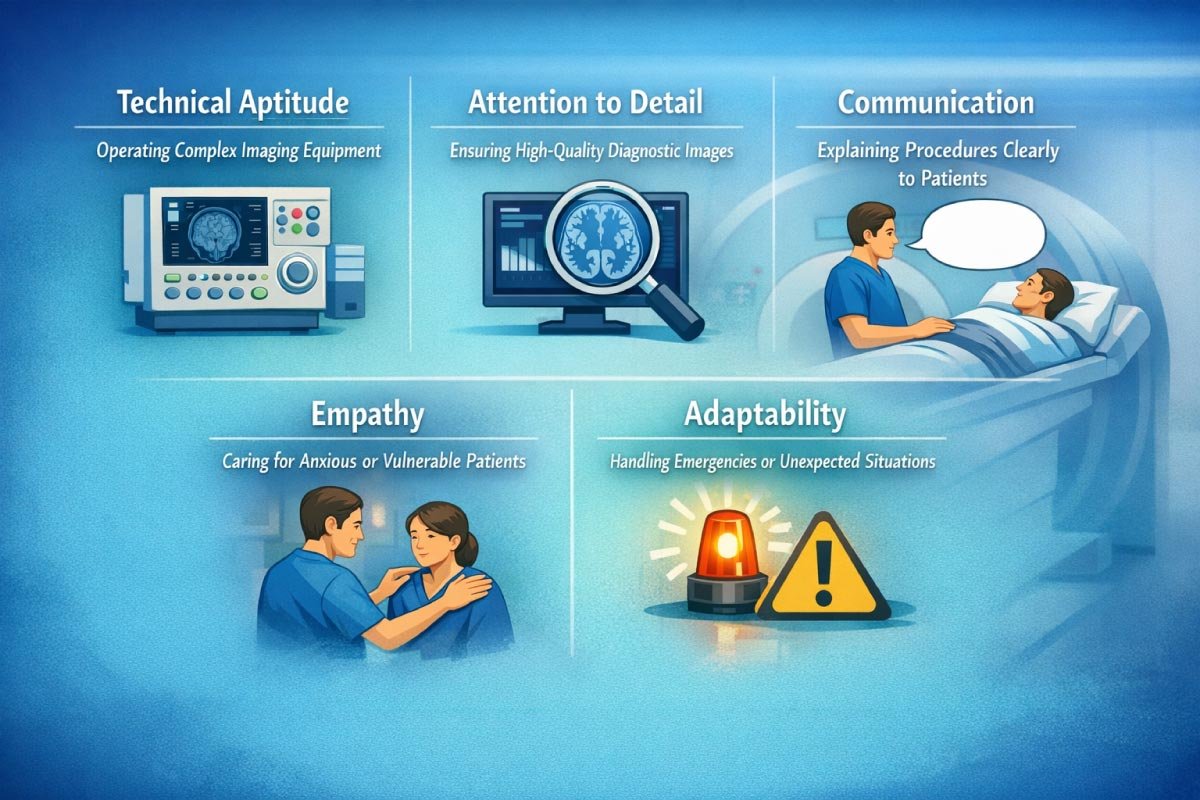
Successful MRI technologists combine technical expertise with strong interpersonal skills. They must operate advanced imaging equipment accurately, follow safety protocols, and communicate effectively with patients and medical teams. Balancing precision, empathy, and adaptability ensures both high-quality diagnostic results and positive patient experiences.
Key Skills
-
Technical aptitude – Operating complex imaging equipment
-
Attention to detail – Ensuring high-quality diagnostic images
-
Communication – Explaining procedures clearly to patients
-
Empathy – Caring for anxious or vulnerable patients
-
Adaptability – Handling emergencies or unexpected situations
Interpersonal skills are especially important, since many patients may feel uncomfortable or scared during scans.
Discover More:
Pros and Cons of the Career
A career as an MRI technologist offers a rewarding blend of professional growth, patient impact, and technical expertise. Understanding both the advantages and challenges helps aspiring technologists make informed decisions about entering this field and prepares them for the demands and rewards of daily work.
Pros
-
High demand and job stability
-
Strong salary potential
-
Opportunities for specialization
-
Ability to make a meaningful impact on patient health
-
Dynamic work environment
Cons
-
Physically demanding (long hours on feet)
-
May involve night or weekend shifts
-
Exposure to stressful situations with patients
-
Requires ongoing education and training
Discover More:
How to Get Started (Step-by-Step)
Starting a career as an X-ray technician requires careful planning, education, and hands-on experience. Following a clear roadmap helps ensure success and professional growth. From understanding prerequisites to gaining clinical practice, each step builds essential skills and credentials. This guide provides a structured, step-by-step approach to help you confidently enter the field of radiologic technology.
1. Research Radiologic Technology Programs
Begin by exploring accredited radiologic technology programs. Look for institutions recognized by the American Registry of Radiologic Technologists (ARRT) or your country’s equivalent. Compare program duration, curriculum, tuition, and clinical training opportunities. Researching thoroughly ensures you select a program that meets certification requirements and provides strong foundational knowledge for your future career in medical imaging.
2. Complete Prerequisite High School Courses
Focus on science and math courses in high school or their equivalents. Subjects like biology, chemistry, physics, and algebra build essential knowledge for understanding human anatomy and imaging technology. Strong academic performance in these areas improves program admission chances and prepares you for the technical and analytical challenges of a radiologic technology curriculum.
3. Enroll in an Accredited Radiography Program
Once prerequisites are met, enroll in an accredited radiography program. These programs typically offer associate or bachelor’s degrees combining classroom instruction with practical labs. Accreditation ensures the curriculum meets professional standards and prepares you for certification exams. Hands-on learning during this phase develops the technical skills necessary for safe, effective patient imaging procedures.
4. Complete Clinical Internships and Training
Clinical internships provide real-world experience under supervision in hospitals, clinics, or imaging centers. During these rotations, you practice patient positioning, operating imaging equipment, and following safety protocols. Internships bridge theory and practice, allowing you to gain confidence, refine technical skills, and demonstrate competence to future employers. Performance during this stage often impacts job placement opportunities.
5. Obtain Certification and Licensure
After graduation, apply for certification through the ARRT or your country’s licensing body. Pass the certification exam to demonstrate professional competency. Some regions also require state licensure. Maintaining credentials may involve continuing education. Certification and licensure validate your expertise, making you eligible for employment as a professional radiologic technologist.
| Step | Action |
|---|---|
| 1 | Research accredited radiologic or MRI programs |
| 2 | Complete required coursework and clinical training |
| 3 | Pass certification exam (e.g., ARRT MRI) |
| 4 | Check state licensure requirements |
| 5 | Apply for MRI technologist positions |
| 6 | Continue professional development |
Starting with a clear plan increases your chances of success and helps you choose the best program for your goals.
Discover More:
Final Thoughts
Being an MRI technologist is a rewarding career that combines technology, patient care, and critical thinking. Whether you’re just starting your career journey or considering a change, this field offers strong growth prospects and meaningful work.
If you enjoy science, help others, and thrive in a clinical setting, pursuing work as an MRI technologist could be an excellent fit.
Discover More:

Zak is a dedicated medical and career writer specializing in sonography, healthcare education, and professional development. Through SonographerSalary.com, he shares in-depth insights on sonographer salaries, education pathways, and career tips to help readers build successful futures in medical imaging. His content combines accuracy with practical, easy-to-understand guidance, empowering students and professionals to make confident, informed career decisions.