
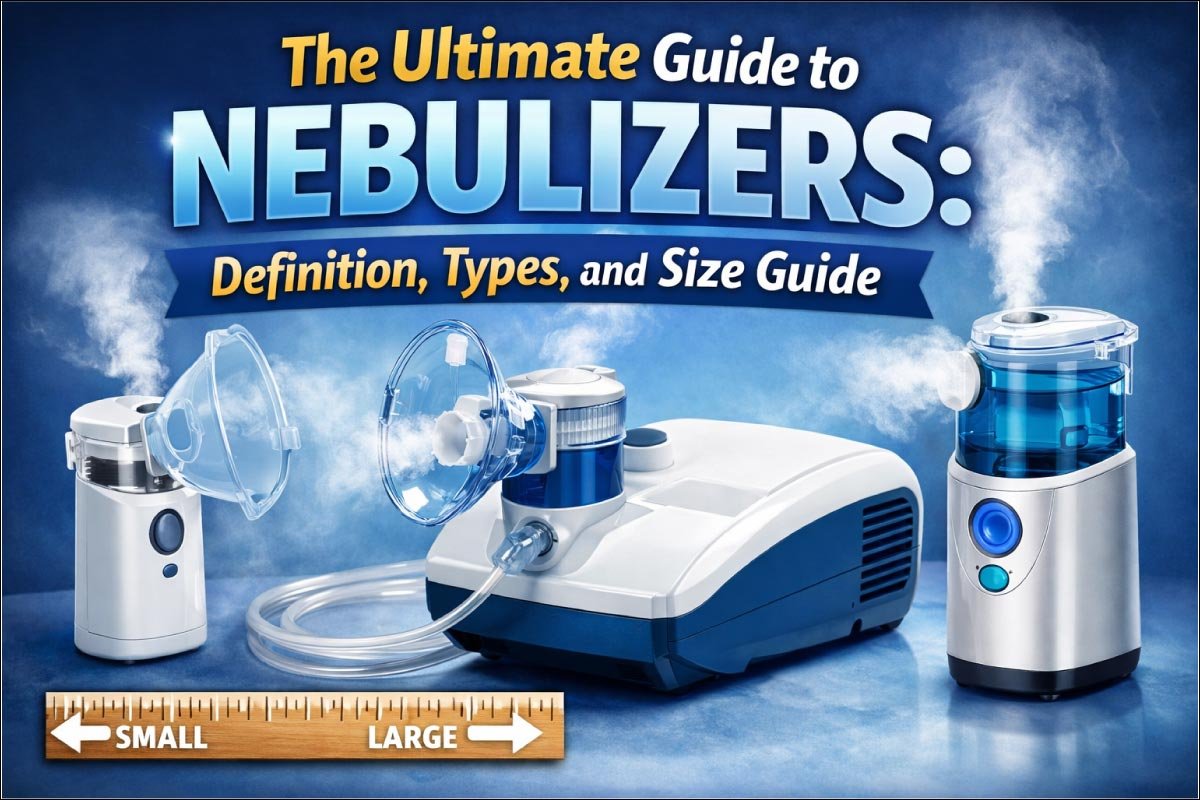
Nebulizers are essential medical devices designed to deliver medication directly to the lungs in the form of a fine mist, making breathing easier for patients with respiratory conditions. From asthma and COPD to bronchitis and other pulmonary illnesses, nebulizers play a crucial role in managing symptoms and improving overall lung function.
This guide provides a comprehensive overview of nebulizers, their types, size options, and practical usage insights.
What is a Nebulizer?
A nebulizer is a medical device that converts liquid medication into a fine aerosol or mist, allowing the medicine to be inhaled directly into the lungs. This method is particularly effective for patients who have difficulty using inhalers, including children and elderly individuals. Nebulizers are widely used in hospitals, clinics, and home care settings for respiratory therapy.
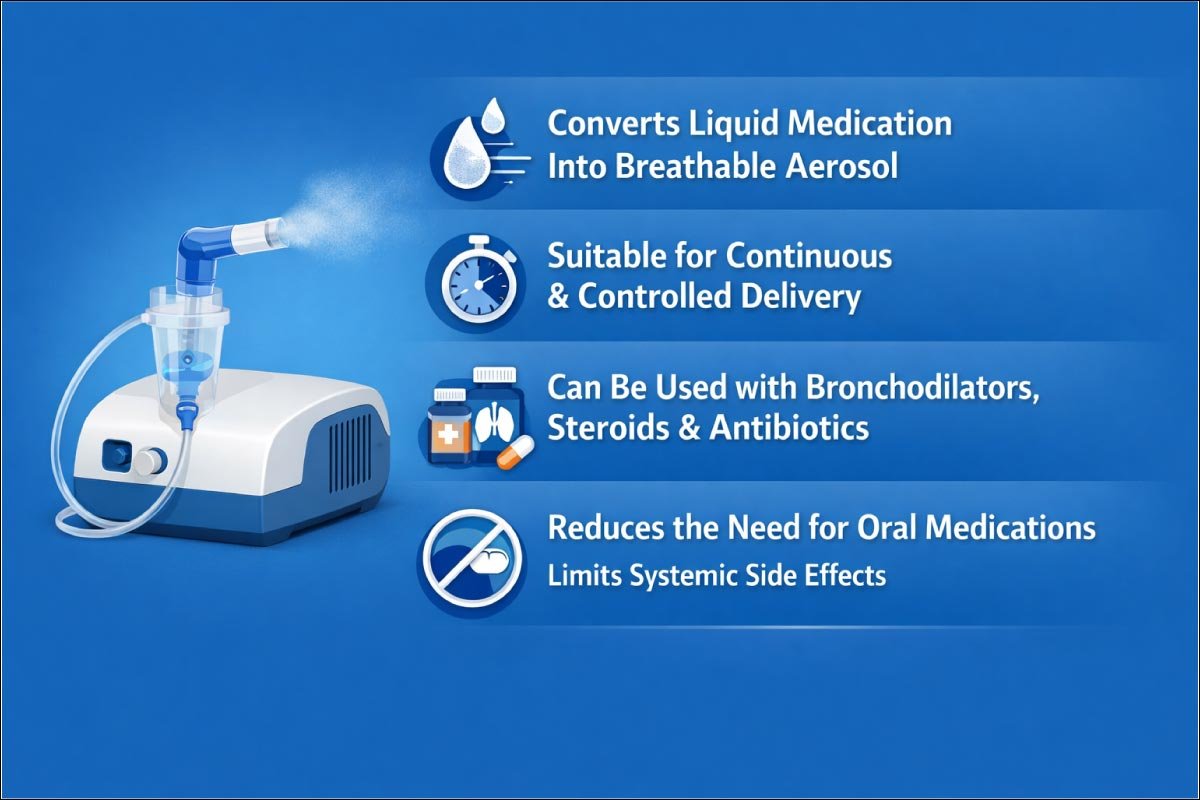
Key Features of Nebulizers:
-
Converts liquid medication into breathable aerosol
-
Suitable for continuous and controlled delivery
-
Can be used with various medications, including bronchodilators, steroids, and antibiotics
-
Reduces the need for oral medications, which may have systemic side effects
How Does a Nebulizer Work ?
A nebulizer is a medical device designed to deliver liquid medication directly to the lungs in the form of a fine mist. By converting medicine into aerosol particles, it allows for faster absorption and targeted relief of respiratory issues such as asthma, COPD, or bronchitis.
Different types of nebulizers use distinct mechanisms to ensure efficient delivery and comfort.
1. Jet Nebulizer Mechanism
Jet nebulizers use compressed air or oxygen to create a high-velocity stream that converts liquid medication into an inhalable aerosol. The patient inhales the mist through a mouthpiece or mask, ensuring medicine reaches the lungs directly.
This method is cost-effective, widely used, and suitable for both adults and children with respiratory conditions.
2. Ultrasonic Nebulizer Function
Ultrasonic nebulizers employ high-frequency sound waves to vibrate liquid medication, turning it into a fine mist. The vibration generates uniform particles, which the patient inhales for effective lung delivery
. They are quieter and faster than jet nebulizers but may be unsuitable for certain heat-sensitive medications due to slight warming during operation.
3. Mesh Nebulizer Operation
Mesh nebulizers push liquid medicine through a fine, perforated mesh to produce a controlled, consistent mist. This technology allows precise dosing, portable design, and quiet operation. Patients benefit from shorter treatment times and improved comfort, making mesh nebulizers ideal for home use, travel, or frequent medication administration.
4. Importance of Particle Size
Nebulizer efficiency largely depends on aerosol particle size. Particles between 1 and 5 microns penetrate deep into the lungs, reaching the alveoli for optimal absorption. Larger particles deposit in the mouth or throat, reducing effectiveness
. Choosing the right device and technique ensures maximum therapeutic benefit and faster relief from respiratory symptoms.
5. Direct Lung Delivery Advantage
By inhaling medication directly into the lungs, nebulizers provide rapid symptom relief and higher drug efficacy compared to oral or systemic routes.
Direct delivery reduces systemic side effects, ensures faster action, and is especially helpful for patients unable to use inhalers effectively, including young children and elderly individuals with respiratory difficulties.
Types of Nebulizers
Nebulizers are essential devices for delivering medication directly to the lungs in mist form. They differ in mechanism, portability, and efficiency, making it crucial to select the right type for each patient.
Understanding the features, advantages, and limitations of each helps ensure effective respiratory therapy for both home and clinical settings.
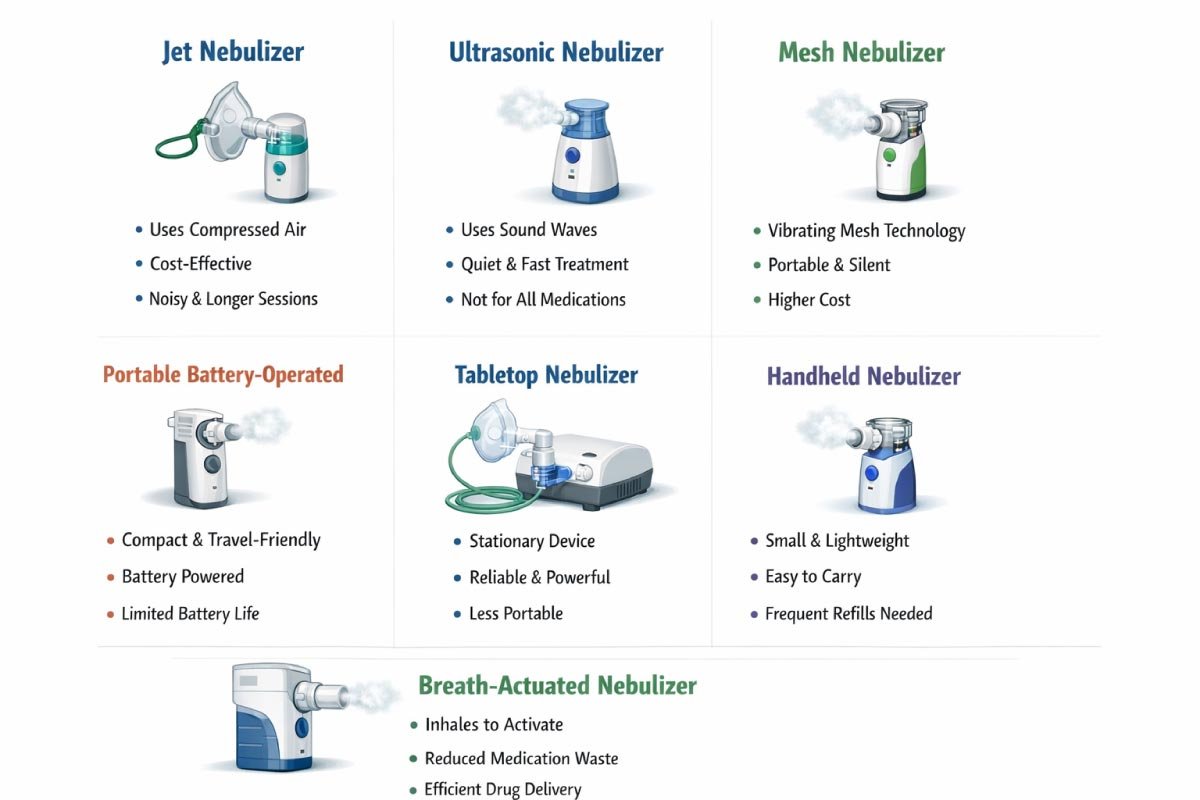
1. Jet Nebulizers
Jet nebulizers, also called pneumatic nebulizers, use compressed air or oxygen to atomize liquid medication into a fine mist. They are cost-effective, widely available, and compatible with most medications.
However, they are noisy and require longer treatment sessions. Commonly used for asthma attacks, COPD management, and pediatric respiratory conditions.
2. Ultrasonic Nebulizers
Ultrasonic nebulizers employ high-frequency sound waves to generate a fine aerosol from liquid medication. They are quieter and deliver medicine faster than jet nebulizers.
Best suited for adults and children who require quick therapy. However, they may not be suitable for all medications, particularly suspensions or proteins sensitive to vibration.
3. Mesh Nebulizers
Mesh nebulizers use a vibrating mesh or perforated membrane to produce a consistent mist. They are lightweight, portable, and silent, making them ideal for home or travel use.
These devices provide efficient drug delivery with minimal waste. The main drawback is higher cost and more delicate components requiring careful maintenance.
4. Portable Battery-Operated Nebulizers
Battery-operated nebulizers are compact devices designed for mobility. They allow patients to administer treatment anywhere without relying on electrical outlets. Ideal for active individuals or children attending school.
While convenient, they may have limited capacity and shorter battery life, making frequent recharging necessary during prolonged use.
5. Tabletop Nebulizers
Tabletop nebulizers are stationary devices intended for home or hospital use. They provide consistent airflow, accommodate various medications, and often allow longer treatment sessions. While efficient, they are bulky, less portable, and require a nearby power source, limiting mobility compared to handheld options.
6. Handheld Nebulizers
Handheld nebulizers are small, portable devices that fit in the palm, designed for convenience and on-the-go therapy. They deliver medication quickly and are ideal for patients with mild respiratory conditions.
Limitations include smaller medication reservoirs and the need for frequent refills during extended treatments.
7. Breath-Actuated Nebulizers
Breath-actuated nebulizers release medication only when the patient inhales, reducing drug wastage and improving efficiency. These are particularly useful for children or patients with difficulty coordinating inhalation.
They are more expensive and may require instruction for proper use but optimize therapeutic outcomes with each breath.
Jet Nebulizer Comparison
The Jet Nebulizer is a widely used respiratory device that transforms liquid medication into a fine mist for inhalation. This table highlights its key features, including its compressed-air mechanism, particle size, treatment duration, noise level, and portability, providing a clear comparison for patients and healthcare providers.
| Feature | Description |
|---|---|
| Mechanism | Compressed air converts liquid to mist |
| Particle Size | 1–5 microns |
| Typical Treatment Time | 10–15 minutes |
| Noise Level | Moderate to high |
| Portability | Low |
Ultrasonic Nebulizers
Ultrasonic nebulizers are medical devices that use high-frequency sound waves to convert liquid medication into a fine mist for inhalation. They are designed to deliver medicine efficiently, quietly, and quickly, making them suitable for home use, pulmonary rehabilitation, and long-term respiratory therapy.
Advantages:
-
Quiet and smooth operation
-
Faster delivery of medication
-
Efficient for small-volume treatments
Disadvantages:
-
Not suitable for viscous or suspensions of some medications
-
Slightly more expensive
Common Uses:
-
Home respiratory therapy
-
Pulmonary rehabilitation
-
Long-term medication delivery
Ultrasonic Nebulizer Features
The Ultrasonic Nebulizer uses high-frequency vibrations to convert liquid medication into a fine mist, offering a quieter and faster treatment option. This table outlines its essential features, including particle size, treatment duration, noise level, and compatibility with various medications, helping patients and healthcare providers make informed choices.
| Feature | Description |
|---|---|
| Mechanism | High-frequency vibrations create mist |
| Particle Size | 1–5 microns |
| Typical Treatment Time | 5–10 minutes |
| Noise Level | Low |
| Suitable Medications | Liquids and aqueous solutions |
Mesh Nebulizers
Mesh nebulizers are modern, high-precision devices that use a vibrating mesh to transform liquid medication into a fine aerosol for inhalation.
Their portability, efficiency, and quiet operation make them ideal for patients of all ages, including children and the elderly, for both home use and travel.
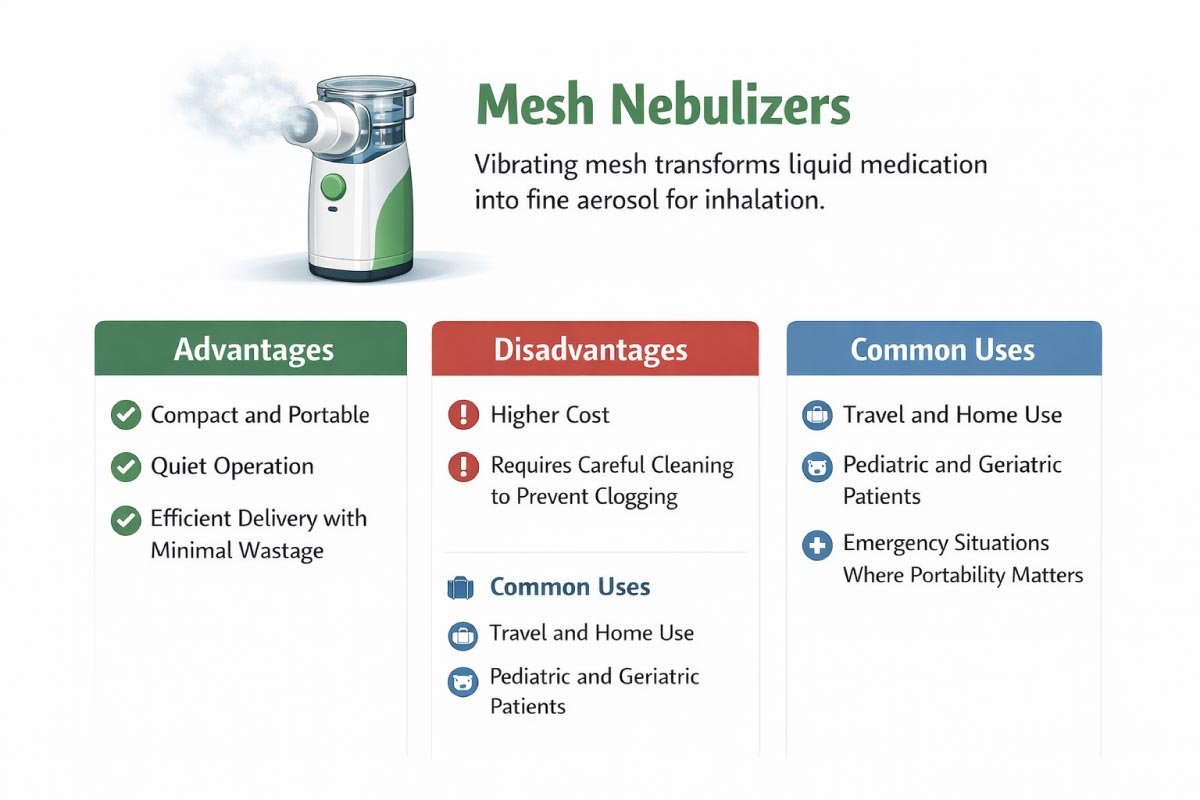
Advantages:
-
Compact and portable
-
Quiet operation
-
Efficient delivery with minimal wastage
Disadvantages:
-
Higher cost
-
Requires careful cleaning to prevent clogging
Common Uses:
-
Travel and home use
-
Pediatric and geriatric patients
-
Emergency situations where portability matters
Mesh Nebulizer Overview
The Mesh Nebulizer delivers medication efficiently by pushing liquid through a vibrating mesh, producing a fine mist. This table highlights its key features, including particle size, treatment time, noise level, and portability, showcasing its advantages as a quiet, fast, and highly portable option for effective respiratory therapy.
| Feature | Description |
|---|---|
| Mechanism | Medication pushed through vibrating mesh |
| Particle Size | 1–5 microns |
| Typical Treatment Time | 5–10 minutes |
| Noise Level | Very low |
| Portability | High |
Portable Handheld Nebulizers
Portable handheld nebulizers are compact, battery-powered devices that deliver medication efficiently while on the move. Designed for convenience, they are suitable for home, travel, or emergency situations.
Their lightweight design and ease of use make them ideal for children, elderly patients, and anyone needing quick, on-the-go respiratory relief.
Advantages:
-
Lightweight and portable
-
Battery-operated for mobility
-
Easy to use for children and elderly
Disadvantages:
-
Smaller medication capacity
-
Slightly longer refill intervals
Common Uses:
-
Travel therapy
-
Emergency use outside the home
-
Quick relief for acute symptoms
Hospital or ICU Nebulizers
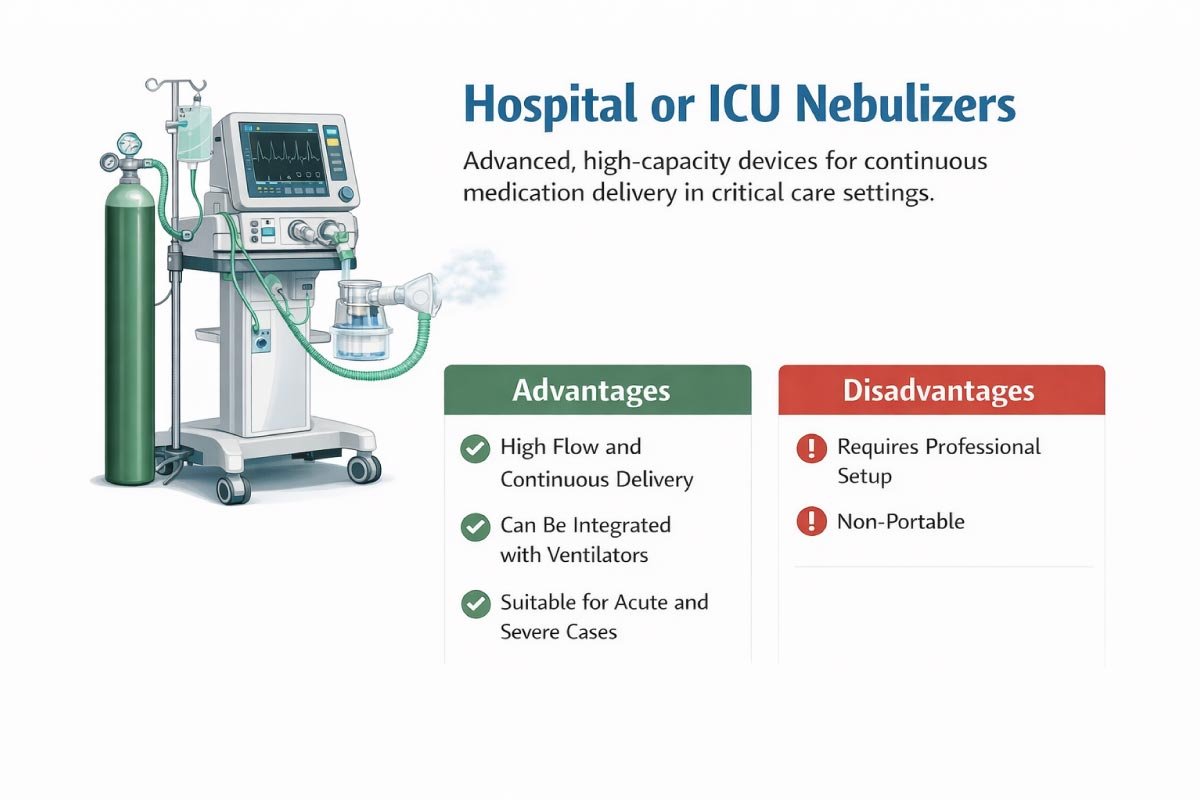
Hospital and ICU nebulizers are advanced, high-capacity devices designed for continuous medication delivery in critical care settings. Often connected to oxygen lines or integrated with ventilators, they provide precise and high-volume respiratory treatment for severe cases, ensuring rapid and effective therapy under professional supervision in hospital environments.
Advantages:
-
High flow and continuous delivery
-
Can be integrated with ventilators
-
Suitable for acute and severe cases
Disadvantages:
-
Requires professional setup
-
Non-portable
Hospital Nebulizer Features
Hospital nebulizers provide continuous mist using compressed oxygen or air, making them ideal for clinical settings. This table summarizes their features, including particle size, treatment duration, noise level, and portability, emphasizing their suitability for extended therapy sessions in hospitals despite limited mobility.
| Feature | Description |
|---|---|
| Mechanism | Compressed oxygen/air for continuous mist |
| Particle Size | 1–5 microns |
| Typical Treatment Time | 10–30 minutes |
| Noise Level | Moderate |
| Portability | Very low |
Discover More:
Nebulizer Size Guide
Nebulizers are available in a range of sizes, designed to match patient age, treatment duration, and portability needs. Selecting the appropriate size ensures optimal medication delivery, comfort, and convenience, whether for home use, travel, or hospital care, helping patients receive effective and efficient respiratory therapy every time.
1- Small Nebulizers
Small nebulizers are compact devices intended for home use or short-duration treatment sessions. With a typical capacity of 5–10 mL, they are ideal for children, single-dose therapies, or brief respiratory treatments, offering convenience, portability, and efficient medication delivery for everyday or emergency use in non-hospital settings.
-
Designed for home use or short treatment sessions
-
Typically 5–10 mL liquid capacity
-
Ideal for children or single-dose treatments
2- Medium Nebulizers
Medium nebulizers offer a balance between capacity and portability, typically holding 10–20 mL of medication. They are ideal for adult patients or multiple-dose treatments, providing effective therapy without frequent refills.
Their moderate size ensures convenience for home use or short-term travel while maintaining efficient medication delivery.
-
Capacity: 10–20 mL
-
Suitable for multiple doses or adult patients
-
Moderate portability
3- Large Nebulizers
Large nebulizers are high-capacity devices, typically holding 20–50 mL of medication, designed for hospital use or intensive respiratory therapy. They provide continuous medication delivery for patients requiring extended or high-volume treatments, ensuring effective therapy in critical care settings while being less portable due to their size and professional setup requirements.
-
Capacity: 20–50 mL
-
Intended for hospital use or intensive therapy
-
Continuous medication delivery capability
Discover More:
Nebulizer Size Comparison
Nebulizers come in various sizes to suit different patients and treatment settings. This table compares small, medium, and large nebulizers based on capacity, recommended use, portability, and typical treatment duration, helping healthcare providers and patients select the most appropriate device for home, clinical, or intensive care applications
| Size | Capacity (mL) | Recommended Use | Portability | Treatment Duration |
|---|---|---|---|---|
| Small | 5–10 | Home use, children | High | 5–10 min |
| Medium | 10–20 | Adults, multiple doses | Medium | 10–15 min |
| Large | 20–50 | Hospital, ICU | Low | 15–30 min |
Discover More:
Tips for Choosing the Right Nebulizer
Selecting the right nebulizer is crucial for effective and comfortable respiratory therapy. Consider patient age, medication type, portability, treatment duration, and noise tolerance when making your choice. Matching the device to individual needs ensures safe, efficient, and convenient medication delivery, whether at home, during travel, or in hospital settings.
-
Patient Age: Children and elderly patients benefit from portable or small nebulizers.
-
Medication Type: Some medications are unsuitable for ultrasonic or mesh devices.
-
Portability Needs: Travel or emergency therapy requires lightweight devices.
-
Treatment Duration: Longer treatments may require medium to large-capacity nebulizers.
-
Noise Tolerance: Consider mesh or ultrasonic devices for quieter operation.
Discover More:
Nebulizer Maintenance and Safety
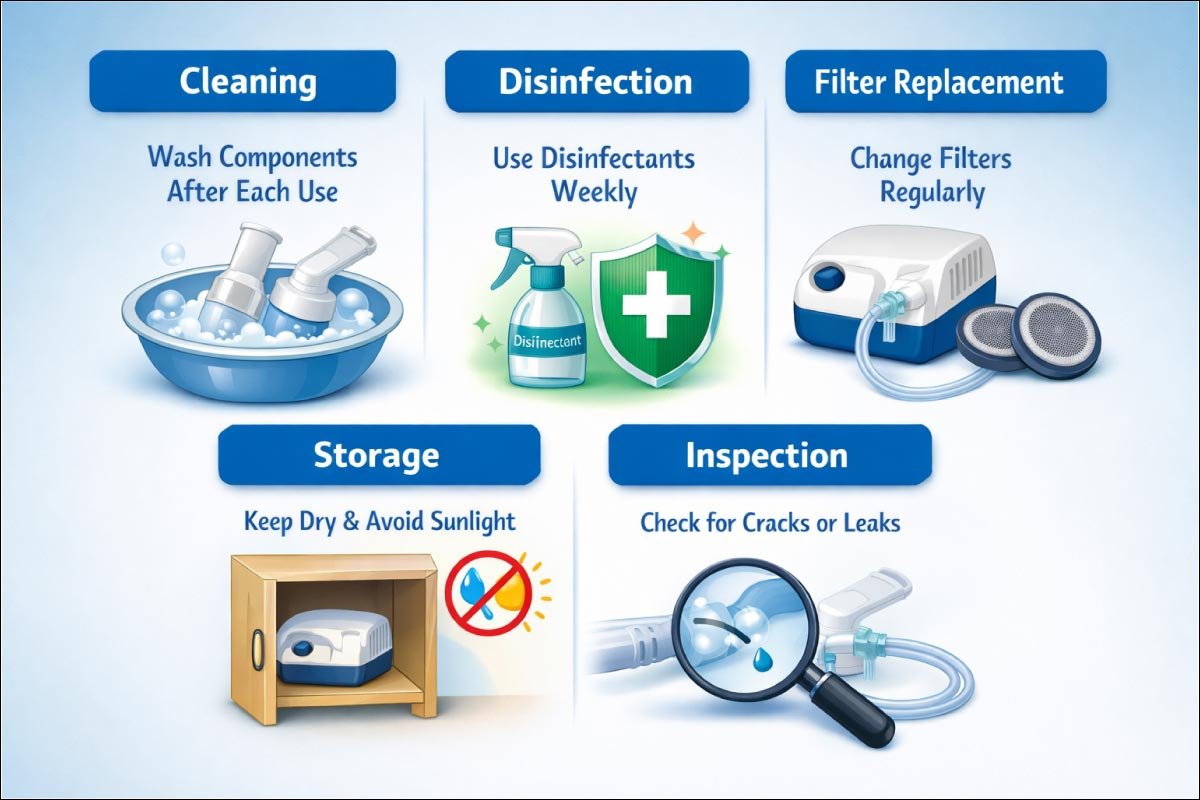
Regular maintenance and safety checks are essential to keep nebulizers functioning effectively and to ensure safe therapy. Proper cleaning, disinfection, filter replacement, storage, and inspection prevent infections, device damage, or medication delivery issues, helping patients receive reliable, efficient respiratory treatment at home, during travel, or in clinical settings.
-
Cleaning: Wash components after each use with warm soapy water.
-
Disinfection: Use recommended disinfectants weekly.
-
Filter Replacement: Change filters in jet nebulizers regularly.
-
Storage: Keep dry and away from direct sunlight.
-
Inspection: Check for cracks, leaks, or clogged parts before use.
Conclusion
Nebulizers are indispensable tools for patients with respiratory conditions, offering efficient and direct medication delivery to the lungs. Understanding the different types, their advantages, and the appropriate size ensures optimal therapy. Whether for home use, travel, or hospital care, selecting the right nebulizer can significantly improve breathing comfort and overall health.
Proper maintenance, usage, and adherence to medical guidance further enhance the benefits of these devices.
Discover More:

Zak is a dedicated medical and career writer specializing in sonography, healthcare education, and professional development. Through SonographerSalary.com, he shares in-depth insights on sonographer salaries, education pathways, and career tips to help readers build successful futures in medical imaging. His content combines accuracy with practical, easy-to-understand guidance, empowering students and professionals to make confident, informed career decisions.