
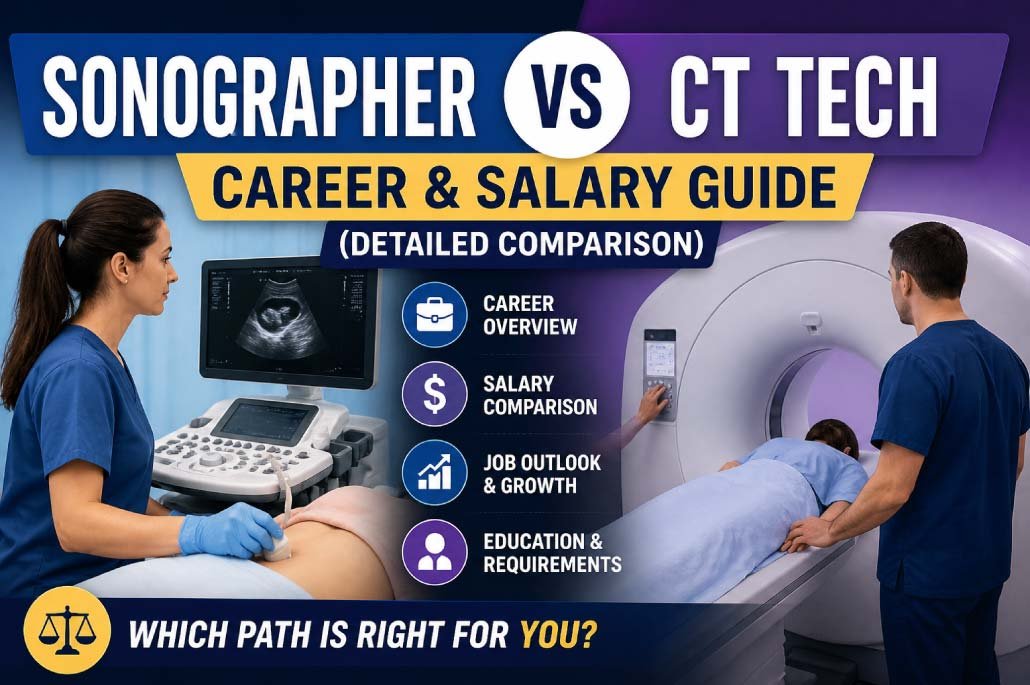
Choosing a healthcare career in diagnostic imaging is a smart move in today’s growing medical field. Two of the most in-demand roles are Diagnostic Medical Sonographer and CT (Computed Tomography) Technologist. Both careers involve working with advanced imaging technology to help doctors diagnose diseases, but they differ in education, work environment, salary potential, and long-term career paths.
If you are confused between these two professions, this detailed guide will help you understand everything clearly so you can make the right decision for your future.
What is a Sonographer?
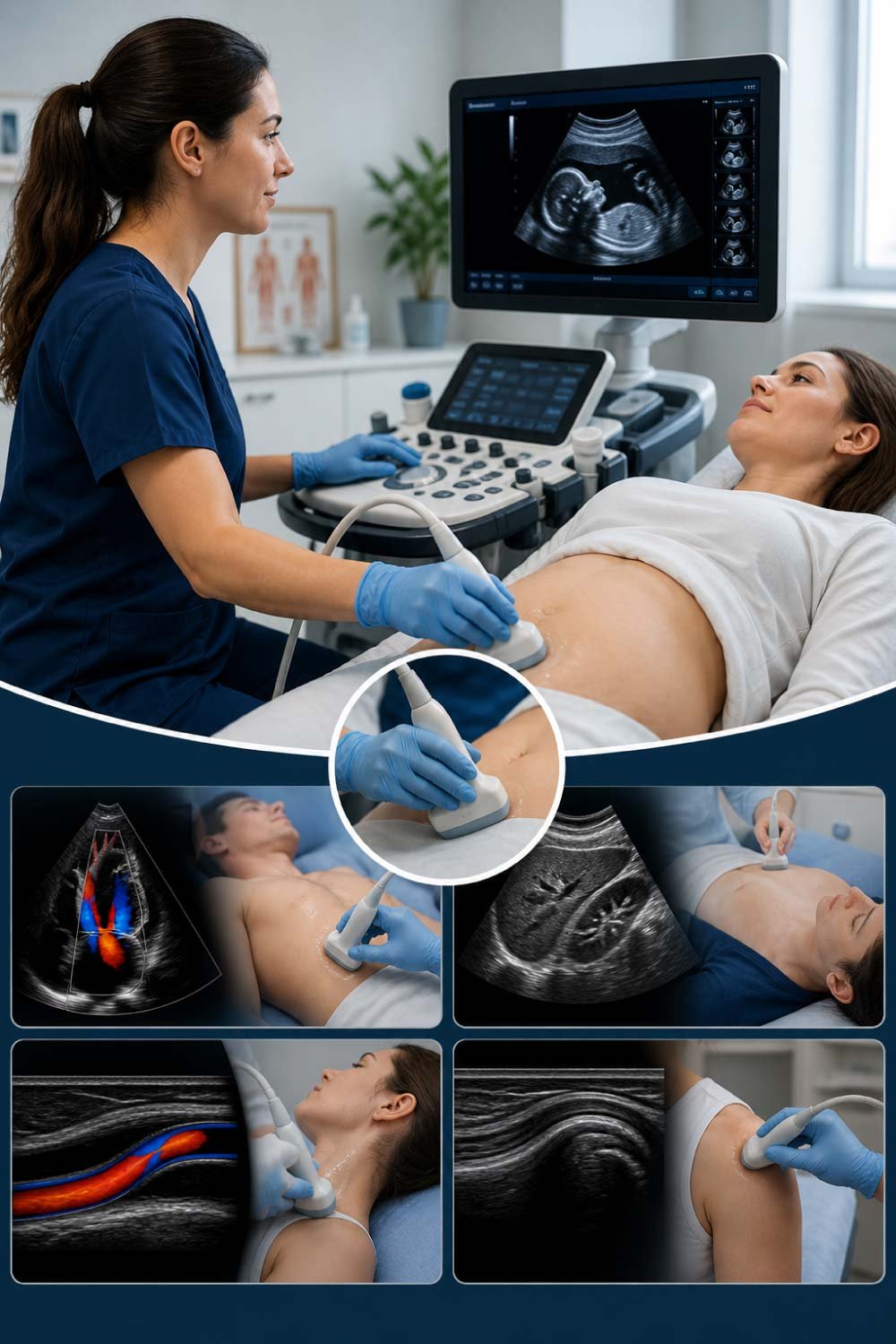
A Diagnostic Medical Sonographer uses high-frequency sound waves (ultrasound) to create images of organs, tissues, and blood flow inside the body. These images help doctors diagnose conditions related to pregnancy, heart disease, abdominal issues, and more.
Sonographers are often associated with pregnancy scans, but their role is much broader, including:
- Abdominal ultrasound (liver, kidneys, gallbladder)
- Cardiac ultrasound (echocardiography)
- Vascular imaging (blood flow in arteries and veins)
- Musculoskeletal imaging
Key Role:
Sonographers operate ultrasound machines, position patients, and ensure high-quality images for accurate diagnosis.
What is a CT Technologist?
A CT Technologist is a trained medical imaging professional who uses computed tomography (CT) scanners to produce detailed cross-sectional images of the human body. These images help doctors diagnose diseases, injuries, and internal conditions with high accuracy. CT Techs play a critical role in emergency and diagnostic healthcare settings.
CT scans provide more detailed information than standard X-rays, making them essential in modern medicine. They are especially useful in urgent and complex cases where fast and precise imaging is required.
Common CT scan applications include:
- Detecting tumors and cancers
- Diagnosing internal injuries (trauma cases)
- Brain imaging (stroke detection)
- Chest and lung scans
- Bone fractures and abnormalities
Key Role:
CT Technologists are responsible for preparing patients, positioning them correctly for scans, operating advanced CT imaging equipment, and ensuring image clarity. They may also administer contrast dye when required and follow strict safety protocols to produce accurate diagnostic results.
Education and Training Requirements
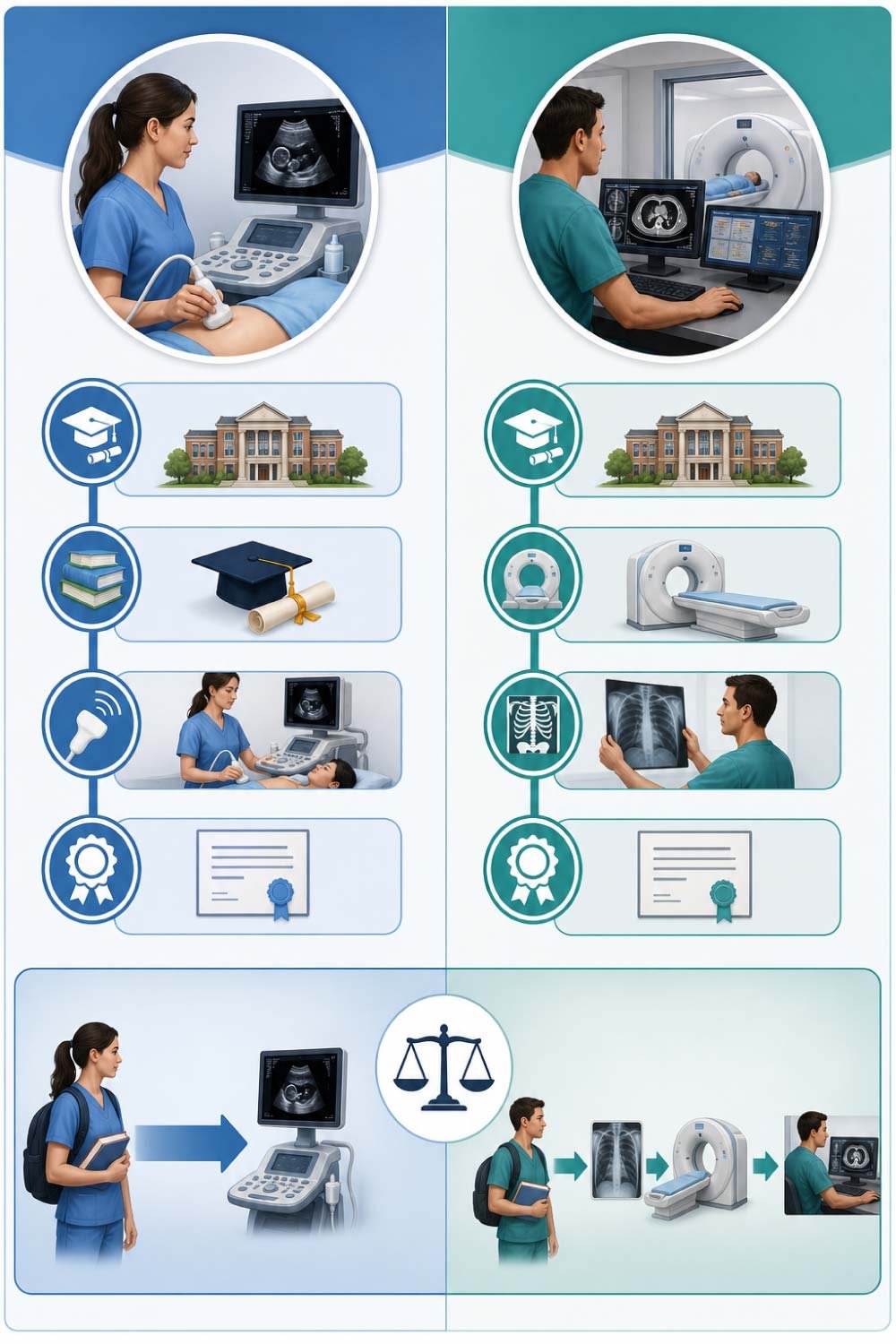
This section explains the academic path and training needed to enter both professions. While both careers require medical imaging education, the pathways differ in structure, specialization timing, and certification requirements. Proper training ensures safe equipment handling and accurate diagnostic imaging skills.
Sonographer Education Path:
- Associate Degree in Diagnostic Medical Sonography (2 years)
- Bachelor’s degree (optional but preferred)
- Clinical training in ultrasound technology
- Certification (ARDMS or equivalent)
CT Tech Education Path:
- Associate degree in Radiologic Technology (2 years)
- Additional CT certification program (6–12 months)
- Clinical experience in X-ray imaging
- Certification (ARRT in Radiography and CT)
Key Difference:
Sonography is usually pursued as a direct and focused specialization from the beginning of training. In contrast, CT Technologists typically begin their careers as Radiologic Technologists and later advance into CT specialization through additional certification and experience.
Salary Comparison (Overview)
Salary plays a major role when choosing between Sonography and CT Technology careers. Both fields offer strong earning potential, but differences exist based on specialization, experience level, workplace setting, and shift type. Understanding salary ranges helps in making a more informed career decision.
Sonographer Salary:
- Entry Level: $55,000 – $70,000 per year
- Mid-Level: $75,000 – $95,000 per year
- Experienced: $100,000+ per year
Sonographers working in specialized areas such as cardiac, vascular, or maternal-fetal imaging often earn higher salaries due to advanced skill requirements.
CT Technologist Salary:
- Entry Level: $50,000 – $65,000 per year
- Mid-Level: $70,000 – $85,000 per year
- Experienced: $90,000 – $105,000 per year
CT Technologists working in emergency departments, trauma centers, or night shifts may receive additional pay through overtime and shift differentials.
Direct Salary Insight
- Sonographers generally earn slightly higher average salaries overall
- CT Techs have more opportunities for overtime and shift differentials
- Both careers offer strong income growth with experience

Pros and Cons Comparison
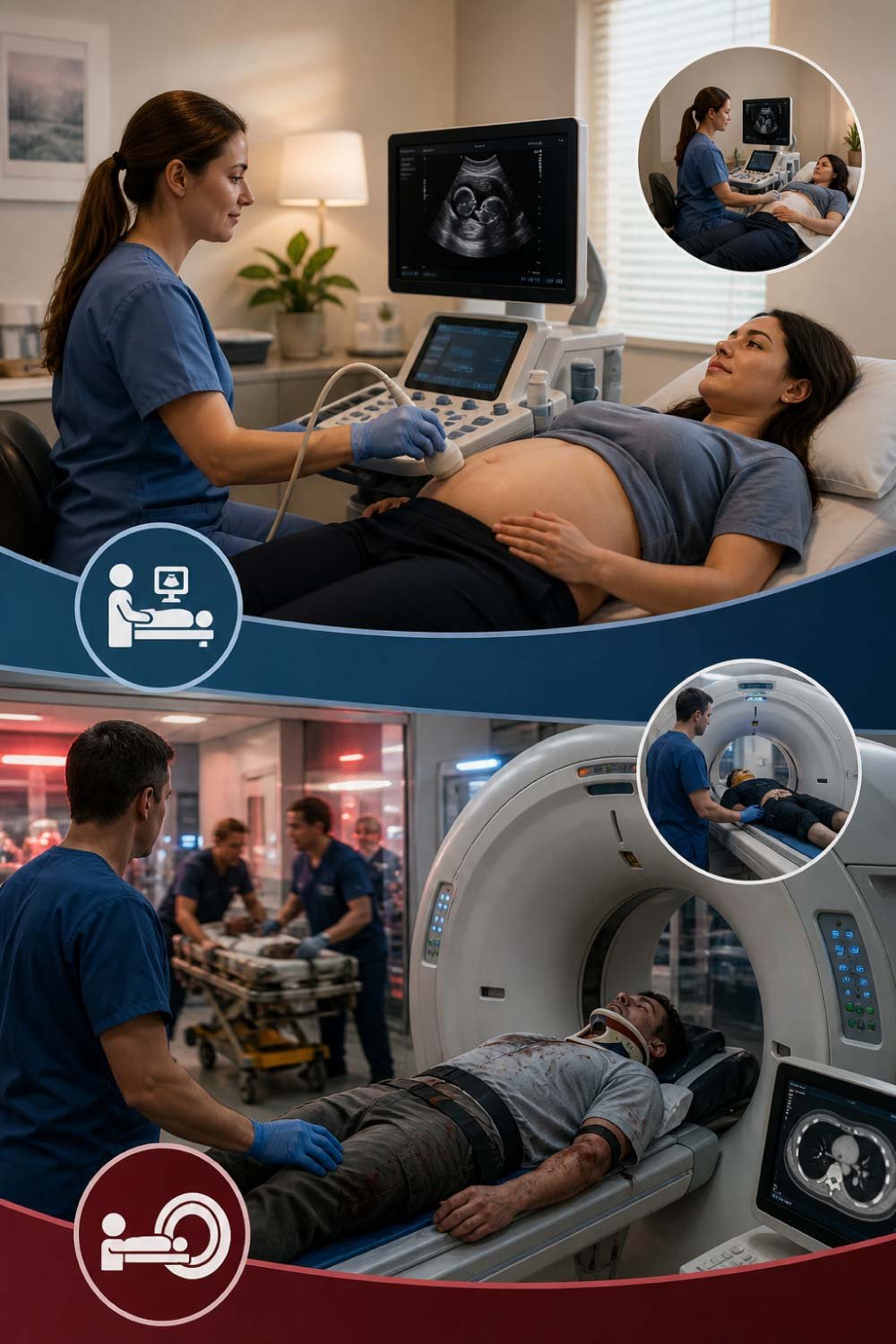
This section compares the advantages and disadvantages of Sonographer and CT Technologist careers. Both fields offer strong healthcare opportunities, but each comes with its own challenges, lifestyle factors, and career limitations that should be considered before choosing a path.
Sonographer Pros:
- Higher average salary
- Better work-life balance
- No radiation exposure
- High job satisfaction
- Strong demand in maternity care
Sonography is often seen as a rewarding career because it combines patient care with advanced imaging while maintaining a safer working environment. Many professionals appreciate the stability and meaningful patient interactions.
Sonographer Cons:
- Physically demanding scanning positions
- Limited career diversification
- Requires strong focus and patience
Despite its benefits, sonography can be physically tiring due to repetitive movements and extended scanning sessions. Career growth is also more specialized, limiting movement into other imaging fields without additional training.
CT Tech Pros:
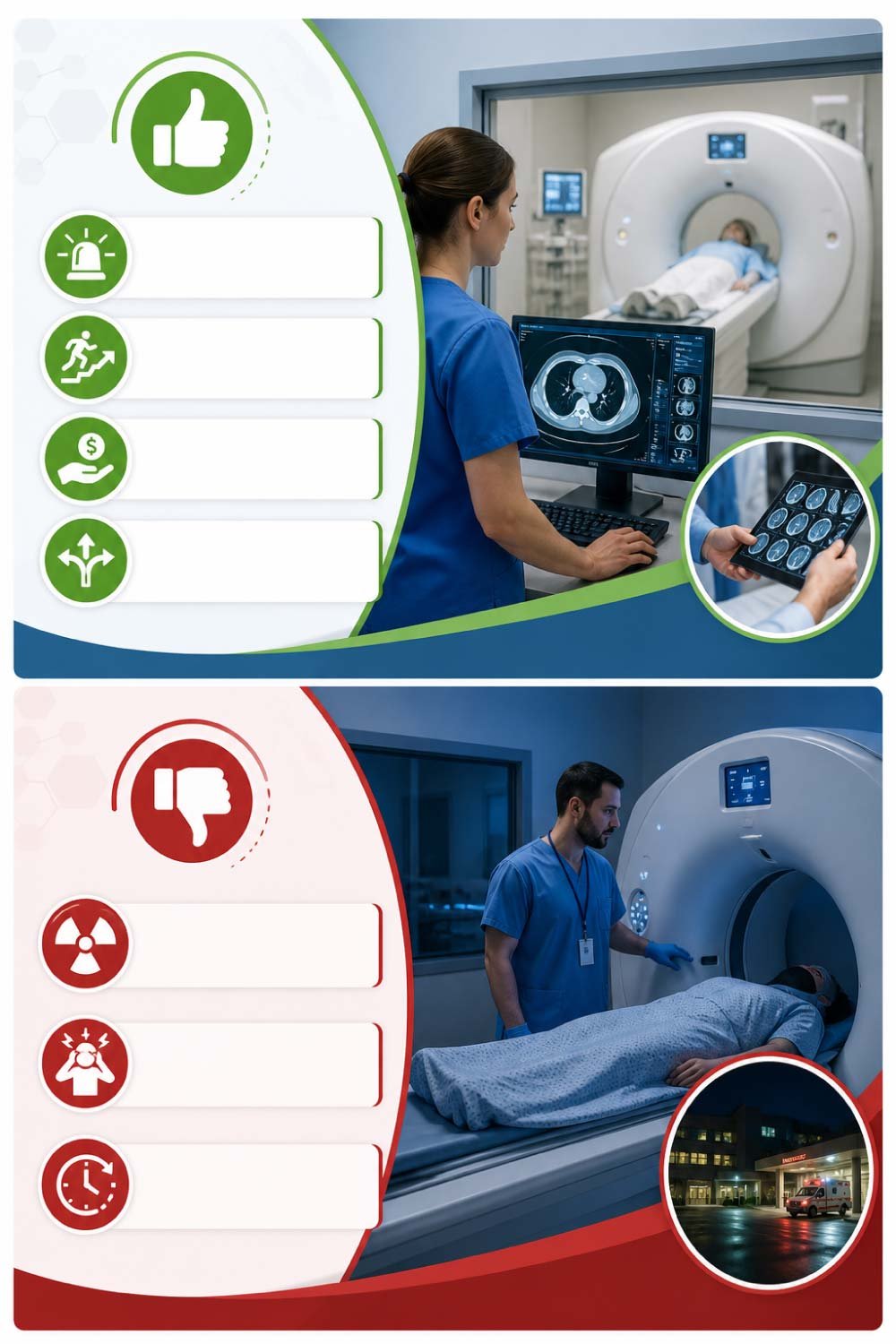
- High demand in emergency medicine
- Faster career entry path
- More opportunities for overtime pay
- Strong career mobility into other imaging fields
CT Technology is a flexible and in-demand career, especially in hospital environments where emergency imaging is essential. It also provides easier transition into other modalities like MRI with additional certification.
CT Tech Cons:
- Exposure to radiation (controlled but present)
- High-pressure environment
- Shift work including nights and weekends
CT Techs often work in urgent care settings, which can be stressful and fast-paced. While radiation exposure is strictly controlled, it is still part of the job environment, and shift schedules can be demanding.
Work-Life Balance
This section explains how each career affects daily lifestyle, schedules, and personal time. Work-life balance is an important factor for long-term job satisfaction in healthcare professions.
Sonographers:
Sonographers generally enjoy a more stable and predictable schedule, especially in outpatient clinics and diagnostic centers. Their work routine often follows regular daytime hours, which supports a healthier work-life balance.
CT Techs:
CT Technologists frequently work rotating shifts, including nights, weekends, and emergency calls, especially in hospital environments. This can make scheduling less predictable but offers more flexibility in earning overtime.
Also Read:
Which Career Pays More?
Salary comparison is an important decision factor for many students entering healthcare imaging careers.
In most cases:
- Sonographers earn slightly higher average salaries
- CT Techs can earn more with overtime and shift differentials
However, income varies depending on:
- Location
- Experience
- Hospital type
- Specialization
Both careers offer strong financial growth over time, especially with advanced skills and experience.
Which Career is Easier to Enter?
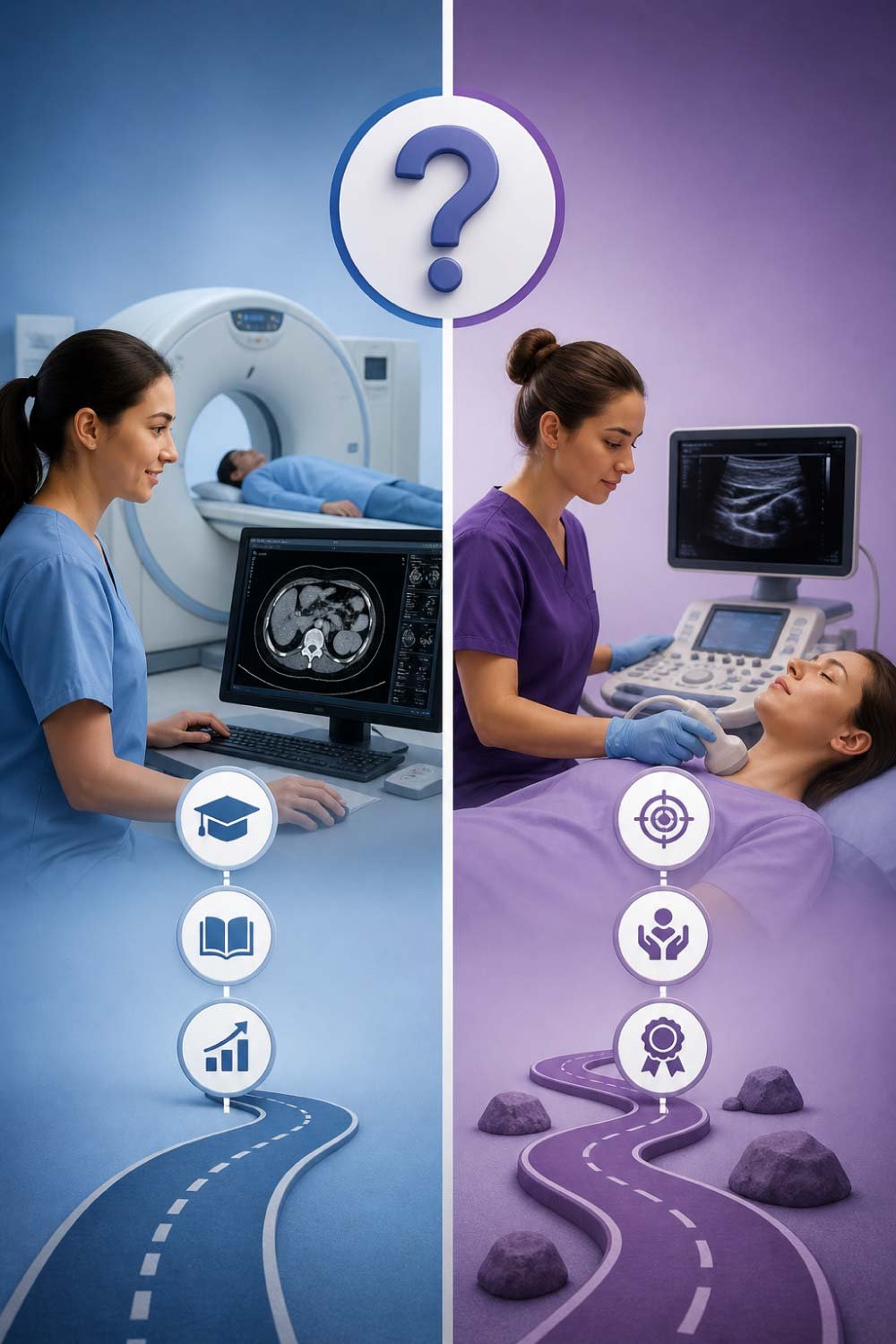
Entry difficulty is another key difference between these two careers.
CT Tech is generally easier to enter due to more structured radiology programs and clearer progression from Radiologic Technology to CT specialization. This makes it a more direct pathway for many students.
Sonography requires more focused training and skill development early on, as it is a specialized field from the beginning with strong emphasis on precision and patient handling.
Final Verdict: Sonographer vs CT Tech
Both careers are excellent choices in healthcare imaging, offering strong job stability, competitive salaries, and long-term growth. However, the best option depends on your personality, interests, and career goals.
Choose Sonography if:
- You prefer patient interaction
- You want a calmer work environment
- You are interested in pregnancy or cardiac imaging
- You want slightly higher average salary potential
Choose CT Technology if:
- You like fast-paced emergency work
- You want broader imaging career options
- You are comfortable working with radiation safety protocols
- You prefer structured technical procedures
Final Thoughts
The decision between Sonographer vs CT Tech is not about which is better overall—it is about which is better for you.
Both careers offer:
- Strong job security
- Competitive salaries
- Growing demand in healthcare
- Opportunities for long-term professional growth
If you value patient care and detailed imaging, sonography may be your path. If you prefer technology-driven, fast-paced diagnostic work, CT technology could be the right choice.
Either way, both professions play a critical role in modern healthcare and offer a stable and rewarding future.
Also Read:

Zak is a dedicated medical and career writer specializing in sonography, healthcare education, and professional development. Through SonographerSalary.com, he shares in-depth insights on sonographer salaries, education pathways, and career tips to help readers build successful futures in medical imaging. His content combines accuracy with practical, easy-to-understand guidance, empowering students and professionals to make confident, informed career decisions.