
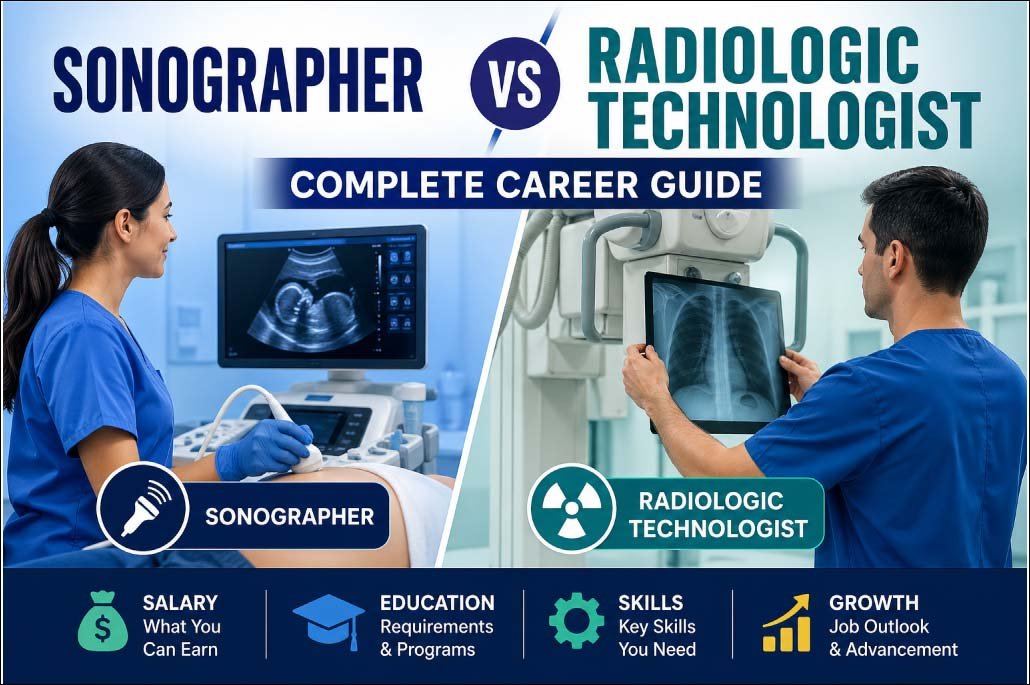
Healthcare careers in diagnostic imaging are becoming increasingly important as modern medicine relies heavily on accurate, non-invasive diagnosis. Two of the most in-demand professions in this field are Sonographers (Ultrasound Technologists) and Radiologic Technologists (X-ray Technicians). While both work with imaging technology and assist doctors in diagnosing medical conditions, their roles, training, salary potential, and career paths are quite different.
If you are considering a healthcare career that is stable, well-paying, and impactful, this detailed guide will help you clearly understand the differences between a Sonographer vs Radiologic Technologist career path so you can make the right decision.
1. What is a Sonographer?

A Sonographer is a highly skilled healthcare professional who plays a vital role in modern medical diagnosis. Using advanced ultrasound technology, they produce real-time images of internal organs and tissues. These images help doctors detect medical conditions safely, without using radiation, making sonography a crucial diagnostic tool in healthcare.
Key Responsibilities of a Sonographer:
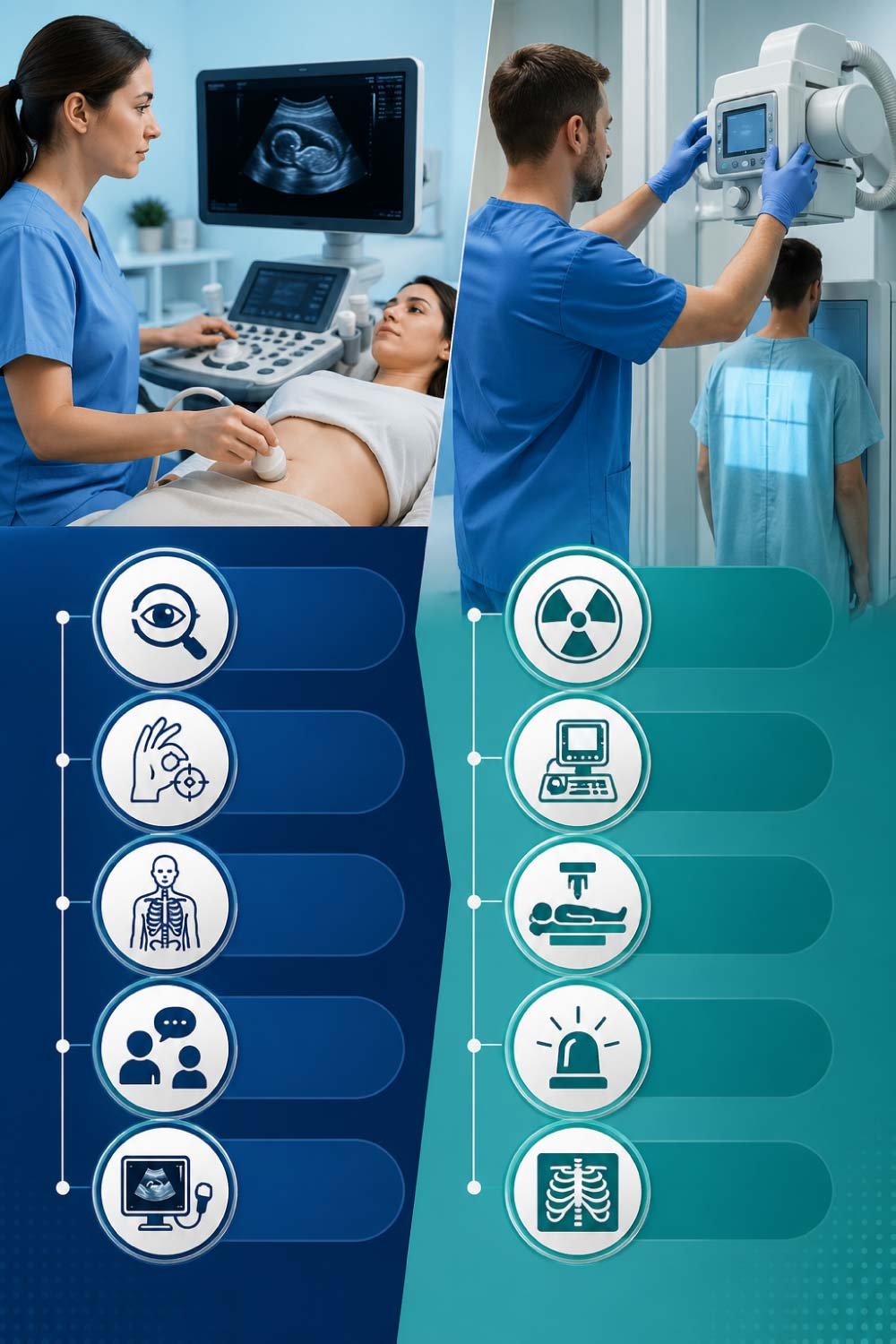
- Performing ultrasound scans on patients
- Capturing images of organs and tissues
- Assisting doctors in diagnosing medical conditions
- Maintaining patient records and reports
- Ensuring patient comfort during procedures
Sonographers often specialize in areas such as:
- Obstetric and Gynecologic Sonography
- Cardiac Sonography (Echocardiography)
- Vascular Sonography
- Abdominal Sonography
2. What is a Radiologic Technologist?
A Radiologic Technologist is a trained medical imaging professional who uses radiation-based equipment to create diagnostic images of the human body. These images, such as X-rays and CT scans, help doctors identify injuries and diseases. They play an essential role in hospitals, emergency rooms, and diagnostic centers.
Key Responsibilities of a Radiologic Technologist:
- Performing X-rays and imaging scans
- Positioning patients correctly for imaging
- Operating radiation equipment safely
- Protecting patients from unnecessary radiation exposure
- Working closely with radiologists for diagnosis
Common specializations include:
- X-ray Technology
- CT (Computed Tomography) Scanning
- MRI Technology (in advanced roles)
- Mammography
3. Education and Training Requirements
Education and training are essential steps for both careers, as they ensure professionals are fully prepared to handle complex imaging equipment and patient care responsibilities. Both paths require clinical experience, certification, and strong knowledge of anatomy, physics, and medical imaging techniques.
Sonographer Education Path:
- Associate Degree in Diagnostic Medical Sonography (2 years) OR
- Bachelor’s Degree in Sonography (4 years)
- Clinical training in hospitals and labs
Radiologic Technologist Education Path:
- Associate Degree in Radiologic Technology (2 years)
- Certification in Radiography
- Additional training for CT or MRI specialization
Key Difference:
Sonography training is more focused on ultrasound physics and anatomy, while radiologic technology focuses on radiation physics and imaging techniques.
4. Salary Comparison

Salary is a key factor when choosing between healthcare careers, and both sonographers and radiologic technologists offer competitive incomes. Earnings depend on experience, specialization, location, and type of healthcare facility. Advanced skills and certifications significantly increase salary potential in both fields.
Sonographer Salary:
- Entry-level: Moderate to high
- Experienced professionals: High earning potential
- Specialized sonographers (cardiac or vascular): Even higher salaries
Sonographers are often among the highest-paid allied health professionals due to their specialized skills and demand.
Radiologic Technologist Salary:
- Entry-level: Stable and competitive
- Experienced technologists: Higher with specialization
- MRI/CT technologists: Higher pay than standard X-ray techs
Overall Comparison:
Sonographers generally earn slightly higher average salaries, but radiologic technologists have broader opportunities for specialization.
Also Read:
5. Job Demand and Career Outlook
The demand for medical imaging professionals continues to grow rapidly due to advances in healthcare and increasing diagnostic needs. Both careers offer strong job security, but their growth rates and applications vary depending on technology use and medical requirements.
Sonographer Demand:
- Growing faster than average healthcare occupations
- Increasing use in pregnancy and heart diagnostics
- Non-invasive nature makes ultrasound very popular
Radiologic Technologist Demand:
- High demand in hospitals and diagnostic centers
- Essential for emergency and trauma care
- Continuous need for X-ray and CT imaging
Growth Insight:
Sonography is growing slightly faster due to its safety (no radiation exposure), but radiologic technology offers more job variety across imaging departments.
Final Verdict

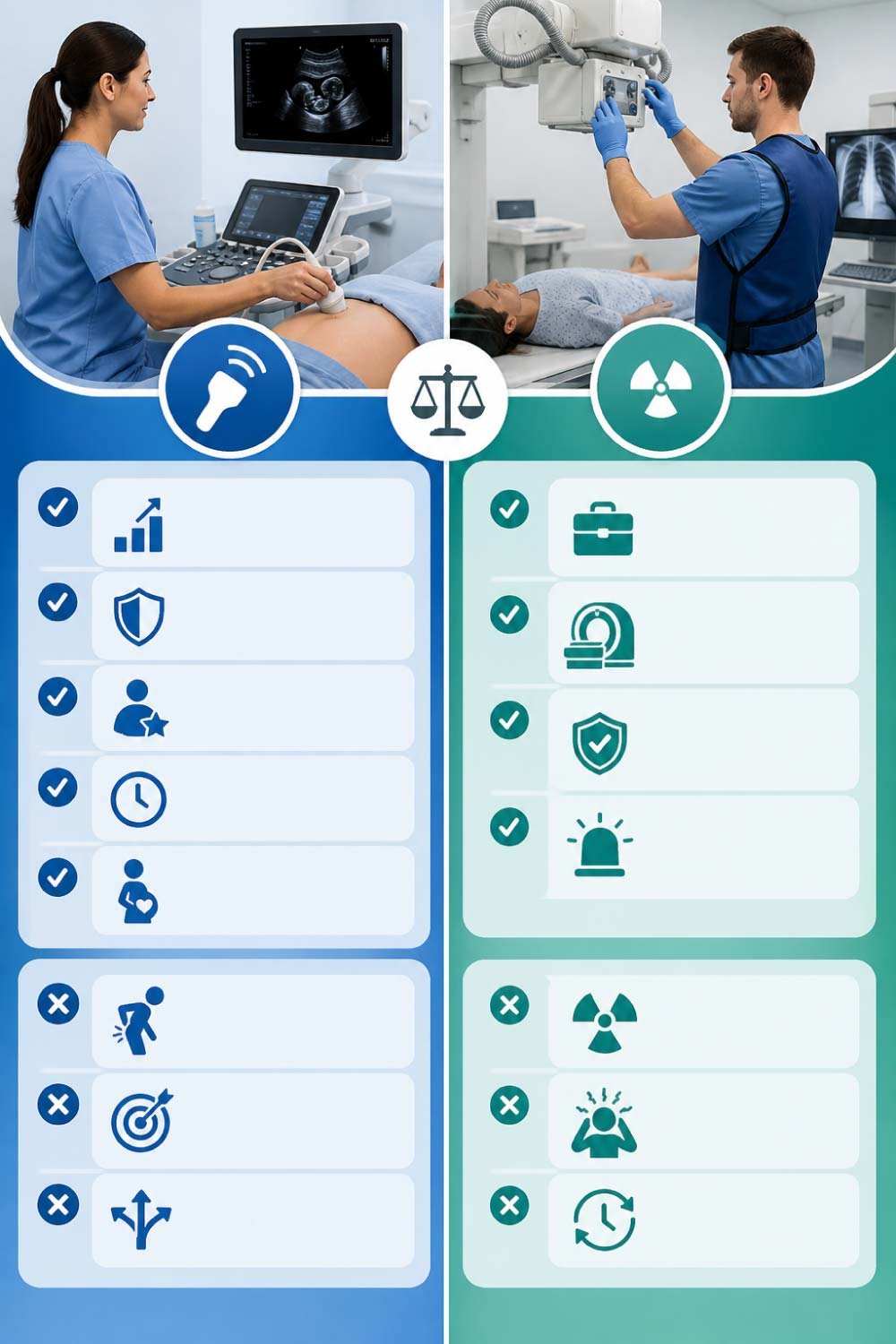
Both Sonography and Radiologic Technology are excellent healthcare career options with strong job demand, good salaries, and long-term stability. The better choice depends on your personality, interests, and preferred working style in the medical imaging field.
If you prefer a safer, non-invasive, and patient-focused role with higher earning potential in specialized areas like cardiac or obstetric imaging, Sonography is a better fit. It offers a calmer environment and strong work-life balance.
On the other hand, if you want a broader medical imaging career with multiple specialization paths such as CT, MRI, and emergency diagnostics, Radiologic Technology provides more variety and long-term flexibility.
Final Insight:
- Sonography = Specialized, patient-centered, higher ultrasound focus
- Radiologic Technology = Broader, technical, and more versatile career path
Both careers are valuable to the healthcare system, and success in either depends on dedication, skill development, and passion for medical imaging.
Also Read:
Conclusion
The healthcare industry continues to grow rapidly, and diagnostic imaging professionals are at the center of this expansion. Whether you choose to become a Sonographer or a Radiologic Technologist, both paths offer rewarding careers with stability, respect, and growth opportunities.
If you are passionate about medical imaging, both careers can lead you to a successful future in modern healthcare.

Zak is a dedicated medical and career writer specializing in sonography, healthcare education, and professional development. Through SonographerSalary.com, he shares in-depth insights on sonographer salaries, education pathways, and career tips to help readers build successful futures in medical imaging. His content combines accuracy with practical, easy-to-understand guidance, empowering students and professionals to make confident, informed career decisions.