
A career as a sonographer is one of the most rewarding in healthcare. Combining patient care with cutting-edge imaging technology, sonographers play a vital role in diagnosing medical conditions. But before entering this career, one of the most important questions is: “What degree do you need to be a sonographer?”
The answer depends on the type of sonography you want to practice, your career goals, and the state or employer requirements. In this comprehensive guide, we will discuss educational pathways, degree options, certification requirements, and tips to pursue a successful sonography career in 2026.
Who Is a Sonographer?
A sonographer, also called an ultrasound technician, is a trained healthcare professional who performs diagnostic imaging using ultrasound technology. Unlike X-rays or CT scans, ultrasound uses high-frequency sound waves to create images of internal organs, blood flow, and tissues.
Sonographers provide critical information to physicians, assisting in diagnosing conditions ranging from heart disease to pregnancy monitoring. They work in hospitals, outpatient clinics, cardiology centers, OB/GYN offices, and even travel assignments.
Types of Sonography Degrees: A Complete Guide
To become a sonographer, formal education from an accredited program is essential. Sonography is a growing healthcare field with high earning potential and rewarding patient care opportunities. Your educational path will directly influence your career options, earning potential, and ability to specialize. Understanding the different degree options can help you make an informed decision for long-term success.
1. Associate Degree in Diagnostic Medical Sonography
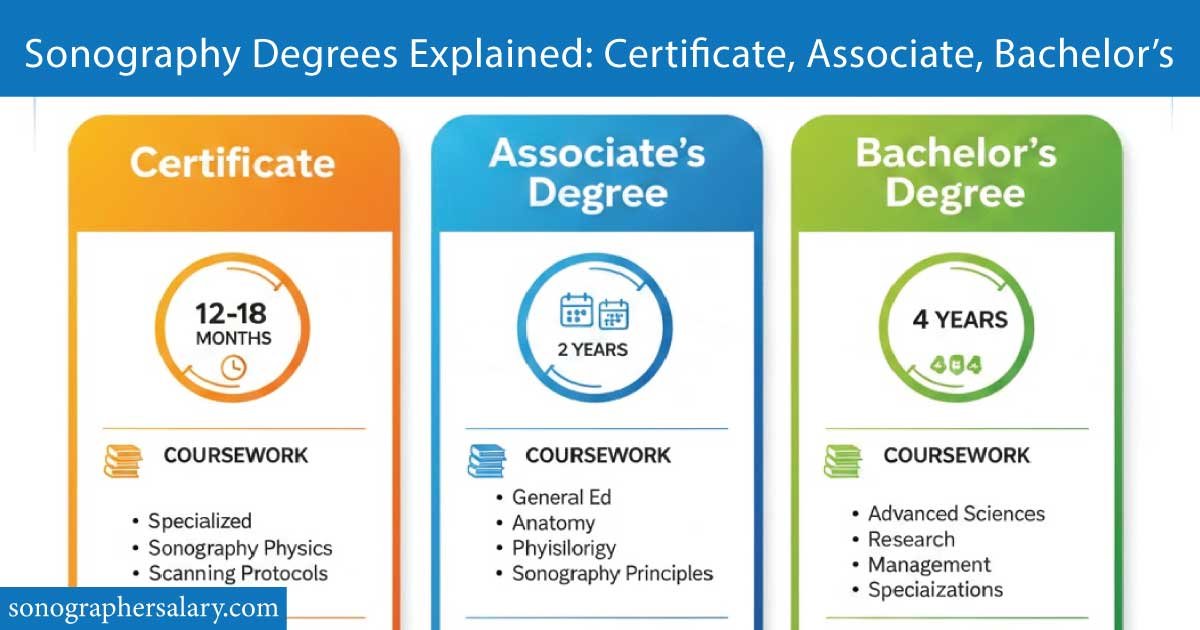
Duration: Typically 2 years
Overview: The associate degree is the most common path for entry-level sonographers. It combines classroom learning with clinical experience, giving students both the theoretical knowledge and practical skills required to start a career quickly. For many students, this is the fastest route to entering the workforce while preparing for certification exams such as RDMS, RDCS, or RVT.
Courses Include:
Anatomy and Physiology: Understanding the structure and function of the human body, organ systems, and tissues.
Medical Terminology: Learning the vocabulary necessary for accurate communication in healthcare settings.
Ultrasound Physics and Instrumentation: Understanding how ultrasound waves create images, as well as operating and maintaining imaging equipment.
Patient Care and Ethics: Developing communication skills, professionalism, and ethical understanding necessary for patient interaction.
Clinical Practicum: Hands-on experience in hospitals, outpatient clinics, or specialty imaging centers under the supervision of experienced sonographers.
Pros:
Shorter duration compared to a bachelor’s degree, allowing faster entry into the workforce.
Lower tuition costs, making it financially accessible for many students.
Prepares students for certification exams, a key requirement for employment.
Offers opportunities to work in hospitals, imaging centers, private practices, or outpatient clinics immediately after graduation.
Cons:
May limit advancement opportunities compared to a bachelor’s degree.
Some specialized roles, leadership positions, or teaching opportunities may require additional education.
Career Tip: Many associate degree graduates choose to pursue certifications in specialties such as OB/GYN, cardiac, or vascular sonography to enhance earning potential and marketability.
💰 Reveal Hidden Insights: How Education Level Affects Sonographer Salary in the USA
2. Bachelor’s Degree in Diagnostic Medical Sonography
Duration: 4 years
Overview: A bachelor’s degree provides a more in-depth education, covering advanced imaging techniques, research methods, and leadership skills. Students who pursue a bachelor’s degree are often preparing for supervisory roles, educator positions, or specialized clinical practices. This path is suited for those who want a strong foundation for long-term career growth and higher earning potential.
Courses Include:
Advanced Sonographic Imaging Techniques: Covers complex imaging modalities, including Doppler, 3D/4D imaging, and specialized scans.
Pathophysiology and Disease Processes: Understanding how diseases affect organs and systems and how they appear on imaging.
Research Methods and Clinical Studies: Learning to interpret medical research, evaluate evidence-based practices, and conduct clinical studies.
Management and Education in Sonography: Preparing for leadership roles, supervising teams, or teaching future sonographers.
Pros:
Opens doors to supervisory roles, clinical coordinators, or educator positions.
Provides higher earning potential over the long term, especially in specialized fields.
Offers a comprehensive understanding of sonography science, patient care, and healthcare management.
Prepares graduates for advanced certifications and specialized practice areas.
Cons:
Longer time commitment compared to an associate degree.
Higher tuition costs and potentially more student debt.
May not be necessary for entry-level clinical positions where an associate degree suffices.
Career Tip: A bachelor’s degree is ideal if you plan to pursue administrative, educational, or research roles within sonography, or if you aim to become a specialized expert in areas like pediatric or fetal echocardiography.
3. Certificate Programs
Duration: 12–18 months
Overview: Certificate programs are designed for healthcare professionals—such as nurses, radiologic technologists, or respiratory therapists—who want to transition into sonography. These programs focus on practical ultrasound skills, with fewer general education courses. They are ideal for those who already have a healthcare background and want a fast-track into sonography.
Courses Include:
Focused training in a particular ultrasound specialty, such as OB/GYN, cardiac, or vascular.
Clinical practicum, allowing hands-on experience under supervision.
Basic patient care, ethics, and professional communication skills.
Pros:
Fast-track program—graduates can enter the workforce quickly.
Ideal for healthcare professionals seeking career advancement or a specialty change.
Focused curriculum directly related to practical sonography skills.
Cons:
Often requires prior healthcare experience or a degree.
Limited exposure to general education courses that bachelor’s or associate programs provide.
May be less flexible if you later want to pursue leadership or academic roles.
Career Tip: Certificate programs are highly effective for experienced medical professionals looking to move into imaging, but students should ensure their program includes CAAHEP accreditation and prepares them for certification exams.
💰 Reveal Hidden Insights: Cardiac Sonographer Pay Scale 2026: What to Expect
Specialized Degrees and Focus Areas
Sonography offers a variety of specialties, allowing students to focus on areas that match their interests and career goals. Specializing can increase job opportunities, earning potential, and professional expertise in high-demand healthcare fields.
1. Cardiac Sonography (Echocardiography)
Cardiac sonography focuses on imaging the heart, detecting cardiac conditions, and assessing heart function. This specialty is in high demand, providing opportunities in hospitals, outpatient clinics, and cardiac centers while preparing students for advanced certification and career growth.
-
Focuses on heart imaging, diagnosing cardiac conditions, and evaluating heart function.
-
Degree options include associate, bachelor’s, or certificate with a cardiac specialization.
-
Certification: RDCS (Registered Diagnostic Cardiac Sonographer).
-
High demand in hospitals, cardiac centers, and outpatient clinics.
2. Vascular Sonography
Vascular sonography specializes in blood vessels and circulation, helping diagnose vascular diseases and assess blood flow. This area requires precise skills and offers strong earning potential, especially in specialized clinics and hospitals where advanced vascular imaging is critical.
-
Focuses on blood vessels, circulation, and blood flow.
-
Certification: RVT (Registered Vascular Technologist).
-
Requires coursework in vascular anatomy, physiology, and pathology.
-
Often higher-paying due to specialization and demand.
3. OB/GYN Sonography
OB/GYN sonography emphasizes prenatal care, fetal development, and reproductive health, helping monitor pregnancies and detect complications. Professionals in this field work closely with expectant mothers, combining technical imaging skills with compassionate patient care.
-
Focuses on prenatal care, fetal development, and reproductive health.
-
Certification: RDMS with OB/GYN specialty.
-
Work settings include OB/GYN clinics, hospitals, and specialty maternity centers.
4. Pediatric or Fetal Echocardiography
Pediatric and fetal echocardiography involves advanced imaging of infants and children, including fetal heart assessments. This specialty requires additional training, high expertise, and precision, making it one of the most rewarding and specialized areas within sonography.
-
Specialized imaging of infants and children, including fetal heart conditions.
-
Often requires additional training and certifications beyond basic programs.
-
High level of expertise is required, making it one of the more specialized and rewarding fields.
Tip: Choosing a specialty during your degree program can give you a head start for certification exams, increase your earning potential, and make you more competitive in the job market.
Accreditation and Why It Matters
Accreditation is critical when selecting a sonography program. It ensures that the curriculum meets industry standards, provides proper clinical experience, and prepares graduates for certification exams.
Key Accrediting Bodies:
CAAHEP (Commission on Accreditation of Allied Health Education Programs): Primary accrediting body for sonography programs.
JRC-DMS (Joint Review Committee on Education in Diagnostic Medical Sonography): Oversees program standards and evaluates educational quality.
Importance of Accreditation:
Eligibility for ARDMS certification.
Increased employability and recognition by healthcare employers.
Ensures adequate clinical competency and hands-on experience.
Provides confidence to students and employers that the program meets national quality standards.
Warning: Enrolling in a non-accredited program can limit your certification eligibility and hinder career growth, even if the program claims to provide training in ultrasound.
💰 Reveal Hidden Insights: 7 Career Mistakes to Avoid as a Diagnostic Sonographer
Certification Requirements
Certification is a key step in a sonographer’s career. It demonstrates professional competency, credibility, and expertise, ensuring employers trust your skills. Holding certification often leads to better job opportunities, higher pay, and access to specialized or leadership roles.
Popular ARDMS Certifications:
RDMS (Registered Diagnostic Medical Sonographer): General sonography.
RDCS (Registered Diagnostic Cardiac Sonographer): Cardiac specialty.
RVT (Registered Vascular Technologist): Vascular specialty.
RMSKS (Registered Musculoskeletal Sonographer): Musculoskeletal specialty.
Certification Process:
Graduate from an accredited sonography program.
Complete the required clinical experience hours.
Pass both written and practical exams.
Benefits of Certification:
Higher pay and more job opportunities.
Ability to work in hospitals, clinics, and specialized centers.
Access to advanced roles such as lead sonographer, clinical coordinator, or educator.
Skills Required for a Successful Sonographer Career
Success in sonography depends not only on formal education but also on mastering a combination of technical, analytical, interpersonal, and physical skills. These abilities ensure accurate imaging, patient safety, and effective collaboration with healthcare teams.
Technical Skills:
-
Operating ultrasound equipment efficiently and safely.
-
Adjusting imaging settings for optimal clarity.
-
Measuring organs, tissues, and blood flow accurately.
Analytical Skills:
-
Distinguishing normal from abnormal anatomy.
-
Understanding disease patterns and variations.
-
Recording, interpreting, and communicating results to physicians.
Interpersonal Skills:
-
Compassionate care for patients during scans.
-
Clear communication with patients and healthcare teams.
-
Managing anxious or sensitive patients effectively.
Physical Skills:
-
Standing for long periods during scanning procedures.
-
Assisting patients with mobility limitations.
-
Coordinating precise hand-eye movements for accurate imaging.
Work Settings and Degree Impact
Your degree type, certifications, and clinical experience directly influence your work environment, responsibilities, and opportunities for career advancement. Understanding how each setting operates helps sonographers choose the right path for professional growth, stability, and long-term earning potential.
1. Hospitals
Hospitals often prefer associate or bachelor’s degree holders with multiple certifications. Working in a hospital exposes sonographers to a wide range of cases, including complex or emergency scans, offering valuable experience in diverse patient populations while providing opportunities for specialization.
-
Often prefer associate or bachelor’s degree holders; multiple certifications are advantageous.
2. Outpatient Centers
Outpatient imaging centers typically hire associate degree graduates and provide predictable work schedules. These centers allow sonographers to focus on routine imaging procedures, maintain a consistent patient load, and balance professional responsibilities with personal life more easily than hospital settings.
-
Frequently hire associate degree graduates; typically offer predictable schedules.
3. Private Clinics
Private clinics may accept certificate or associate degree holders, depending on the specialty and patient volume. These clinics often focus on specific areas like OB/GYN or cardiac imaging, providing sonographers with a more specialized work environment and closer patient interactions.
-
May accept certificate or associate degree holders depending on specialty.
4. Travel Sonography
Travel sonography positions usually require prior experience and certifications. These roles allow sonographers to work in different cities or states, often with higher pay and flexible assignments. Travel positions are ideal for professionals seeking adventure, variety, and rapid career advancement.
-
Usually requires certification and prior experience; offers high pay and flexible assignments.
5. Career Insight
A bachelor’s degree may open doors to leadership, educator, or administrative roles, while an associate or certificate degree is sufficient for most clinical positions. Combining any degree with specialty certifications enhances earning potential, career flexibility, and long-term professional growth.
-
A bachelor’s degree may open doors to leadership or educator roles, while an associate or certificate is sufficient for most clinical positions. Combining a degree with specialty certifications maximizes earning potential and career flexibility.
💰 Reveal Hidden Insights: Pediatric Sonographer Salary by Experience Level
Salary Overview by Degree Level
Education impacts not just eligibility but also salary:
| Degree Level | Average Salary 2026 |
|---|---|
| Certificate Program | $65,000 – $80,000 |
| Associate Degree | $70,000 – $90,000 |
| Bachelor’s Degree | $80,000 – $110,000 |
Specialization, certifications, and location also affect pay. For example, cardiac or vascular sonographers with a bachelor’s degree may earn $100,000+ annually.
Job Outlook for Sonographers
The demand for sonographers continues to grow as healthcare needs expand and imaging technology advances. Ultrasound is a non-invasive, safe, and versatile diagnostic tool, making sonographers increasingly valuable in hospitals, outpatient centers, and specialty clinics. The aging population also drives higher demand, as older adults require more diagnostic imaging to monitor heart, vascular, and abdominal health.
1. Projected Job Growth:
The Bureau of Labor Statistics estimates a 17% growth in sonography jobs over the next decade, which is much faster than the average for all occupations. This strong growth reflects both the increasing use of ultrasound in routine diagnostics and the rising need for specialized imaging in areas like cardiac care, obstetrics, and pediatric diagnostics.
2. High-Demand Specialties:
Some specialties in sonography are particularly sought after. Cardiac sonographers, for example, play a critical role in detecting heart disease and monitoring patients with cardiovascular conditions. Vascular sonographers are essential in diagnosing blood flow issues, aneurysms, and vascular blockages. Pediatric sonographers provide critical imaging for infants and children, while OB/GYN sonographers are central to prenatal care and maternal health monitoring. Professionals trained in these high-demand specialties often enjoy higher salaries and better job stability.
3. Job Stability:
Sonography offers strong employment security. Hospitals, outpatient imaging centers, and private clinics consistently require skilled sonographers to operate ultrasound equipment, interpret images, and assist physicians with diagnoses. Because diagnostic imaging is integral to patient care, sonographers are less affected by economic fluctuations compared to some other healthcare positions.
A strong degree program combined with certification significantly enhances your prospects in this growing field. Accredited programs ensure you gain the knowledge, technical skills, and clinical experience needed to succeed. Certification through ARDMS, CCI, or other recognized organizations demonstrates your competency to employers and opens doors to specialized roles, leadership positions, and higher-paying opportunities.
Tips for Choosing the Right Degree Program
Selecting the right sonography program is crucial for entering the field prepared and confident. Here are several factors to consider:
1. Check Accreditation:
Always verify that the program is accredited by CAAHEP or JRC-DMS. Accreditation ensures the curriculum meets industry standards and qualifies you for certification exams, which are often required for employment.
2. Consider Specialization:
Choose a program that offers coursework or clinical rotations aligned with your career goals. If you’re interested in cardiac imaging, OB/GYN, or vascular sonography, select a program that provides strong training in that specialty.
3. Look for Clinical Rotations:
Hands-on experience is essential. Programs that include supervised clinical training allow you to practice scanning real patients, work with advanced equipment, and develop confidence in your skills before graduation.
4. Evaluate Program Length and Cost:
Balance the time commitment and tuition with your career objectives. Associate degrees typically take two years, bachelor’s degrees four years, and certificate programs 12–18 months for healthcare professionals. Choose a program that fits your schedule and financial situation while providing comprehensive training.
5. Assess Certification Preparation:
Confirm that the program prepares you for ARDMS or other relevant certification exams, including both theoretical knowledge and practical skills. Certification is a critical step in securing employment and advancing your career.
💰 Reveal Hidden Insights: How to Switch from Nursing to Sonography Successfully
Conclusion
So, what degree do you need to become a sonographer? The answer depends on your goals and background. An associate degree is the most common path, providing a solid foundation and eligibility for entry-level roles. A bachelor’s degree offers advanced knowledge, leadership opportunities, and higher earning potential. A certificate program is ideal for healthcare professionals seeking a fast-track transition into sonography.
Regardless of the degree, accreditation, clinical experience, and certification are essential for success. Sonography is a rewarding career with strong demand, competitive salaries, and numerous opportunities for specialization. Professionals in this field not only operate sophisticated imaging technology but also make a meaningful impact on patient care daily.
If you are interested in healthcare, enjoy working with technology, and want a career that combines patient interaction with advanced medical imaging, earning a degree in diagnostic medical sonography is a smart and future-proof choice. With the right education, hands-on experience, and certification, you can enter this growing field and build a successful, fulfilling career that offers stability, professional growth, and the satisfaction of helping others.
FAQs:
What is the best degree for sonography?
The best degree depends on your goals. An associate degree is most common and prepares you for entry-level roles quickly. A bachelor’s degree provides advanced training, leadership opportunities, and higher earning potential, while certificate programs are ideal for healthcare professionals seeking a fast-track path.
What is needed for a sonography degree?
To pursue a sonography degree, you need a high school diploma or GED with strong science coursework in biology, anatomy, physics, and math. Accredited programs also require clinical training, technical skills, and sometimes prior healthcare experience for certificate pathways. Soft skills like communication and attention to detail are essential.
What is the fastest way to become a sonographer?
The fastest route is a certificate program designed for healthcare professionals or an associate degree in sonography. These programs typically take 1–2 years, include clinical rotations, and prepare you for certification exams, allowing you to enter the workforce quickly while gaining hands-on experience.
Is sonography a hard career?
Sonography can be challenging because it combines science, technology, patient care, and scanning technique. Students must master anatomy, ultrasound physics, machine operation, and image interpretation. While difficult, consistent practice, proper training, and clinical exposure make it achievable and highly rewarding for those interested in medical imaging.
Can a nurse become a sonographer?
Yes, nurses can transition to sonography through certificate programs designed for healthcare professionals. Their clinical background provides a strong foundation, allowing them to focus on ultrasound-specific skills, complete clinical rotations, and become eligible for ARDMS or CCI certification in as little as 12–18 months.
How many years does a sonographer take?
The time varies by program: associate degrees take 2 years, bachelor’s degrees 4 years, and certificate programs 12–18 months. Clinical rotations and certification exams add additional months. On average, most students complete all requirements in 2–3 years, entering the workforce efficiently with credentials.
Is sonography easier than nursing?
Sonography and nursing require different skill sets. Sonography focuses on diagnostic imaging, technical precision, and patient communication, while nursing emphasizes direct patient care, medication administration, and broader clinical responsibilities. Neither is “easy,” but sonography may involve less shift work and broader specialization options.
Which type of sonographer gets paid most?
Cardiac, vascular, and travel sonographers tend to earn the highest salaries due to specialized skills and demand. Travel sonographers often receive additional incentives, while advanced pediatric and OB/GYN specialists can also command higher pay. Certification in high-demand specialties increases earning potential significantly.

Zak is a dedicated medical and career writer specializing in sonography, healthcare education, and professional development. Through SonographerSalary.com, he shares in-depth insights on sonographer salaries, education pathways, and career tips to help readers build successful futures in medical imaging. His content combines accuracy with practical, easy-to-understand guidance, empowering students and professionals to make confident, informed career decisions.