
Radiologic technology has become an essential part of modern healthcare. X‑ray technicians—or radiologic technologists—play a vital role in diagnosing injuries and illnesses by producing high‑quality medical images.
If you are curious about what an X‑ray technician does, how much they earn, what education is required, and what career paths exist,
this guide will walk you through everything you need to know.
Who Is an X‑Ray Technician? (Definition & Role)
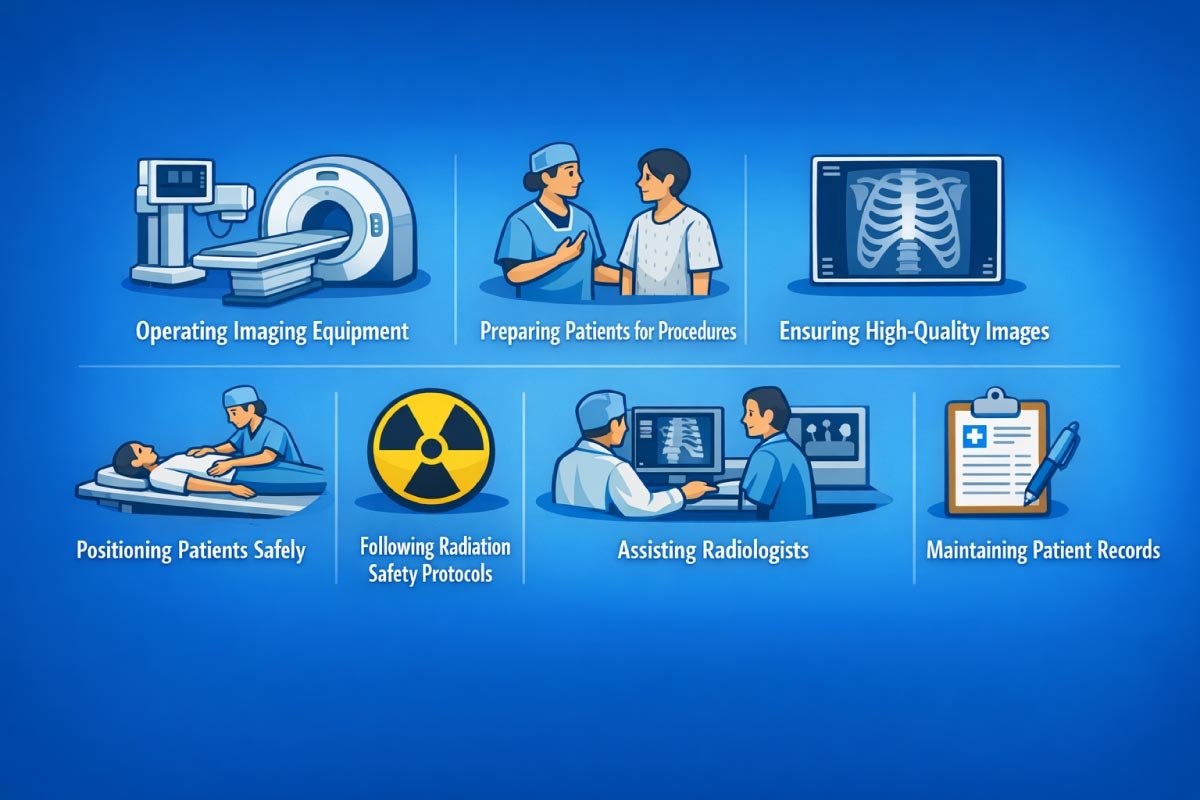
X‑ray technicians play a vital role in modern healthcare by creating diagnostic images that assist doctors in evaluating patient conditions.
They combine technical expertise with patient care, ensuring accurate imaging while maintaining safety standards in medical environments.
Core Responsibilities
X‑ray technicians carry out essential tasks that blend technical expertise with patient care.
Their duties focus on capturing accurate diagnostic images while maintaining safety standards, preparing patients properly, and supporting radiologists.
Precision, communication, and adherence to protocols are key to effective performance in this critical healthcare role.
-
Operating imaging equipment (X‑ray machines, computed tomography [CT] scanners)
-
Preparing patients for imaging procedures
-
Ensuring high‑quality images for accurate diagnosis
-
Positioning patients and equipment safely
-
Following radiation safety protocols
-
Assisting radiologists with procedures
-
Maintaining accurate patient records
The role is a mix of technical skills, patient interaction, and safety protocol adherence.
What Does an X‑Ray Technician Do? (Daily Tasks)
X‑ray technicians perform a variety of tasks each day that combine technical skill, patient care, and safety.
Their work ensures accurate diagnostic images, smooth workflow in imaging departments, and proper radiation protection.
They coordinate with patients and medical staff to support efficient and safe diagnostic procedures.
-
Greeting and positioning patients
-
Verifying patient medical history and imaging orders
-
Adjusting machines to capture the correct views
-
Protecting patients and themselves from unnecessary radiation
-
Processing digital images for physician review
-
Communicating results to radiologists
-
Assisting with portable X‑ray procedures in emergency rooms or patient wards
Education Requirements: How to Become an X‑Ray Technician
Becoming an X‑ray technician combines formal education, practical training, and professional certification.
This career demands strong science and math foundations, hands-on clinical experience, and adherence to regulatory standards.
Following a structured pathway ensures that aspiring technologists develop the technical skills, safety knowledge, and patient-care abilities needed to succeed in medical imaging.
1. High School Preparation
A high school diploma or GED is the first step toward an X‑ray technician career.
Students should focus on science courses such as biology, chemistry, and physics, along with mathematics.
Strong performance in these subjects builds a foundation for understanding human anatomy, radiation principles, and imaging technology, all critical for success in further radiologic education.
2. Accredited Radiologic Technology Programs
Enrollment in an accredited radiologic technology program is essential. Most programs are offered at community colleges or technical schools and award an Associate’s Degree.
A smaller number provide a Bachelor’s Degree option.
Accreditation ensures the curriculum meets industry standards, covering imaging procedures, safety protocols, and patient care techniques, which prepare students for professional practice.
3. Core Coursework and Skills Development
During the program, students study anatomy, physiology, radiation physics, and imaging techniques.
Courses also emphasize patient positioning, image evaluation, and radiation safety. Practical labs allow students to apply knowledge in controlled settings.
This combination of theory and hands-on practice ensures graduates are competent in operating X-ray equipment and providing quality patient care.
4. Clinical Training and Internships
Hands-on clinical experience is a crucial component. Students rotate through hospitals, clinics, or diagnostic centers, observing and performing imaging procedures under supervision.
Clinical training develops technical proficiency, professional communication, and real-world problem-solving skills.
It allows students to gain confidence in patient interactions while ensuring they meet the standards required for certification and employment.
5. Certification and Licensure Requirements
Most X‑ray technicians pursue certification through the American Registry of Radiologic Technologists (ARRT).
Certification verifies knowledge and competence in radiologic technology. Additionally, many states require a license to practice.
Meeting these requirements involves passing exams, completing continuing education, and adhering to professional standards, ensuring safe, high-quality imaging services in clinical settings.
Certification & Licensure Explained
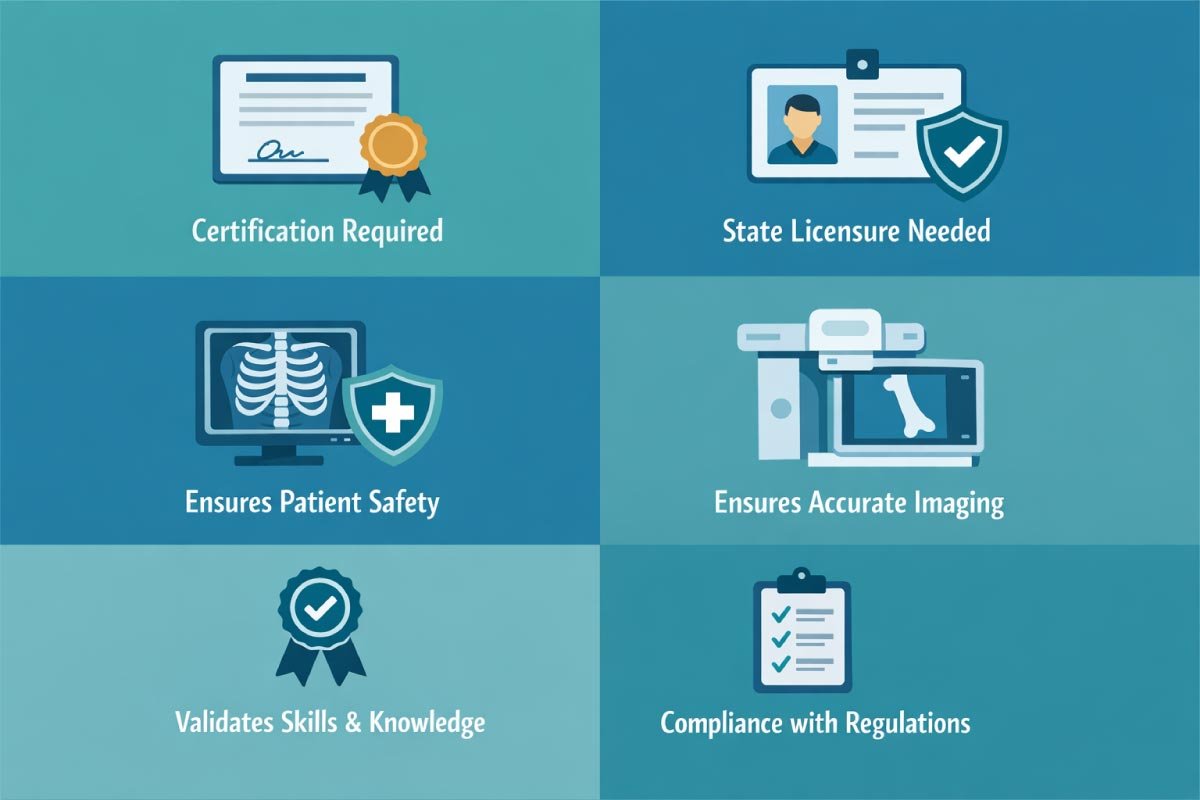
X‑ray technicians must meet professional standards to practice safely and effectively.
Certification and licensure demonstrate their knowledge, technical skill, and adherence to safety protocols.
These credentials protect patients, ensure accurate imaging, and validate the technician’s qualifications in a regulated healthcare environment.
ARRT Certification
The American Registry of Radiologic Technologists (ARRT) certification is a key credential for X‑ray technicians.
It validates professional knowledge, technical skills, and ethical standards.
Achieving ARRT certification ensures that technicians are prepared to perform imaging procedures safely and accurately, meeting national standards for patient care.
-
Candidates must complete an accredited program.
-
Pass a national certification exam.
-
Meet ethical requirements.
State Licensure
State licensure ensures X‑ray technicians meet regional regulatory standards for safe and effective practice.
Requirements differ by state, often building on national certification. Licensure protects patients, upholds professional accountability,
and may include additional exams or ongoing education to maintain current knowledge and skills in radiologic technology.
-
Varies by state; most require ARRT certification.
-
Some states require additional exams or continuing education.
Skills You Need
X‑ray technicians must combine technical proficiency with strong interpersonal skills.
Success depends on operating imaging equipment safely, understanding anatomy, and producing high-quality images, while also communicating effectively, showing empathy, and thinking critically.
These skills ensure accurate diagnostics, patient comfort, and smooth collaboration within healthcare teams.
Technical Skills
-
Mastery in imaging equipment
-
Radiation safety
-
Knowledge of anatomy and physiology
-
Computer literacy for digital imaging
Soft Skills
-
Excellent communication
-
Patient care and empathy
-
Critical thinking
-
Attention to detail
X‑Ray Technician Salary Guide
X‑ray technician salaries depend on factors such as geographic location, level of experience, and type of employer.
Understanding average earnings and potential growth helps professionals make informed career decisions and negotiate effectively.
Compensation reflects skill, certifications, and the demands of various healthcare settings.
X‑Ray Technician Salary Range (Annual)
Table 1 highlights the typical annual salary ranges for X‑Ray technicians in the U.S., based on experience and specialization.
Salaries increase with years of practice and advanced skills, reflecting the growing expertise and responsibilities of the role.
Figures represent industry averages and may vary by location and employer.
| Experience Level | Estimated Salary Range (U.S.) |
|---|---|
| Entry‑Level (0–2 years) | $45,000 – $55,000 |
| Mid‑Level (3–5 years) | $55,000 – $65,000 |
| Experienced (5–10 yrs) | $65,000 – $75,000 |
| Senior / Specialized | $75,000+ |
Source: Industry averages; individual salaries may vary.
Key Factors That Affect Salary:
-
Geographic location
-
Type of employer (hospital vs. clinic)
-
Additional certifications (e.g., CT, MRI)
-
Years of experience
X‑Ray Technician Salary by Setting
X‑ray technician pay can vary significantly depending on the healthcare setting.
Hospitals, outpatient centers, clinics, and specialized imaging facilities each offer different salary ranges based on patient volume, complexity of procedures, and regional demand.
Understanding these differences helps professionals plan their career paths and maximize earning potential.
Average Salaries by Workplace Setting
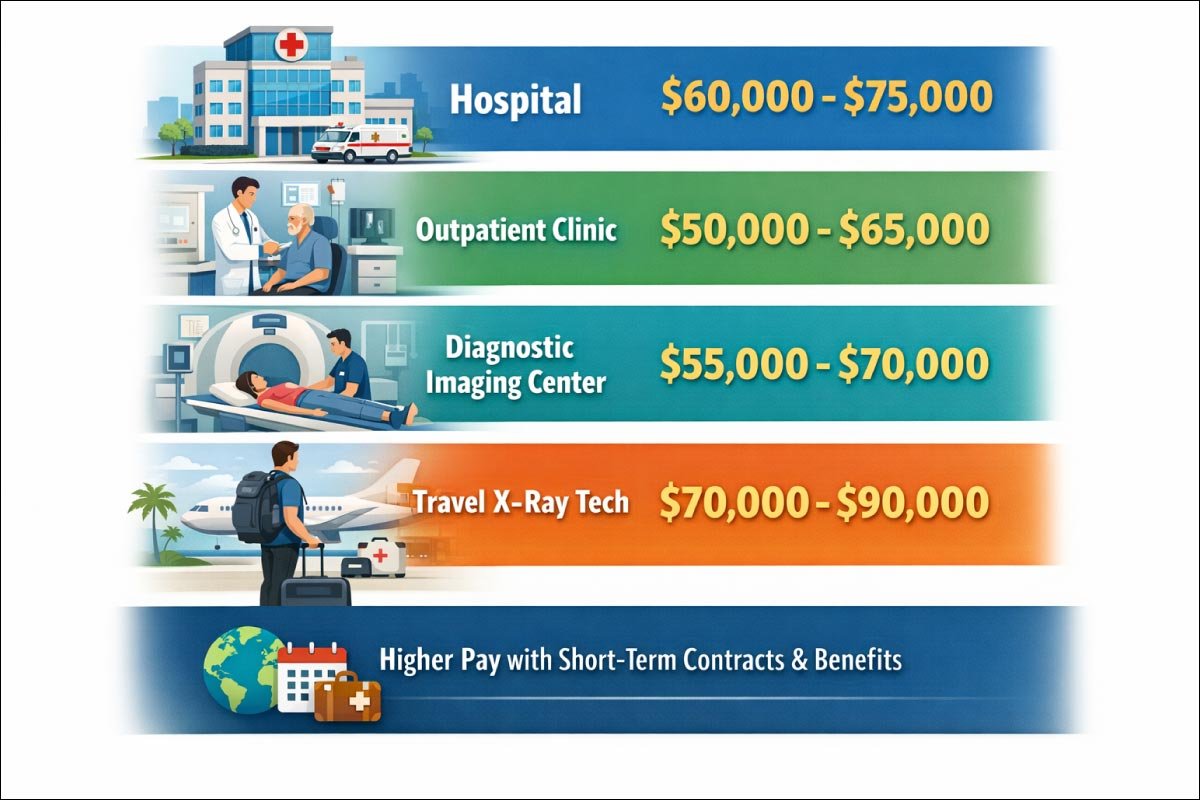
Table 2 presents the average salaries of X‑Ray technicians across different workplace settings.
Compensation varies depending on the work environment, responsibilities, and demand.
Notably, travel X‑Ray technologists tend to earn higher pay due to short-term contracts, flexibility, and added benefits, reflecting the specialized nature of their assignments.
| Workplace Setting | Approx. Average Salary |
|---|---|
| Hospital | $60,000 – $75,000 |
| Outpatient Clinic | $50,000 – $65,000 |
| Diagnostic Imaging Center | $55,000 – $70,000 |
| Travel X‑Ray Tech | $70,000 – $90,000 |
Travel X‑ray technologists often earn higher pay due to short‑term contracts and benefits.
Certification & Specialization Options
X‑ray technicians can advance their careers by pursuing specialized certifications, which demonstrate expertise in areas like CT, MRI, mammography, or interventional radiology.
Additional credentials can improve job prospects, expand clinical responsibilities, and increase earning potential,
while ensuring technicians stay current with evolving imaging technologies and professional standards.
Common Specializations
X‑ray technicians can choose specialized fields to expand their expertise and career opportunities.
Each specialization focuses on advanced imaging techniques, requiring additional training and certification.
Pursuing these areas allows technicians to work with complex procedures, contribute to more precise diagnostics, and often earn higher salaries.
-
Computed Tomography (CT)
-
Magnetic Resonance Imaging (MRI)
-
Mammography
-
Bone Densitometry
-
Cardiovascular Interventional Radiography
These require additional training and exams but can significantly increase job prospects and salary.
Career Path & Advancement Opportunities
Radiologic technology offers multiple pathways for growth, from specializing in advanced imaging techniques to moving into supervisory, educational, or administrative roles.
Career advancement depends on experience, additional certifications, and continuing education.
Exploring these opportunities allows X‑ray technicians to expand responsibilities, increase earning potential, and shape long-term professional development.
Career Progression Chart
This chart outlines typical career advancement paths for X‑Ray technicians and radiologic professionals.
As experience and expertise grow, individuals can move into specialized imaging roles, supervisory positions, or educational and administrative careers.
Many professionals also pursue advanced modalities, allowing for greater responsibility, higher pay, and diverse opportunities within medical imaging.
| Career Stage | Possible Next Step |
|---|---|
| X‑Ray Technician | CT / MRI Specialist |
| Radiologic Technologist | Lead Technologist / Supervisor |
| Experienced Technologist | Imaging Department Manager |
| Senior Professional | Educator / Clinical Trainer |
| Advanced Practitioner | Radiologist Assistant / Advanced Modality Expert |
Many professionals transition into teaching, administrative roles, or advanced imaging specialties.
Work Environment & Schedule
X‑ray technicians perform their duties in diverse healthcare settings, adapting to different patient volumes, equipment, and team structures.
Their work environment influences daily tasks, professional interactions, and safety protocols.
Flexible scheduling may be required to meet patient needs, including evenings, weekends, and on-call shifts in emergency or specialized care settings.
-
Hospitals
-
Diagnostic imaging centers
-
Physician offices
-
Urgent care clinics
-
Research facilities
Schedules can include evenings, nights, weekends, and on‑call hours, especially in emergency care environments.
Read More:
Pros and Cons of Being an X‑Ray Technician
A career as an X‑ray technician offers rewarding opportunities but also presents challenges.
Understanding the benefits and drawbacks helps aspiring professionals make informed decisions.
Balancing patient care, technical responsibilities, and work-life demands is key to long-term satisfaction and success in this healthcare field.
Pros & Cons
highlights the key pros and cons of working as an X‑Ray technician.
While the role offers steady demand, good salary potential, and opportunities to specialize, it also involves physical demands, shift work, and controlled exposure to radiation.
Many professionals find the personal and professional rewards outweigh the challenges.
| Pros | Cons |
|---|---|
| Steady demand for healthcare jobs | Exposure to radiation (controlled risk) |
| Good salary potential | Physically demanding (standing, lifting) |
| Variety of work environments | Shifts and on‑call schedules |
| Opportunities to specialize | Stressful in emergency settings |
| Ability to help patients directly | Repetitive procedures in some settings |
Overall, many find the rewards—both personally and professionally—worth the challenges.
Read More:
Radiation Safety and Patient Care
Ensuring safety is a critical part of an X‑ray technician’s role. They must carefully manage radiation exposure, follow established protocols, and provide clear guidance to patients.
Combining technical precision with compassionate communication helps protect both patients and staff while maintaining high-quality imaging standards.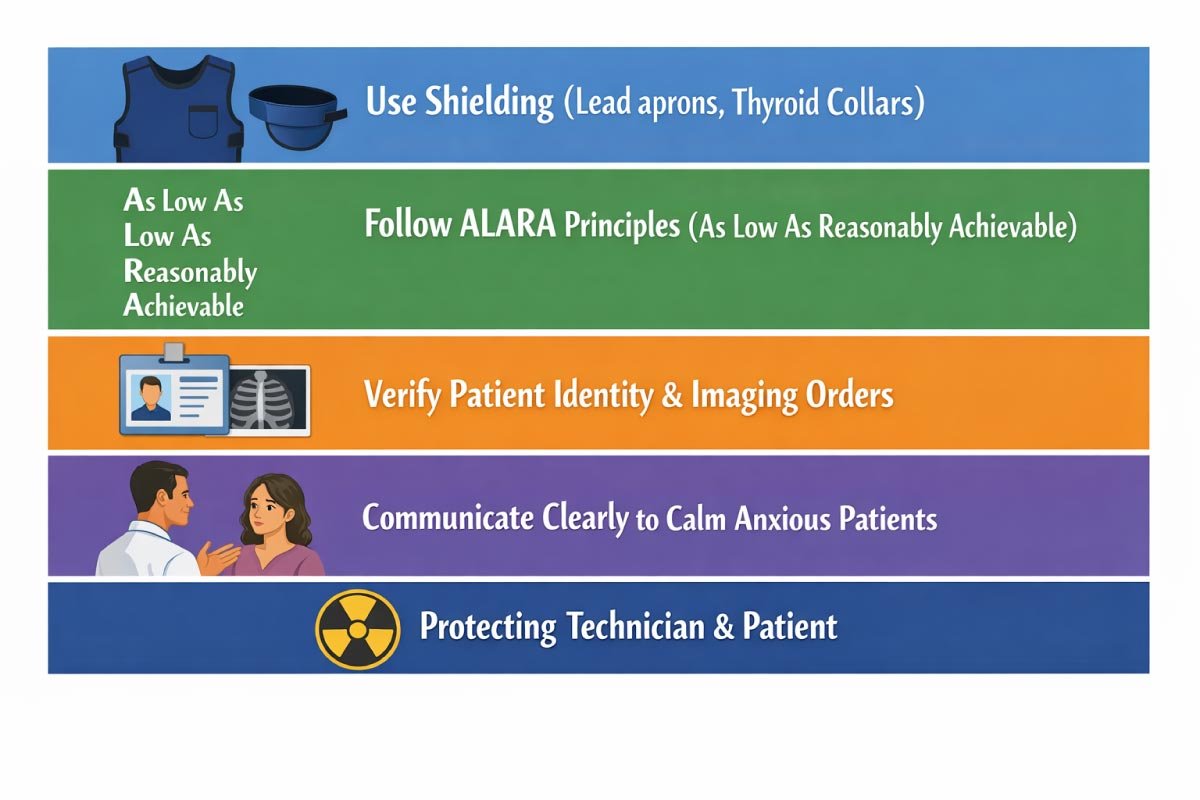
-
Use shielding (lead aprons, thyroid collars)
-
Follow ALARA principles (As Low As Reasonably Achievable)
-
Verify patient identity and imaging orders
-
Communicate clearly to calm anxious patients
Understanding radiation safety protects both technician and patient.
Read More:
Job Outlook (Future Demand)
The demand for X‑ray technicians is projected to grow steadily as healthcare needs increase.
Advances in imaging technology, an aging population, and expanding outpatient services drive this trend.
Understanding job prospects helps aspiring technicians plan their careers and anticipate opportunities in a stable, in-demand healthcare profession.
-
Aging population requiring diagnostic imaging
-
Expanded use of imaging technologies
-
Growth of outpatient imaging centers
Radiologic technology remains a stable and promising healthcare career.
Read More:
Tips for Success
Becoming a successful X‑ray technician requires dedication, continuous learning, and practical experience.
Excelling in clinical rotations, pursuing certifications, staying current with technology, and mastering patient communication are all essential.
These strategies help technicians deliver accurate imaging, ensure patient safety, and advance their careers in a competitive healthcare environment.
-
Choose an accredited program (ARRT‑recognized)
-
Complete clinical rotations with excellence
-
Seek additional certifications
-
Stay updated on technology and safety guidelines
-
Develop strong patient communication skills
Conclusion
Being an X‑ray technician is a rewarding career that blends technical expertise with direct patient care.
With a solid education, proper certification, and a passion for healthcare, you can build a stable and fulfilling career in medical imaging.
Whether you are just starting your journey or exploring career options, the path of a radiologic technologist offers strong job prospects, competitive salaries, and opportunities for advancement.
Read More:

Zak is a dedicated medical and career writer specializing in sonography, healthcare education, and professional development. Through SonographerSalary.com, he shares in-depth insights on sonographer salaries, education pathways, and career tips to help readers build successful futures in medical imaging. His content combines accuracy with practical, easy-to-understand guidance, empowering students and professionals to make confident, informed career decisions.