

Oxygen masks are essential medical devices designed to deliver supplemental oxygen to individuals experiencing respiratory distress, low oxygen levels, or other medical conditions requiring oxygen therapy. They ensure proper oxygenation of the blood, improving patient health outcomes.
These masks are widely used in hospitals, emergency services, home care, and even industrial settings where high oxygen environments are necessary. Oxygen masks work by connecting to oxygen cylinders, concentrators, or other delivery systems.
The mask covers the nose and mouth, allowing patients to breathe oxygen-enriched air. Selecting the correct mask type and size is crucial for comfort, efficiency, and safety. Incorrect fit can result in inadequate oxygen delivery or discomfort, affecting treatment effectiveness.
Oxygen Mask Definition and Key Features
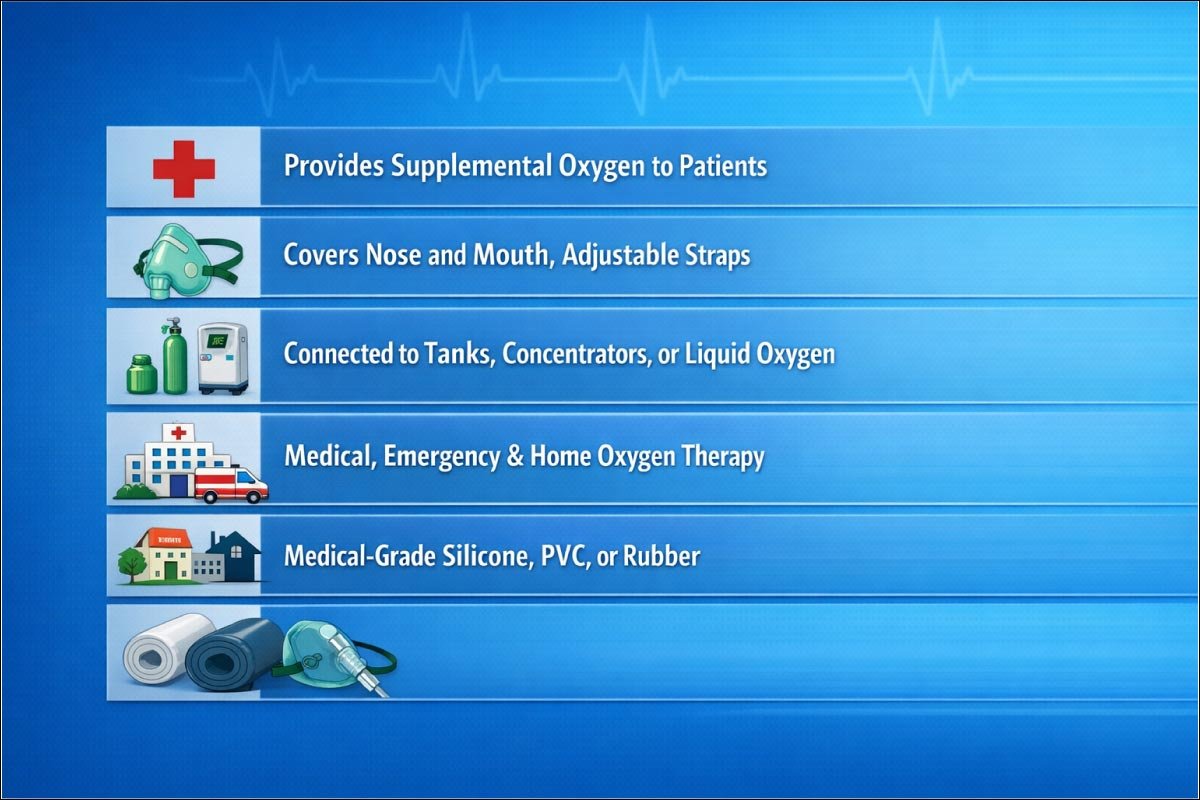
Oxygen masks are essential medical devices designed to provide supplemental oxygen to patients in various settings, including hospitals, emergencies, and home care.
They feature durable, medical-grade materials and adjustable designs to ensure comfort and efficiency. The table below highlights their key features, purposes, and oxygen delivery methods.
| Feature | Description |
|---|---|
| Purpose | To deliver supplemental oxygen to patients in medical or emergency settings |
| Design | Covers nose and mouth, often with adjustable straps |
| Oxygen Source | Connected to oxygen cylinders, concentrators, or liquid oxygen systems |
| Usage | Medical, emergency, industrial, or home oxygen therapy |
| Material | Medical-grade silicone, PVC, or rubber for durability and safety |
Types of Oxygen Masks
Oxygen masks are essential devices for delivering oxygen effectively to patients in medical and emergency settings. They differ in design, oxygen concentration, and intended use.
Choosing the appropriate mask ensures optimal therapy, patient comfort, and safety.
1. Simple Oxygen Mask
A simple oxygen mask is lightweight and transparent, covering both the nose and mouth. Small side holes allow exhaled air to escape, ensuring safe breathing.
It is commonly used for patients requiring moderate oxygen levels (5–10 L/min). While easy to apply, it may become uncomfortable during long-term use.
Features:
-
Moderate oxygen delivery
-
Adjustable straps
-
Suitable for short-term therapy
2. Venturi Mask
The Venturi mask is designed for accurate and controlled oxygen delivery. Using color-coded adapters, it mixes oxygen with room air to provide specific concentrations (24–60%).
This mask is ideal for patients with chronic respiratory conditions such as COPD, where maintaining precise oxygen levels is crucial for safe therapy.
Features:
-
Precise oxygen concentration control
-
Color-coded adapters for different percentages
-
Suitable for long-term respiratory care
3. Non-Rebreather Mask
Non-rebreather masks provide high oxygen concentrations, up to 100%. Equipped with a reservoir bag and one-way valves, they prevent exhaled air from mixing with incoming oxygen.
These masks are primarily used in emergency situations such as trauma, cardiac arrest, or severe hypoxia, where rapid and maximum oxygen delivery is critical.
Features:
-
High-flow oxygen delivery
-
One-way valve for maximum efficiency
-
Emergency and critical care use
4. Partial Rebreather Mask
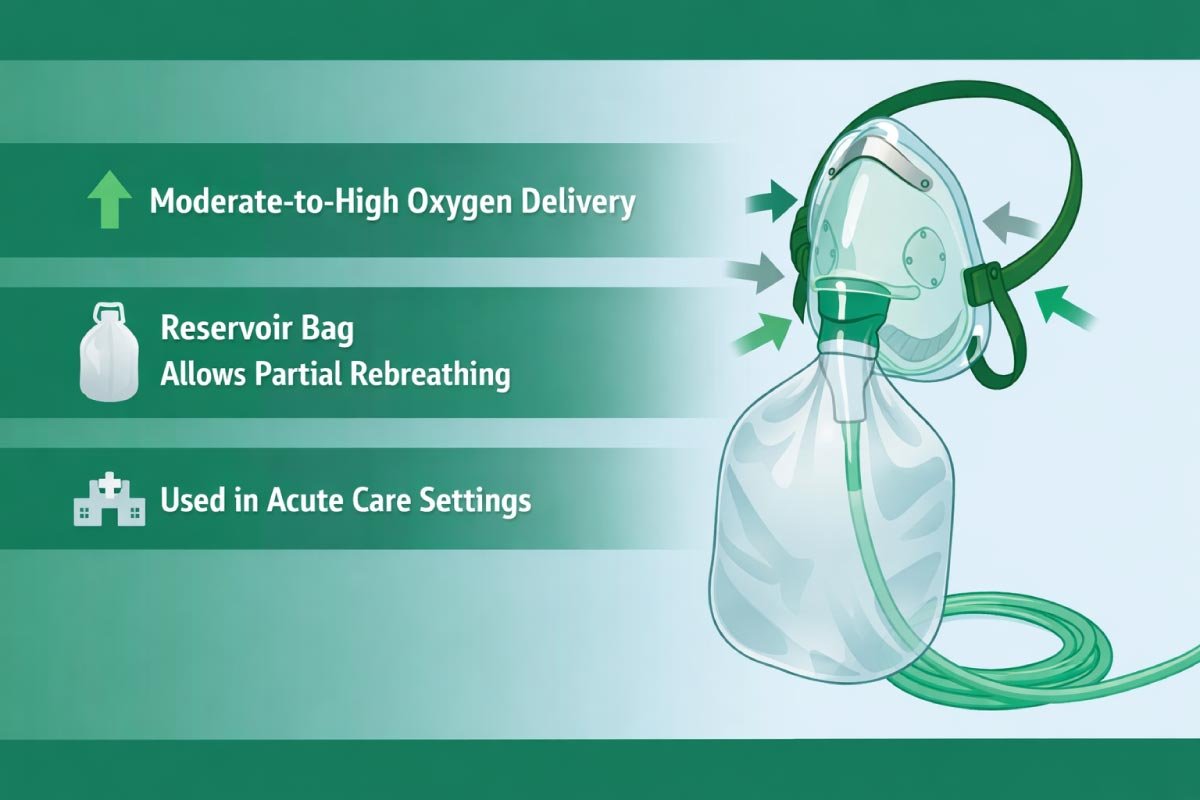
Partial rebreather masks resemble non-rebreather masks but allow some exhaled air to mix with incoming oxygen. They feature a reservoir bag without one-way valves, delivering oxygen concentrations around 60–90%.
These masks are suitable for patients requiring high oxygen levels without complete separation from exhaled air.
Features:
-
Moderate-to-high oxygen delivery
-
Reservoir bag allows partial rebreathing
-
Used in acute care settings
5. Pediatric Oxygen Mask
Pediatric oxygen masks are smaller and specifically designed for children and infants. They provide a proper seal to prevent oxygen leakage while ensuring comfort.
Depending on the child’s needs, pediatric masks can be simple, Venturi, or non-rebreather types, delivering safe and effective oxygen therapy.
Features:
-
Child-friendly size and shape
-
Lightweight and transparent
-
Adjustable straps for comfort
6. High-Flow Oxygen Mask
High-flow oxygen masks deliver oxygen at very high flow rates, often exceeding 15 L/min. They are primarily used in intensive care units for patients experiencing severe respiratory distress.
Certain models include heating and humidification features to enhance comfort and prevent airway dryness during prolonged use.
Features:
-
High-flow oxygen delivery
-
Humidification optional
-
Used in ICU or severe respiratory cases
7. CPAP/BiPAP Mask
CPAP (Continuous Positive Airway Pressure) and BiPAP (Bilevel Positive Airway Pressure) masks deliver oxygen combined with pressurized airflow. They are commonly used for sleep apnea, chronic respiratory failure, or acute respiratory distress, providing both oxygenation and airway support for patients needing long-term or acute respiratory therapy.
Features:
-
Delivers oxygen with positive airway pressure
-
Seals tightly on nose or face
-
Long-term or acute respiratory therapy
Oxygen Mask Types and Oxygen Delivery
Oxygen masks come in various types, each designed to deliver specific oxygen concentrations and flow rates based on patient needs. From simple masks for short-term therapy to high-flow and CPAP/BiPAP masks for critical care, the table below outlines the types, oxygen delivery ranges, and typical medical applications.
| Mask Type | Oxygen Concentration | Flow Rate (L/min) | Typical Use |
|---|---|---|---|
| Simple Mask | 35–55% | 5–10 | Short-term oxygen therapy |
| Venturi Mask | 24–60% | 4–12 | Controlled oxygen therapy |
| Non-Rebreather Mask | 80–100% | 10–15 | Emergency/critical care |
| Partial Rebreather Mask | 60–90% | 6–10 | Acute care |
| Pediatric Mask | 24–60% | 2–10 | Children and infants |
| High-Flow Mask | 60–100% | 15+ | ICU/severe cases |
| CPAP/BiPAP Mask | 24–100% | Variable | Sleep apnea, respiratory failure |
Oxygen Mask Size Guide
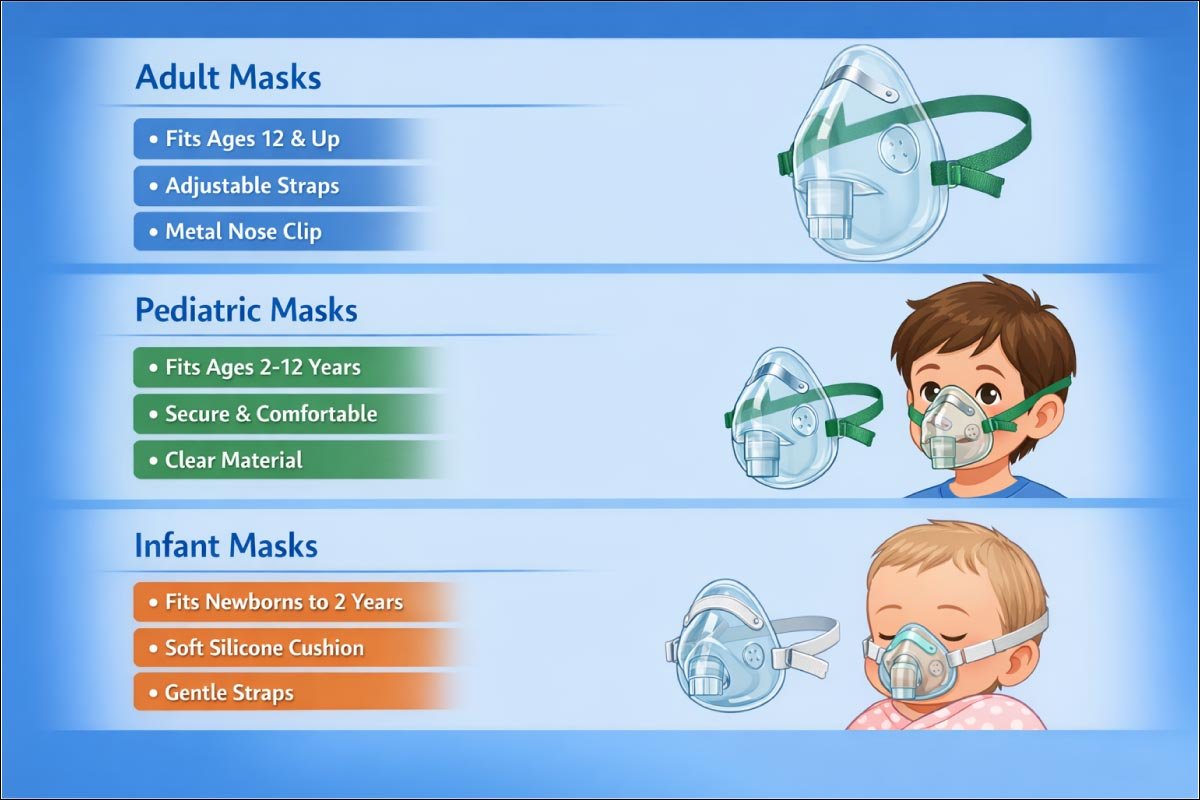
Selecting the correct oxygen mask size is essential for effective therapy. An ill-fitting mask can lead to oxygen leaks, discomfort, and decreased efficiency. Oxygen masks are typically available in standard adult, pediatric, and infant sizes, each designed to ensure a secure fit, optimal oxygen delivery, and patient comfort during treatment.
1- Adult Masks
Adult oxygen masks are designed to fit patients aged 12 years and above. They comfortably cover the nose and mouth and typically include adjustable elastic straps for secure fitting.
Many hospital-grade models also feature a flexible metal nose clip to ensure a tight seal, minimizing air leaks and maximizing oxygen delivery.
2- Pediatric Masks
Pediatric oxygen masks are smaller and specifically designed for children aged 2–12 years. They provide a secure fit to minimize oxygen leakage while avoiding excessive pressure on the face. Made from transparent material, these masks allow healthcare providers to monitor the child’s facial expressions and skin color during therapy.
3- Infant Masks
Infant oxygen masks are small, designed to fit newborns and infants up to 2 years old. They often include soft silicone cushions to prevent skin irritation and ensure comfort.
Specialized straps gently secure the mask in place without causing pressure, providing safe and effective oxygen delivery for the youngest patients.
Oxygen Mask Size Guide
Selecting the correct oxygen mask size is crucial for effective therapy and patient comfort. Masks are designed for different age groups, from infants to adults, with varying face widths and flow rate ranges. The table below provides a clear guide to choosing the appropriate mask for each patient category.
| Mask Size | Age/Patient Group | Approximate Face Width | Typical Flow Rate (L/min) |
|---|---|---|---|
| Adult | 12+ years | 10–12 cm | 5–15 |
| Pediatric | 2–12 years | 6–9 cm | 2–10 |
| Infant | 0–2 years | 4–6 cm | 0.5–5 |
Material and Construction
Oxygen masks are constructed from materials that are safe for medical use and comfortable for prolonged wear. Medical-grade PVC or silicone provides softness, flexibility, and hypoallergenic properties.
Adjustable elastic straps ensure durability and repeated use, while transparent masks allow staff to monitor skin color and comfort. Metal nose clips enhance the fit and reduce air leakage.
-
Medical-grade PVC or silicone: Soft, flexible, and hypoallergenic
-
Elastic straps: Adjustable and durable for repeated use
-
Transparent masks: Allow healthcare staff to monitor skin color and patient comfort
-
Metal nose clips: Enhance fit and prevent air leakage
Read More:
Oxygen Mask Materials
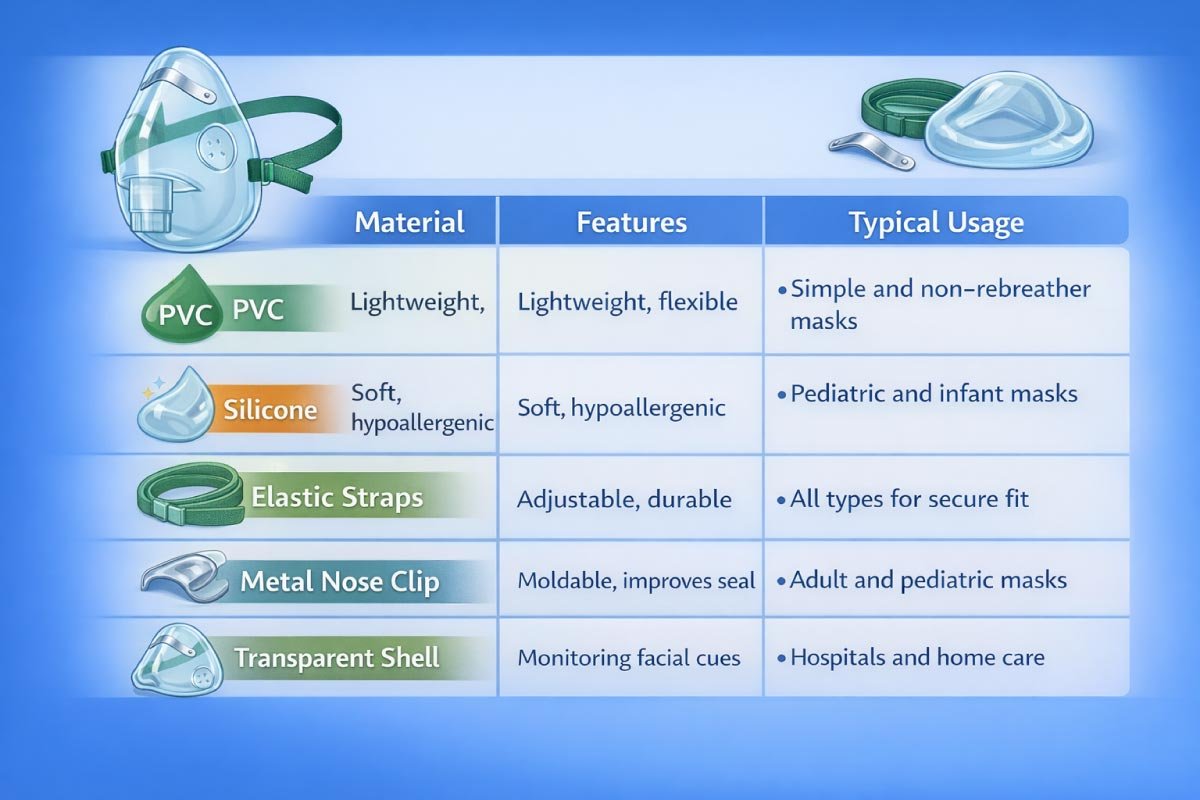
Oxygen masks are constructed from a variety of materials to ensure safety, comfort, and effectiveness. From flexible PVC to soft, hypoallergenic silicone, each component serves a specific purpose.
The table below highlights common materials, their features, and typical applications across different mask types and patient needs.
| Material | Features | Typical Usage |
|---|---|---|
| PVC | Lightweight, flexible | Simple and non-rebreather masks |
| Silicone | Soft, hypoallergenic | Pediatric and infant masks |
| Elastic Straps | Adjustable, durable | All types for secure fit |
| Metal Nose Clip | Moldable, improves seal | Adult and pediatric masks |
| Transparent Shell | Monitoring facial cues | Hospitals and home care |
Read More:
Safety Considerations
Proper use of oxygen masks is essential to ensure effective therapy and prevent complications. Adhering to safety guidelines protects patients and caregivers alike, minimizing risks associated with high-concentration oxygen delivery.
Correct Flow Rate: Always follow prescribed oxygen flow rates.
Mask Fit: Ensure no leaks around the edges.
Hygiene: Clean masks regularly to prevent infections.
Avoid Open Flames: Oxygen supports combustion.
Check Equipment: Inspect hoses, valves, and cylinders before use.
Oxygen Mask Safety Guidelines
Safety is critical when using oxygen masks to ensure effective therapy and prevent accidents. Proper flow rates, correct fit, and regular hygiene are essential.
The table below outlines key safety measures, including equipment checks, heat source precautions, and appropriate storage practices for both medical and home oxygen mask use.
| Safety Measure | Description |
|---|---|
| Correct Flow Rate | Follow prescribed oxygen levels to avoid hypoxia or oxygen toxicity |
| Proper Fit | Prevent air leakage for effective oxygen delivery |
| Hygiene | Regularly clean and disinfect masks |
| Heat Sources | Keep away from open flames or sparks |
| Equipment Check | Inspect valves, tubing, and cylinders before use |
| Storage | Store in a dry, ventilated area |
Read More:
Oxygen Mask Usage Duration
Oxygen mask usage duration varies depending on mask type, flow rate, and cylinder capacity. Monitoring is essential to ensure continuous and effective oxygen delivery.
The table below provides recommended usage times for different mask types, along with appropriate cylinder sizes and flow rates for safe and efficient therapy.
Recommended Oxygen Mask Usage
| Mask Type | Cylinder Size | Flow Rate (L/min) | Approximate Duration |
|---|---|---|---|
| Simple Mask | D | 5–10 | 1–2 hrs |
| Venturi Mask | E | 4–12 | 2–4 hrs |
| Non-Rebreather Mask | F | 10–15 | 30–60 min |
| Partial Rebreather Mask | D | 6–10 | 1–2 hrs |
| Pediatric Mask | B | 2–10 | 1–3 hrs |
| High-Flow Mask | F | 15+ | 30–45 min |
Read More:
Conclusion
Oxygen masks are vital tools in medical and emergency care, providing life-saving oxygen therapy. Choosing the correct type and size ensures patient comfort, safety, and effective oxygen delivery.
From simple masks for moderate oxygen needs to non-rebreather and high-flow masks for emergencies, understanding each type’s functionality allows healthcare providers and caregivers to make informed decisions.
Proper material, hygiene, and safety precautions further enhance patient care outcomes. Selecting the right oxygen mask is not just about comfort—it can be a matter of life and death, particularly in critical care and emergency settings. Proper training in mask usage and maintenance ensures optimal oxygen therapy for patients of all ages.
Read More:
Sonographer Salary Trends in 2026: Where Professionals Are Earning the Most

Zak is a dedicated medical and career writer specializing in sonography, healthcare education, and professional development. Through SonographerSalary.com, he shares in-depth insights on sonographer salaries, education pathways, and career tips to help readers build successful futures in medical imaging. His content combines accuracy with practical, easy-to-understand guidance, empowering students and professionals to make confident, informed career decisions.