

Syringes are essential medical tools used worldwide for the accurate delivery of medications, vaccines, and other fluids directly into the body. From hospitals to home care, they play a pivotal role in patient treatment and care.
These instruments are designed to provide precision, safety, and efficiency, making them indispensable in modern healthcare. Understanding syringes, their types, and proper sizing is crucial for healthcare professionals and patients alike.
What is a Syringe?
A syringe is a medical device consisting of a cylindrical barrel, a plunger, and a needle. It is primarily used to inject medications, vaccines, or other fluids into the body or withdraw bodily fluids for testing. Syringes come in various materials, such as plastic and glass, and are designed for either single-use (disposable) or multiple-use (reusable) purposes.
Modern syringes are engineered for precision, minimizing discomfort and ensuring accurate dosage.
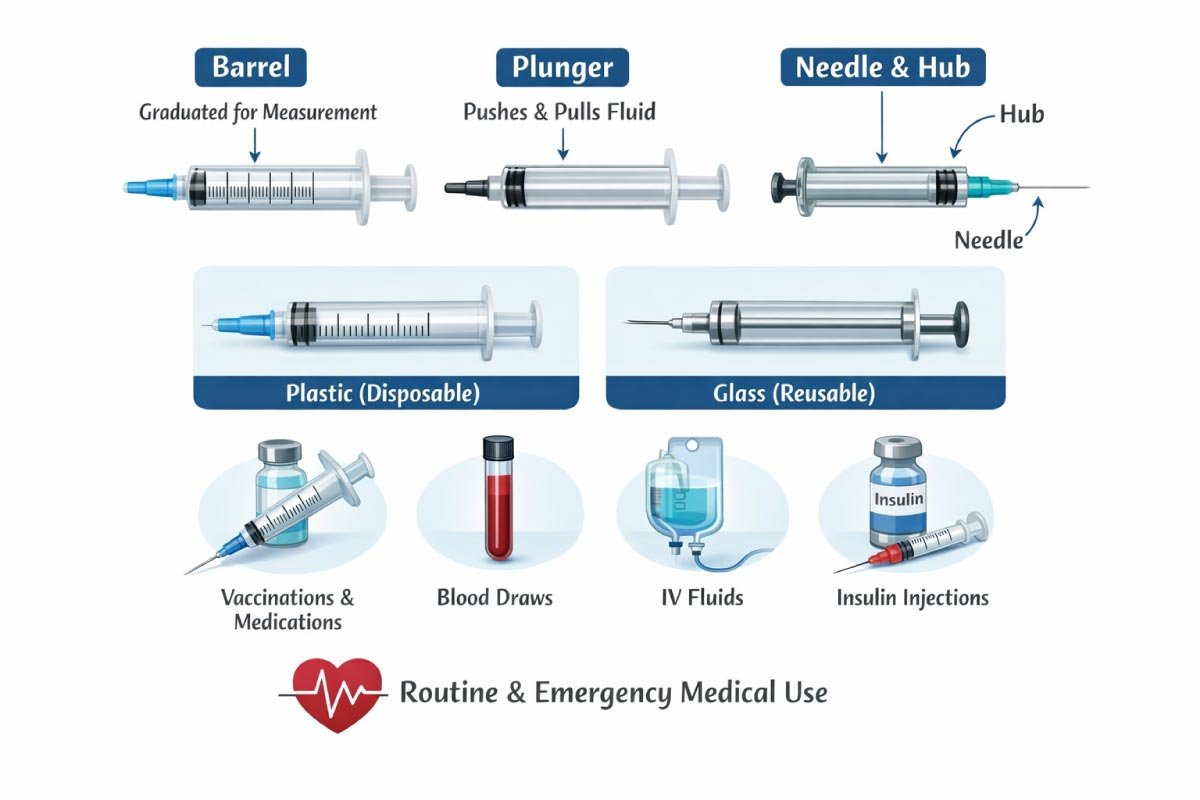
Key Features of Syringes:
-
Barrel: Holds the fluid; usually graduated for accurate measurement.
-
Plunger: Pushes or pulls fluid in and out of the barrel.
-
Needle: Pierces the skin or other materials to deliver or extract fluids.
-
Hub: Connects the needle to the barrel.
Applications:
-
Administering vaccines and medications.
-
Drawing blood for laboratory testing.
-
Delivering intravenous fluids.
-
Medical procedures like insulin injections for diabetics.
Syringes are integral to both routine medical procedures and critical emergency care, emphasizing the need to understand their types and sizes thoroughly.
Types of Syringes
Syringes are medical devices designed to inject or withdraw fluids with precision and safety. They come in various types, each tailored to specific medical needs, from routine injections to specialized treatments.
Choosing the appropriate syringe improves dosage accuracy, reduces infection risk, and ensures patient comfort.
1. Standard Syringes
Standard syringes are the most commonly used, consisting of a plastic barrel and a plunger. Available in sizes from 1 mL to 60 mL, they are versatile and used for injections, fluid removal, or medication administration. Their simplicity makes them essential in hospitals, clinics, and home healthcare.
2. Insulin Syringes
Insulin syringes are specially designed for diabetes management. They feature very fine needles and precise markings for small doses, usually 0.3 mL, 0.5 mL, and 1 mL.
These syringes minimize discomfort during injection while ensuring accurate delivery of insulin for effective blood sugar control.
3. Tuberculin Syringes
Tuberculin syringes are used primarily for intradermal injections and tuberculosis testing. Graduated up to 1 mL with fine measurement markings, they provide high accuracy for small-volume injections.
These syringes help prevent dosage errors, making them essential in diagnostic procedures and allergy testing.
4. Safety Syringes
Safety syringes are designed to prevent accidental needle-stick injuries. They often include retractable needles, sliding protective covers, or self-locking mechanisms.
These features enhance medical personnel safety, reduce infection risk, and are widely adopted in hospitals, vaccination centers, and clinics.
5. Prefilled Syringes
Prefilled syringes come with medications or vaccines already loaded, offering convenience and reducing contamination risks. They save preparation time and ensure accurate dosing, making them ideal for immunizations, emergency care, and mass vaccination campaigns. Their disposable nature also promotes hygiene and efficiency.
6. Catheter Tip Syringes
Catheter tip syringes have a tapered nozzle instead of a needle, allowing them to administer fluids into feeding tubes, catheters, or for irrigation purposes.
Available in various sizes, they are widely used in hospitals and home care for safe and controlled delivery of liquids.
7. Luer Lock Syringes
Luer lock syringes feature a threaded tip that securely attaches needles or other medical devices. This design prevents accidental disconnection during injections or fluid transfer.
Commonly used in hospitals, they ensure safe, leak-free administration of medications, vaccines, and intravenous fluids.
Types of Syringes and Their Common Uses
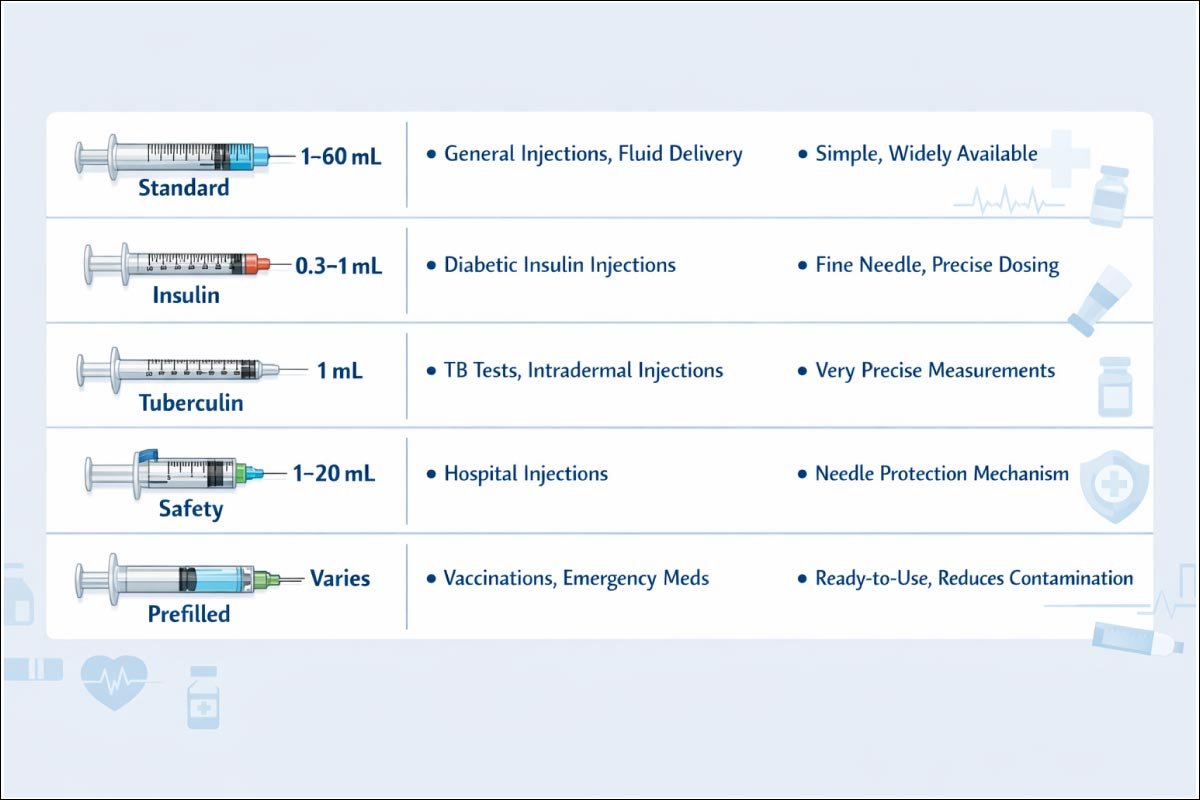
Syringes are essential medical tools designed for precise fluid delivery. They come in various types, each tailored for specific purposes, from routine injections to specialized treatments.
Understanding syringe types, volumes, and key features helps healthcare professionals choose the right syringe, ensuring accuracy, safety, and efficiency in patient care.
| Syringe Type | Volume Range | Common Uses | Key Feature |
|---|---|---|---|
| Standard | 1–60 mL | General injections, fluid delivery | Simple, widely available |
| Insulin | 0.3–1 mL | Diabetic insulin injections | Fine needle, precise dosing |
| Tuberculin | 1 mL | TB tests, intradermal injections | Very precise measurements |
| Safety | 1–20 mL | Hospital injections | Needle protection mechanism |
| Prefilled | Varies | Vaccinations, emergency meds | Ready-to-use, reduces contamination |
Syringe Sizes and Selection
Choosing the correct syringe size ensures precise medication delivery and reduces the risk of errors or injury. Factors such as fluid volume, injection type, and patient characteristics influence selection.
Proper syringe choice enhances comfort, accuracy, and safety during administration. Size is determined by the volume of fluid to be administered, the injection site, and the patient’s age or body type.
1. Common Syringe Volumes
Syringes come in multiple sizes to match different medical needs, from tiny doses for insulin to larger volumes for fluids or medications. Choosing the appropriate volume improves dosing accuracy, patient comfort, and safety, while minimizing waste.
Syringes are manufactured in various sizes, from 0.3 mL for insulin injections to 60 mL for large-volume fluid delivery. Selecting the right volume ensures precision and reduces medication wastage.
2. Needle Gauge and Length
Selecting the correct needle gauge and length is vital for safe, effective injections. Factors include the injection type, medication viscosity, and patient body type. Proper needle choice minimizes pain, tissue damage, and dosing errors.
The combination of barrel volume and needle size must suit both the medication and the patient’s anatomy.
-
Intramuscular (IM): 22–25 gauge, 1–1.5 inch
-
Subcutaneous (SC): 25–30 gauge, 0.5–0.75 inch
-
Intradermal (ID): 26–30 gauge, 0.25–0.5 inch
The combination of barrel volume and needle size must suit both the medication and the patient’s anatomy.
Syringe Size and Injection Recommendations
Choosing the correct syringe size is crucial for safe and effective injections. Different volumes are recommended for subcutaneous, intramuscular, intravenous, or fluid administration, with matching needle gauges and lengths.
Proper selection ensures accurate dosing, minimizes tissue damage, and enhances patient comfort during medical procedures.
| Syringe Volume | Injection Type | Needle Gauge | Needle Length |
|---|---|---|---|
| 0.3–1 mL | Subcutaneous/ID | 26–30 | 0.25–0.75 in |
| 1–3 mL | Intramuscular | 22–25 | 1–1.5 in |
| 5–10 mL | Intravenous/IV meds | 20–22 | 1–1.5 in |
| 20–60 mL | Fluid administration | 18–20 | 1–2 in |
Materials and Construction
Syringe quality depends on the materials and design, ensuring safety, durability, and effective medication delivery. Components are engineered to prevent contamination, leakage, or breakage. Proper construction also improves ease of use and patient comfort. Syringes are made from materials that are safe, durable, and compatible with medications.
1. Plastic Syringes
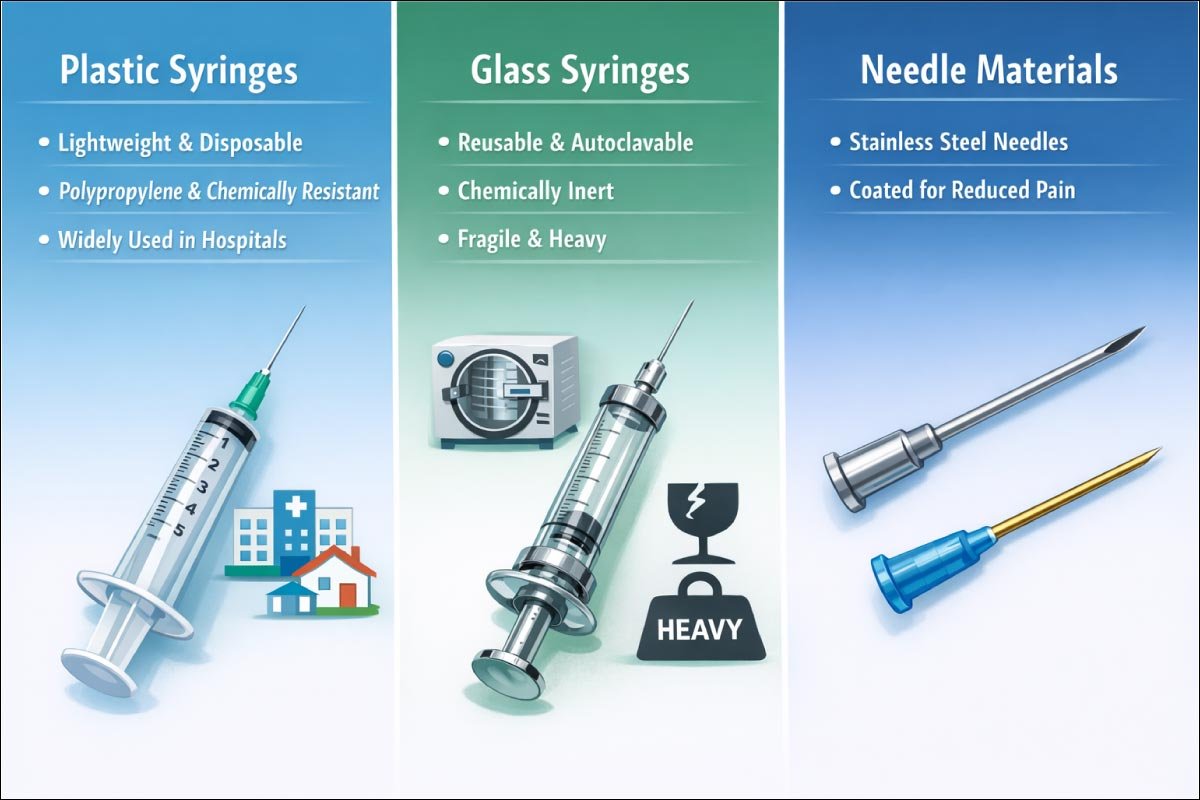
Plastic syringes are lightweight, safe, and designed for single-use, reducing infection risks. Their transparent barrels allow accurate measurement, and chemical resistance ensures compatibility with most medications.
Widely available and cost-effective, they are the preferred choice in hospitals, clinics, and home care.
-
Lightweight and disposable.
-
Often made of polypropylene, which is transparent and chemically resistant.
-
Economical and widely used in hospitals and clinics.
2. Glass Syringes
Glass syringes are durable, reusable, and can be sterilized in an autoclave, making them ideal for repeated use. They are chemically inert, preventing reactions with sensitive medications. However, their weight and fragility require careful handling to ensure safety and longevity.
-
Reusable and autoclavable.
-
Preferred for medications that may react with plastic.
-
Heavier and require careful handling to prevent breakage.
3. Needle Materials
Needle quality and material are critical for safe, effective injections. Stainless steel is widely used for its strength, sharpness, and corrosion resistance.
Some needles feature special coatings to reduce friction, minimize pain, and prevent tissue damage, improving patient comfort and injection accuracy.
-
Stainless steel needles are standard due to their sharpness and resistance to corrosion.
-
Coated needles reduce pain and tissue trauma during injection.
Syringe Materials and Advantages
Syringes are made from various materials, each offering unique benefits. Plastic syringes are lightweight and cost-effective for single use, glass syringes are durable and chemically resistant, while stainless steel needles provide sharp, smooth injections.
Choosing the right material ensures safety, reliability, and comfort for both patients and healthcare providers.
| Material | Features | Advantages |
|---|---|---|
| Plastic | Disposable, lightweight | Cost-effective, safe for single use |
| Glass | Reusable, chemically resistant | Durable, compatible with all meds |
| Stainless Steel (Needle) | Corrosion-resistant, sharp | Smooth injection, minimal pain |
Also Read:
Safety and Usage Guidelines
Correct syringe use is essential for patient safety and infection control. This includes proper handling, storage, and disposal, as well as choosing the right size and needle. Adhering to guidelines minimizes risks such as contamination, accidental needle sticks, and dosing mistakes. Proper syringe handling and usage are vital to prevent infections, injuries, and dosing errors.
1. Single-Use vs. Reusable
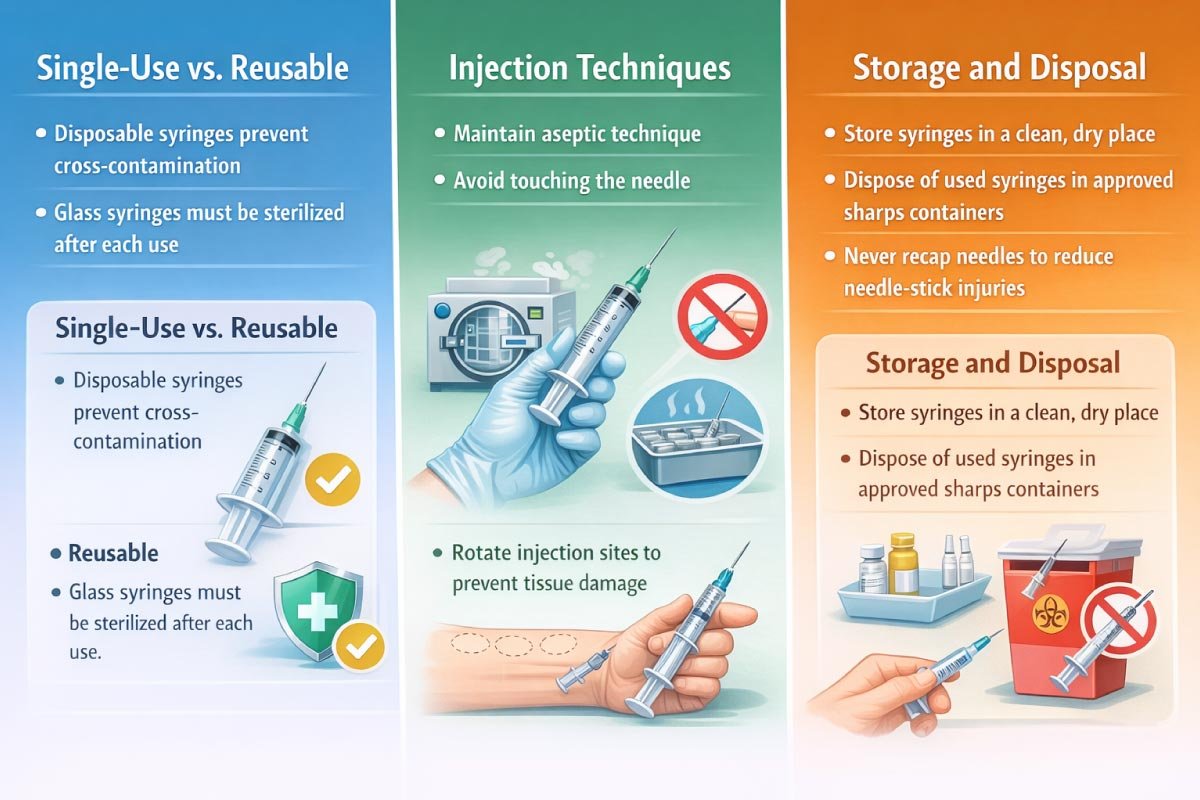
Choosing between single-use and reusable syringes impacts safety, efficiency, and cost. Single-use syringes reduce infection risk and are convenient for routine procedures, while reusable syringes offer durability and cost-effectiveness but require strict sterilization protocols.
-
Single-Use: Disposable syringes prevent cross-contamination. Recommended for vaccinations and routine injections.
-
Reusable: Glass syringes must be sterilized after each use.
2. Injection Techniques
Proper injection techniques are essential to ensure patient comfort, prevent infections, and maximize medication effectiveness.
Following standardized methods reduces complications such as tissue damage, bruising, or contamination. Careful handling also enhances safety for healthcare providers.
-
Maintain aseptic technique.
-
Avoid touching the needle.
-
Rotate injection sites to prevent tissue damage.
3. Storage and Disposal
Proper storage and disposal of syringes are critical for safety and infection prevention. Keeping syringes clean and dry preserves their integrity, while correct disposal prevents accidental injuries and environmental hazards. Following these practices protects both patients and healthcare workers.
-
Store syringes in a clean, dry place.
-
Dispose of used syringes in approved sharps containers.
-
Never recap needles to reduce needle-stick injuries.
Also Read:
Syringe Safety Guidelines
Following syringe safety guidelines is essential to prevent infections and ensure proper use. Key measures include practicing aseptic techniques, handling needles carefully, disposing of sharps correctly, storing syringes in a clean environment, and adhering to single-use or reusable instructions. These practices protect both patients and healthcare providers.
| Safety Measure | Description |
|---|---|
| Aseptic Technique | Always sanitize hands and injection site |
| Proper Needle Handling | Avoid touching or bending needle |
| Sharps Disposal | Use designated sharps containers only |
| Storage | Keep in cool, dry, and clean environment |
| Single-Use vs. Reusable | Follow manufacturer instructions |
Also Read:
Syringe Size Guide for Different Patients
Selecting the right syringe size ensures safe and accurate medication delivery across patient populations. Considerations include the patient’s age, weight, injection type, and medication volume. Tailoring syringe choice improves comfort, reduces complications, and enhances dosing precision.
Different patients require different syringe volumes and needle sizes. Factors include age, weight, and type of injection. Pediatric and neonatal care requires smaller volumes, while adults may need larger doses for IM injections or fluid therapy.
Syringe Size Guide by Patient Type
Selecting the right syringe for each patient is vital for safe and effective injections. Syringe volume, needle gauge, and length vary based on patient age and size—from neonates to large adults. Proper selection ensures accurate dosing, minimizes discomfort, and supports efficient delivery of medications and fluids across different patient groups.
| Patient Type | Syringe Volume | Needle Gauge | Needle Length | Common Use |
|---|---|---|---|---|
| Neonates | 0.3–0.5 mL | 26–30 | 0.25–0.5 in | Vaccinations, ID injections |
| Infants | 0.5–1 mL | 26–30 | 0.25–0.75 in | Immunizations, insulin |
| Children | 1–3 mL | 25–27 | 0.5–1 in | IM injections, antibiotics |
| Adults | 3–10 mL | 22–25 | 1–1.5 in | IM/IV meds, fluid therapy |
| Large Adults | 10–60 mL | 18–20 | 1.5–2 in | High-volume fluid delivery |
Also Read:
Conclusion
Syringes are vital tools in healthcare, enabling accurate medication delivery, fluid administration, and diagnostic procedures. Selecting the right type, size, and needle is crucial for patient safety and treatment efficacy. Understanding the differences between standard, insulin, tuberculin, safety, and prefilled syringes helps healthcare providers make informed choices.
Proper handling, storage, and disposal ensure safety for both patients and medical personnel. By mastering syringe selection and usage, medical professionals can deliver effective care with precision, comfort, and safety.
Also Read:

Zak is a dedicated medical and career writer specializing in sonography, healthcare education, and professional development. Through SonographerSalary.com, he shares in-depth insights on sonographer salaries, education pathways, and career tips to help readers build successful futures in medical imaging. His content combines accuracy with practical, easy-to-understand guidance, empowering students and professionals to make confident, informed career decisions.