
Ultrasound is one of the most widely used and safest medical imaging techniques in the world. Whether you’ve seen it during pregnancy checkups or heard about it in diagnosing internal conditions, ultrasound plays a vital role in modern healthcare.
In this detailed guide, we will explore what ultrasound is, how it works, its types, benefits, uses, and career opportunities related to this technology.
What Is Ultrasound?
Ultrasound, also known as sonography, is a non-invasive medical imaging technique that uses high-frequency sound waves to create images of the inside of the body. Unlike X-rays or CT scans, ultrasound does not use radiation, making it a safer option for many patients.
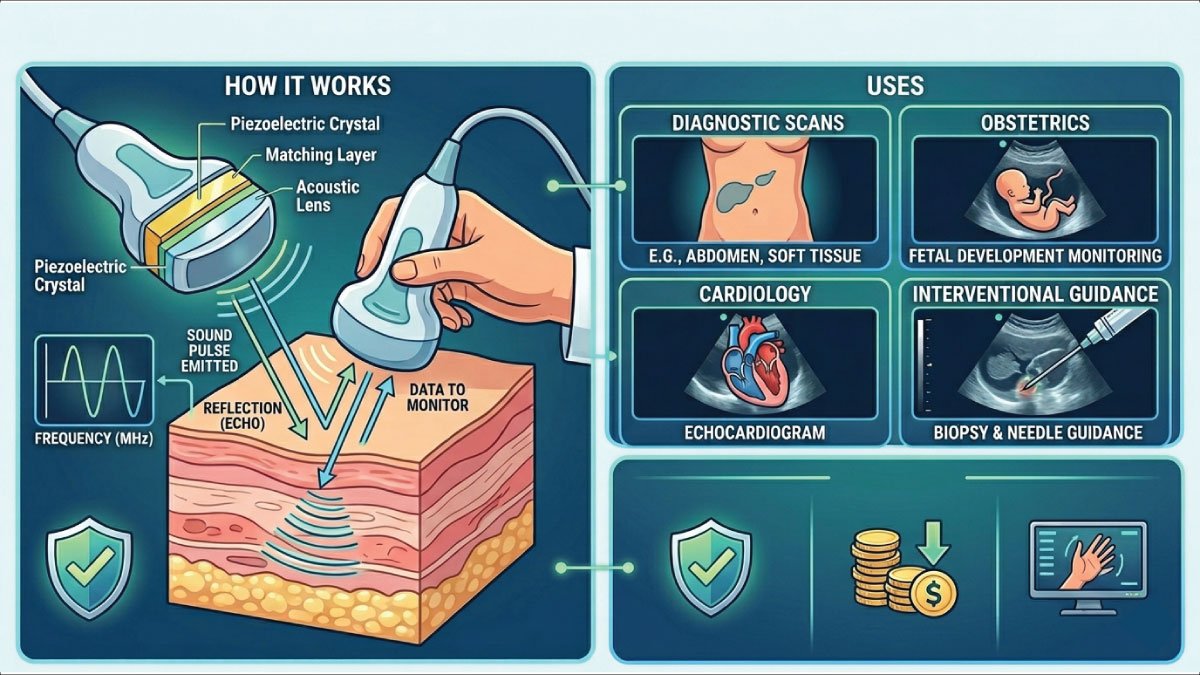
The sound waves are transmitted into the body using a device called a transducer, which then captures the echoes as they bounce off internal organs, tissues, and fluids. These echoes are converted into real-time images displayed on a monitor.
How Does Ultrasound Work?
Ultrasound technology is based on a simple scientific principle: sound waves travel through the body and reflect back when they hit different structures.
Here’s how the process works step-by-step:
- A gel is applied to the skin to reduce air and improve sound wave transmission.
- The transducer emits high-frequency sound waves into the body.
- These waves bounce off tissues and return as echoes.
- A computer processes these echoes into visual images.
This real-time imaging allows healthcare providers to observe movement, such as blood flow or a baby’s heartbeat.
Common Uses of Ultrasound in Medicine
Ultrasound is incredibly versatile and used in many areas of healthcare. It helps doctors diagnose, monitor, and guide treatments safely and effectively. Because it is non-invasive and radiation-free, it is widely preferred in hospitals, clinics, and emergency settings across the world.
1- Pregnancy Monitoring
Ultrasound helps track fetal development and ensures the baby is healthy throughout pregnancy.
Pregnancy monitoring through ultrasound allows doctors to observe the baby’s growth, heartbeat, and overall development. It helps detect any abnormalities early and ensures the pregnancy is progressing normally. Parents can also see real-time images, making it both a medical and emotional experience during prenatal care.
2- Organ Examination
Doctors use ultrasound to examine:
- Abdomen
- Thyroid
- Breast tissue
- Reproductive organs
Organ examination with ultrasound helps detect diseases and abnormalities in different parts of the body. It provides clear images of soft tissues, allowing doctors to identify issues like cysts, tumors, or infections. This method is commonly used for routine checkups and early disease detection.
3- Heart Evaluation
Cardiac ultrasound, also known as echocardiography, helps assess heart function and detect abnormalities.
Heart evaluation using ultrasound provides detailed images of the heart’s structure and movement. It helps doctors monitor heart health, detect valve problems, and identify conditions such as heart disease. This test is essential for diagnosing cardiovascular issues and ensuring proper heart function in patients.
4- Guiding Procedures
Ultrasound is often used to guide medical procedures like:
- Biopsies
- Needle insertions
- Fluid drainage
Ultrasound guidance improves the accuracy and safety of medical procedures. It allows doctors to see inside the body in real time while performing tasks like biopsies or fluid removal. This reduces risks, minimizes complications, and ensures precise targeting of the affected area during treatment.
Limitations of Ultrasound
While ultrasound is highly useful, it does have some limitations.
- It cannot penetrate bone or air-filled structures effectively
- Image quality may vary depending on the technician’s skill
- It may not provide as detailed images as MRI or CT scans
Despite these limitations, ultrasound remains a powerful diagnostic tool.
What to Expect During an Ultrasound
If you have never had an ultrasound before, here’s what you can expect:
- You’ll lie down on an examination table
- A technician will apply gel to the targeted area
- The transducer will be moved across your skin
- Images will appear on a monitor in real-time
The procedure usually takes 15 to 45 minutes, depending on the type of scan.
Read More:
Preparing for an Ultrasound
Preparation depends on the type of ultrasound being performed.
- Abdominal ultrasound: You may need to fast for several hours
- Pelvic ultrasound: You might be asked to drink water and have a full bladder
- Other types: Usually require minimal or no preparation
Always follow your doctor’s instructions for accurate results.
Ultrasound in Modern Healthcare
Ultrasound has revolutionized medical diagnosis and treatment. It allows early detection of diseases, reduces the need for invasive procedures, and improves patient outcomes.
Some advanced applications include:
- Detecting cancers at early stages
- Monitoring chronic conditions
- Assisting in emergency medicine
With continuous advancements, ultrasound technology is becoming even more precise and accessible.
Career Opportunities in Ultrasound
Ultrasound is not only important in healthcare but also offers excellent career opportunities.
Diagnostic Medical Sonographer
A diagnostic medical sonographer is a trained professional who performs ultrasound examinations.
Responsibilities:
- Operating ultrasound equipment
- Capturing and analyzing images
- Assisting physicians in diagnosis
Skills Required:
- Strong attention to detail
- Technical knowledge
- Communication skills
Salary and Demand
Ultrasound professionals are in high demand, especially in developed countries. Salaries vary depending on location, experience, and specialization.
Key factors affecting salary:
- Years of experience
- Certification and specialization
- Workplace setting
Specializations in Sonography
You can specialize in different areas, such as:
- Obstetric and gynecologic sonography
- Cardiac sonography
- Vascular sonography
- Musculoskeletal sonography
Each specialization offers unique career paths and growth opportunities.
Read More:
Why Ultrasound Is Important
Ultrasound plays a crucial role in saving lives and improving healthcare quality.
- It enables early diagnosis
- Reduces healthcare costs
- Improves patient safety
From pregnancy monitoring to disease detection, ultrasound remains an essential tool in modern medicine.
Conclusion
Ultrasound is a powerful, safe, and versatile medical imaging technique that has transformed healthcare. Its ability to provide real-time, radiation-free imaging makes it a preferred choice for doctors and patients alike.
Whether you’re a patient looking to understand your medical test or someone considering a career in healthcare, ultrasound offers valuable insights and opportunities. As technology continues to evolve, ultrasound will only become more advanced, accessible, and impactful in the medical field.
Read More:

Zak is a dedicated medical and career writer specializing in sonography, healthcare education, and professional development. Through SonographerSalary.com, he shares in-depth insights on sonographer salaries, education pathways, and career tips to help readers build successful futures in medical imaging. His content combines accuracy with practical, easy-to-understand guidance, empowering students and professionals to make confident, informed career decisions.