
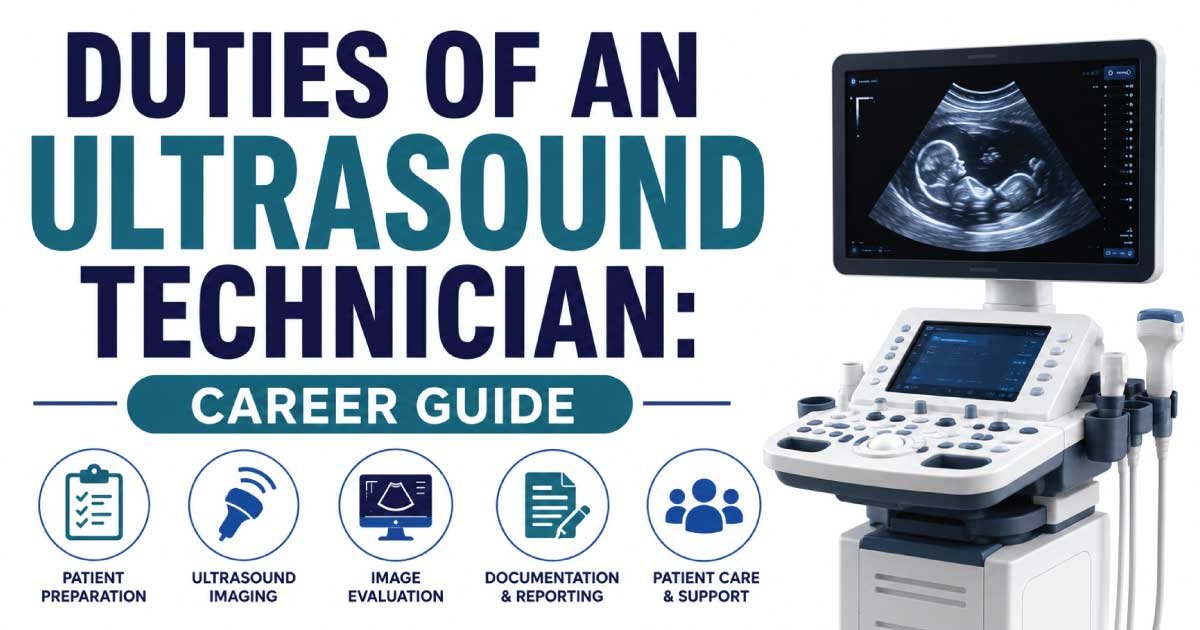
Ultrasound technicians play a vital role in today’s healthcare system by using advanced imaging technology to help physicians diagnose and monitor a wide range of medical conditions. Whether performing prenatal ultrasounds, examining internal organs, or evaluating blood flow, these professionals provide the high-quality images that doctors rely on to make accurate medical decisions.
If you’re considering a career in diagnostic medical sonography or simply want to understand what an ultrasound technician does, learning about their daily responsibilities is essential. While many people associate ultrasound technicians only with pregnancy scans, their work extends to numerous medical specialties, including cardiology, vascular imaging, abdominal diagnostics, and musculoskeletal medicine.
This complete guide explores the duties of an ultrasound technician, the skills needed to succeed, educational requirements, work environments, salary expectations, and career growth opportunities.
Who Is an Ultrasound Technician?
An ultrasound technician, also called a diagnostic medical sonographer, is a healthcare professional trained to operate ultrasound equipment that uses high-frequency sound waves to produce images of internal organs, tissues, blood vessels, and other structures inside the body.
Unlike imaging methods such as X-rays or CT scans, ultrasound does not use radiation, making it a safe and non-invasive diagnostic tool. Physicians depend on these images to diagnose diseases, monitor pregnancies, detect injuries, and evaluate the effectiveness of treatments.
Ultrasound technicians work closely with doctors, nurses, radiologists, and other medical professionals to provide accurate diagnostic information that supports quality patient care.
Primary Duties of an Ultrasound Technician
The primary responsibility of an ultrasound technician is to perform diagnostic ultrasound examinations while ensuring patient comfort, safety, and accurate image quality.
Common duties include:
- Reviewing physician orders
- Preparing patients for ultrasound procedures
- Explaining examination steps
- Operating ultrasound machines
- Capturing detailed diagnostic images
- Measuring organs and anatomical structures
- Recognizing unusual findings
- Documenting examination results
- Maintaining imaging equipment
- Following infection control procedures
- Collaborating with healthcare professionals
Each responsibility contributes to providing physicians with reliable diagnostic information.
Preparing Patients for Ultrasound Exams
One of the first duties performed before every examination is preparing the patient.
This includes:
- Verifying patient identity
- Reviewing medical history
- Confirming the requested examination
- Explaining the procedure
- Answering patient questions
- Positioning the patient correctly
Many patients feel anxious before medical tests. A professional and reassuring approach helps create a positive experience while improving examination quality.
Performing Ultrasound Scans
Operating ultrasound equipment is the core responsibility of every ultrasound technician.
During an examination, technicians:
- Apply ultrasound gel
- Select the correct transducer
- Adjust machine settings
- Scan the required body area
- Capture images from multiple angles
- Record measurements
Different examinations require different scanning techniques depending on the body part being evaluated.
Producing High-Quality Diagnostic Images
Physicians rely on ultrasound technicians to produce clear and accurate images.
To achieve this, technicians must:
- Optimize image quality
- Adjust depth and gain settings
- Record multiple image views
- Label images correctly
- Capture complete anatomical structures
Attention to detail is essential because image quality directly affects diagnosis and treatment planning.
Measuring Anatomical Structures
Many ultrasound examinations require precise measurements.
Technicians routinely measure:
- Organ size
- Blood vessel diameter
- Fetal growth
- Heart chambers
- Tumor dimensions
- Fluid collections
Accurate measurements help physicians monitor diseases, evaluate treatment progress, and assess normal development during pregnancy.
Observing and Documenting Abnormal Findings
Although ultrasound technicians do not diagnose medical conditions, they are trained to recognize unusual findings that may require further evaluation.
Examples include:
- Cysts
- Tumors
- Blood clots
- Organ enlargement
- Gallstones
- Kidney stones
- Abnormal blood flow
- Pregnancy complications
These observations are carefully documented and included with the examination images for physician review.
Maintaining Accurate Medical Records
Documentation is another important duty.
Ultrasound technicians record:
- Patient demographics
- Examination details
- Measurements
- Technical observations
- Image annotations
- Equipment information when necessary
Accurate documentation ensures physicians have all the information needed to interpret the examination correctly.
Also Read:
Maintaining Ultrasound Equipment
Ultrasound machines require routine maintenance to ensure accurate performance.
Technicians are responsible for:
- Cleaning equipment after each use
- Disinfecting transducers
- Performing routine quality checks
- Reporting technical issues
- Following manufacturer guidelines
- Maintaining infection prevention standards
Proper equipment care protects both patients and healthcare staff.
Communicating with Patients
Strong communication skills are essential throughout every examination.
Ultrasound technicians must:
- Explain procedures clearly
- Answer patient questions
- Reduce patient anxiety
- Provide professional reassurance
- Maintain patient privacy
- Communicate respectfully with individuals of all ages
Excellent communication improves patient satisfaction and supports quality healthcare.
Collaborating with Healthcare Teams
Ultrasound technicians work closely with many healthcare professionals, including:
- Physicians
- Radiologists
- Nurses
- Medical assistants
- Cardiologists
- Obstetricians
- Vascular specialists
Effective teamwork ensures patients receive timely diagnoses and coordinated care.
Essential Skills for Ultrasound Technicians
Performing these duties successfully requires a combination of technical knowledge and interpersonal abilities.
1. Technical Skills
Ultrasound technicians should understand:
- Ultrasound physics
- Imaging equipment
- Anatomy and physiology
- Medical terminology
- Image optimization
- Equipment troubleshooting
Keeping these skills updated is essential as imaging technology continues to advance.
2. Attention to Detail
Small imaging errors can affect medical diagnoses.
Successful technicians carefully monitor:
- Image clarity
- Patient positioning
- Measurements
- Equipment settings
- Documentation accuracy
Attention to detail is one of the most important qualities in this profession.
3. Critical Thinking
Every patient presents unique situations.
Technicians often need to:
- Modify scanning techniques
- Solve imaging challenges
- Identify unusual anatomy
- Adapt examinations to physician requests
Strong problem-solving abilities improve examination quality.
4. Compassion and Empathy
Healthcare professionals interact with patients experiencing illness, discomfort, or emotional stress. Showing kindness, patience, and empathy helps build trust and improves the overall patient experience.
5. Physical Stamina
The job can be physically demanding.
Daily activities include:
- Standing for long periods
- Moving ultrasound equipment
- Assisting patients
- Performing repetitive scanning motions
Proper ergonomics help reduce the risk of workplace injuries.
Also Read:
Education and Training
Most employers require ultrasound technicians to complete an accredited diagnostic medical sonography program.
Educational pathways include:
1. Associate Degree
- Approximately two years
- Most common option
- Prepares graduates for entry-level positions
2. Bachelor’s Degree
- Four-year program
- Broader education
- Better opportunities for leadership positions
3. Certificate Programs
Designed for healthcare professionals with prior medical education. Most certificate programs take between 12 and 18 months to complete. Clinical training is an essential part of every educational pathway and provides valuable hands-on experience.
Work Environment
Ultrasound technicians work in many healthcare settings.
Common workplaces include:
- Hospitals
- Diagnostic imaging centers
- Physician offices
- Women’s health clinics
- Outpatient surgery centers
- Emergency departments
- Mobile imaging companies
- Specialty medical practices
Hospital employees may work evenings, weekends, holidays, or on-call shifts, while outpatient clinics often provide regular weekday schedules.
Salary and Career Growth
Ultrasound technicians enjoy competitive salaries and excellent career stability.
Income varies depending on factors such as:
- Education
- Experience
- Geographic location
- Employer
- Specialty
- Professional certification
With additional experience and certifications, technicians may advance into roles such as:
- Lead Sonographer
- Imaging Supervisor
- Clinical Instructor
- Department Manager
- Applications Specialist
- Healthcare Administrator
Many professionals also pursue specialty certifications in cardiac, vascular, obstetric, or musculoskeletal sonography to increase their earning potential.
Also Read:
Why Choose a Career as an Ultrasound Technician?
There are many reasons why people choose this healthcare profession.
Benefits include:
- Strong job demand
- Competitive salary
- Relatively short education pathway
- Opportunities to specialize
- Meaningful patient interaction
- Safe, non-invasive imaging technology
- Long-term career stability
- Excellent advancement opportunities
For individuals who enjoy science, technology, and helping others, ultrasound technology offers a rewarding and fulfilling career.
Conclusion
Understanding the duties of an ultrasound technician provides valuable insight into one of the most important careers in diagnostic healthcare. These professionals do much more than operate ultrasound equipment—they prepare patients, perform detailed imaging examinations, maintain accurate records, collaborate with healthcare teams, and help physicians diagnose medical conditions with confidence.
With growing demand, competitive salaries, diverse specialties, and excellent opportunities for career advancement, becoming an ultrasound technician is an outstanding choice for anyone interested in combining advanced medical technology with compassionate patient care. By developing strong technical skills, completing accredited training, and committing to lifelong learning, you can build a successful and rewarding career in diagnostic medical sonography.

Zak is a dedicated medical and career writer specializing in sonography, healthcare education, and professional development. Through SonographerSalary.com, he shares in-depth insights on sonographer salaries, education pathways, and career tips to help readers build successful futures in medical imaging. His content combines accuracy with practical, easy-to-understand guidance, empowering students and professionals to make confident, informed career decisions.