
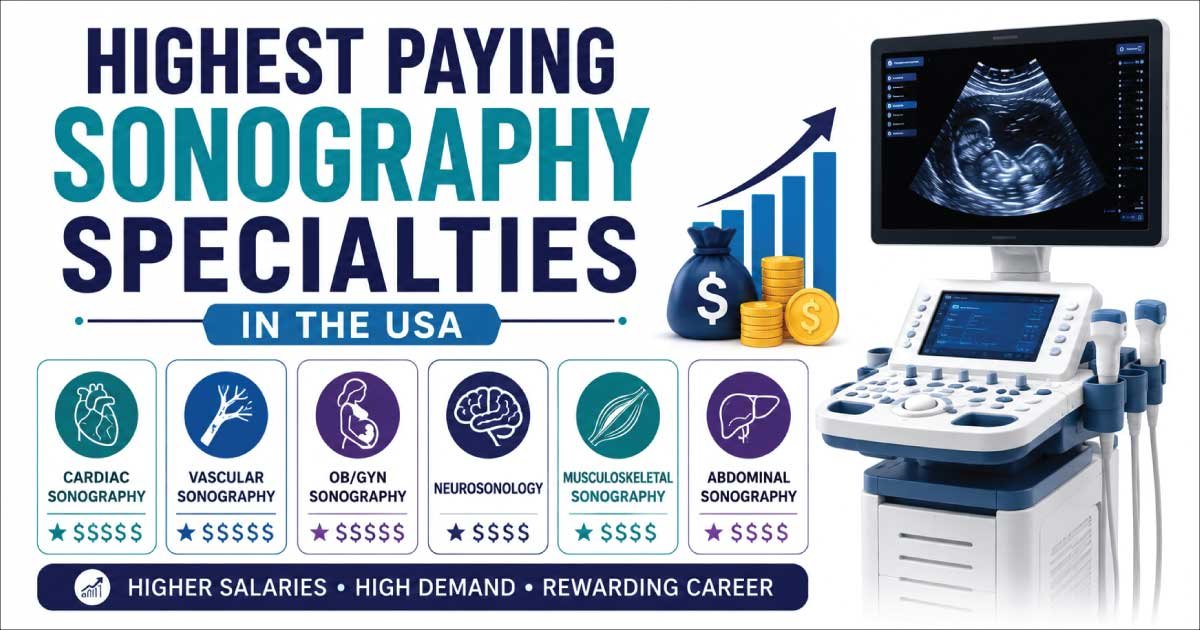
A career in diagnostic medical sonography offers excellent job stability, competitive salaries, and numerous opportunities to specialize. While all sonographers play an essential role in patient care, some specialties command significantly higher salaries due to their advanced technical skills, greater responsibility, and increasing demand across the healthcare industry.
Choosing the right specialty can influence your earning potential, work environment, career growth, and job satisfaction. Whether you’re just beginning your journey or planning to expand your credentials, understanding which specialties pay the most can help you make an informed career decision.
In this guide, we’ll explore the highest paying sonography specialties in the USA, what each specialty involves, salary factors, required certifications, and future career outlook.
Why Do Sonography Specialties Have Different Salaries?
Not every sonography specialty pays the same because each requires different levels of expertise, training, and clinical responsibility.
Several factors affect salary, including:
- Level of specialization
- Professional certifications
- Years of experience
- Geographic location
- Type of employer
- Patient population
- Demand for the specialty
- Complexity of examinations
Specialties that involve complex anatomy, emergency imaging, or advanced diagnostic procedures often offer higher compensation.
1. Cardiac Sonography (Echocardiography)
Cardiac sonography is consistently one of the highest-paying specialties in the United States.
Cardiac sonographers, also called echocardiographers, perform ultrasound examinations of the heart to evaluate its structure, function, valves, and blood flow. Physicians rely on these images to diagnose heart disease, congenital defects, and other cardiovascular conditions.
Common Responsibilities
- Perform echocardiograms
- Assess heart valve function
- Evaluate blood circulation
- Measure heart chambers
- Assist cardiologists during specialized procedures
Why It Pays Well
Heart disease remains one of the leading health concerns in the United States, creating strong demand for experienced cardiac sonographers. The advanced technical skills required and the critical role these professionals play in diagnosing cardiovascular conditions contribute to higher salaries.
2. Vascular Sonography
Vascular sonographers specialize in examining arteries and veins throughout the body. They help physicians diagnose circulatory disorders, blood clots, aneurysms, and blocked arteries using Doppler ultrasound technology.
Common Responsibilities
- Evaluate blood flow
- Detect deep vein thrombosis (DVT)
- Examine carotid arteries
- Assess peripheral vascular disease
- Perform Doppler studies
Why It Pays Well
As cardiovascular disease and diabetes continue to affect millions of Americans, healthcare providers increasingly rely on vascular imaging. This growing demand contributes to strong salaries and excellent job security.
3. Pediatric Sonography
Pediatric sonographers perform ultrasound examinations on infants, children, and adolescents. Working with younger patients requires exceptional communication skills, patience, and specialized scanning techniques.
Common Responsibilities
- Image abdominal organs
- Evaluate congenital abnormalities
- Monitor pediatric illnesses
- Perform neonatal examinations
- Assist pediatric specialists
Why It Pays Well
Pediatric imaging requires specialized knowledge and experience. Hospitals with dedicated children’s departments often offer competitive salaries to attract qualified professionals.
Also Read:
4. Neurosonography
Neurosonographers specialize in imaging the brain and nervous system. This specialty commonly involves examining newborn infants and evaluating neurological conditions using advanced ultrasound techniques.
Common Responsibilities
- Brain imaging
- Neonatal cranial ultrasounds
- Blood flow evaluation
- Neurological assessments
Why It Pays Well
Neurosonography requires highly specialized training and is offered in fewer facilities, making experienced professionals particularly valuable.
5. Obstetric and Gynecologic Sonography
OB/GYN sonographers focus on women’s reproductive health and pregnancy care. Their examinations monitor fetal growth, evaluate pregnancy complications, and assess reproductive organs.
Common Responsibilities
- Pregnancy ultrasounds
- Fetal growth measurements
- Placenta evaluation
- Uterine examinations
- Ovarian imaging
Why It Pays Well
Pregnancy care requires highly accurate imaging and careful monitoring. Experienced OB/GYN sonographers working in high-volume hospitals or maternal-fetal medicine clinics often earn above-average salaries.
6. Musculoskeletal Sonography
Musculoskeletal sonographers examine muscles, tendons, ligaments, joints, and soft tissues. This specialty has grown rapidly due to increased use of ultrasound in sports medicine and orthopedic care.
Common Responsibilities
- Evaluate tendon injuries
- Diagnose ligament tears
- Assess joint inflammation
- Monitor sports injuries
- Guide injection procedures
Why It Pays Well
Demand continues increasing as more orthopedic physicians choose ultrasound for diagnosing and treating sports-related injuries.
7. Breast Sonography
Breast sonographers perform ultrasound examinations to evaluate breast tissue and investigate abnormalities detected during mammograms or physical examinations.
Common Responsibilities
- Evaluate breast lumps
- Perform diagnostic breast ultrasounds
- Assist with biopsies
- Monitor treatment progress
Why It Pays Well
Breast imaging plays an essential role in early cancer detection. Specialized knowledge and precision contribute to competitive salaries.
8. Abdominal Sonography
Abdominal sonographers examine major internal organs, including the liver, kidneys, pancreas, gallbladder, and spleen.
Common Responsibilities
- Liver imaging
- Gallbladder examinations
- Kidney evaluations
- Pancreatic studies
- Abdominal blood vessel assessment
Why It Pays Well
Although considered a general specialty, experienced abdominal sonographers remain in high demand across hospitals and outpatient imaging centers.
9. Travel Sonography
Travel sonographers accept temporary assignments at healthcare facilities across different states. Although travel sonography is not a medical specialty, it is one of the highest-paying career paths in diagnostic medical sonography.
Benefits Include
- Higher hourly pay
- Housing stipends
- Travel reimbursement
- Completion bonuses
- Flexible assignments
Professionals willing to relocate temporarily often earn substantially more than permanent staff.
Also Read:
Average Salary Comparison by Specialty
| Sonography Specialty | Earning Potential | Demand Level |
|---|---|---|
| Cardiac Sonography | Very High | Very High |
| Vascular Sonography | Very High | Very High |
| Travel Sonography | Very High | High |
| Pediatric Sonography | High | High |
| Neurosonography | High | Moderate |
| OB/GYN Sonography | High | Very High |
| Breast Sonography | High | High |
| Musculoskeletal Sonography | High | Growing |
| Abdominal Sonography | Moderate to High | High |
Actual salaries vary depending on experience, certifications, employer, and geographic location.
Factors That Increase Sonographer Salary
Regardless of specialty, several factors can significantly increase your earning potential.
1. Earn Multiple Certifications
Sonographers with credentials in more than one specialty often qualify for higher-paying positions and greater job flexibility.
2. Gain Clinical Experience
Experienced professionals generally earn substantially more than recent graduates.
3. Work in High-Demand States
States with higher healthcare demand or higher costs of living frequently offer better compensation packages.
4. Choose Large Healthcare Systems
Major hospitals, trauma centers, and academic medical centers often provide higher salaries and better employee benefits.
5. Continue Professional Education
Advanced training, workshops, and continuing education help sonographers remain competitive in the job market.
How to Choose the Right Specialty
When selecting a sonography specialty, salary should not be the only consideration.
Also think about:
- Your interests
- Patient population
- Work environment
- Physical demands
- Job availability
- Long-term career goals
- Certification requirements
- Opportunities for advancement
Choosing a specialty that matches both your skills and interests often leads to greater job satisfaction and career success.
Also Read:
Career Outlook for Specialized Sonographers
The future remains bright for sonographers with specialized skills. Advances in ultrasound technology, an aging population, and increased demand for non-invasive diagnostic imaging continue to create excellent employment opportunities across the United States.
Specialists in cardiac, vascular, pediatric, and musculoskeletal imaging are expected to remain especially valuable as healthcare providers expand diagnostic services. Professionals who earn advanced certifications and continue developing their clinical expertise are likely to enjoy strong job security and competitive salaries throughout their careers.
Conclusion
Choosing one of the highest paying sonography specialties in the USA can significantly increase your earning potential while opening the door to exciting career opportunities. Fields such as cardiac sonography, vascular sonography, pediatric sonography, neurosonography, and travel sonography consistently offer some of the best salaries because of their specialized knowledge and growing demand.
While income is an important factor, it’s equally important to choose a specialty that aligns with your interests, strengths, and long-term career goals. By completing accredited education, earning specialty certifications, gaining hands-on experience, and staying current with advances in ultrasound technology, you can build a successful, rewarding, and financially secure career in diagnostic medical sonography.

Zak is a dedicated medical and career writer specializing in sonography, healthcare education, and professional development. Through SonographerSalary.com, he shares in-depth insights on sonographer salaries, education pathways, and career tips to help readers build successful futures in medical imaging. His content combines accuracy with practical, easy-to-understand guidance, empowering students and professionals to make confident, informed career decisions.