
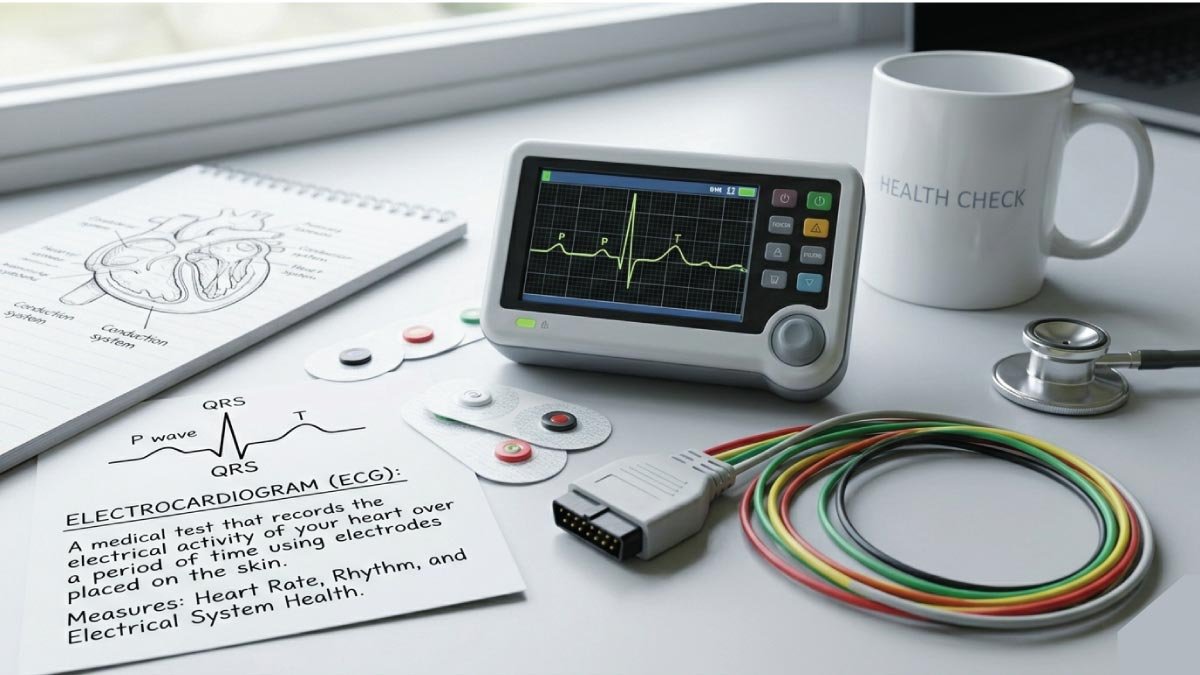
An Electrocardiogram is one of the most important and commonly used heart tests in modern medicine. It helps doctors quickly understand how well the heart is functioning by recording its electrical activity. Because it is fast, painless, and non-invasive, it is widely used in hospitals, clinics, and emergency care.
Electrocardiogram (ECG or EKG) is a simple test that measures the electrical signals produced by the heart each time it beats. These signals are displayed as waves on a monitor or printed paper, helping doctors detect heart problems early.
In this guide, we will explore what ECG is, how it works, its types, uses, benefits, and why it is so important for heart health.
What is Electrocardiogram (ECG)?
An Electrocardiogram is a diagnostic test that records the electrical activity of the heart over a period of time. Every heartbeat is triggered by an electrical signal, and ECG captures these signals to create a visual representation.
The test is commonly used to detect irregular heart rhythms, heart attacks, and other heart-related conditions. It is one of the fastest ways to evaluate heart health, often completed within a few minutes.
ECG is completely safe and does not involve any radiation or needles.
How Does ECG Work?
An ECG (Electrocardiogram) measures the electrical activity of the heart. It uses small sensors called electrodes that are placed on specific areas of the body. These sensors detect the heart’s electrical signals and help doctors understand how well the heart is functioning.
1. Electrode Placement
Sticky electrodes are carefully attached to the chest, arms, and legs at specific points. These electrodes act like small sensors that pick up electrical signals produced by the heart during each heartbeat.
2. Signal Detection
Once the electrodes are in place, they start detecting the tiny electrical impulses generated every time the heart beats. These signals reflect how the heart muscle is contracting and relaxing in a normal or abnormal pattern.
3. Signal Transmission
The detected electrical signals are then sent through wires to the ECG machine. This machine receives all the information from the electrodes and prepares it for processing into readable data.
4. Waveform Creation
The ECG machine converts the electrical signals into a graph-like pattern called waves. These waveforms represent the heart’s rhythm, rate, and overall electrical activity, which doctors analyze to detect any abnormalities.
Doctors study these wave patterns to identify heart rhythm problems, blocked arteries, or other cardiac conditions.
Types of ECG
ECG tests are performed in different ways depending on the patient’s condition and the level of detail needed. Each type helps doctors observe heart activity under different situations.
1. Resting ECG
A resting ECG is performed while the patient is lying still in a relaxed position. It is a simple and quick test used for basic heart evaluation.
Common uses:
- Routine heart checkups
- Detecting basic heart rhythm problems
- Initial cardiac assessment
2. Stress ECG (Exercise ECG)
This test is performed while the patient exercises, usually on a treadmill or stationary bike. It helps evaluate how the heart performs under physical stress.
Common uses:
- Checking heart performance during exercise
- Detecting blocked or narrowed arteries
- Evaluating chest pain during activity
3. Holter Monitor ECG
A Holter monitor is a portable device worn by the patient for 24–48 hours. It continuously records heart activity throughout daily routine activities.
Common uses:
- Detecting irregular heartbeats over time
- Monitoring unexplained fainting episodes
- Long-term heart rhythm analysis
4. Event Monitor ECG
An event monitor is used for longer periods and is activated only when the patient feels symptoms. It helps capture heart activity during irregular episodes.
Common uses:
- Occasional heart palpitations
- Intermittent chest pain
- Tracking irregular heartbeat episodes
5. 12-Lead ECG
The 12-lead ECG is the most common hospital test, providing detailed views of the heart from multiple angles. It gives a comprehensive analysis of heart function.
Common uses:
- Diagnosing heart attacks
- Detecting arrhythmias
- Full cardiac evaluation and assessment
Uses of ECG
ECG (Electrocardiogram) is a very important test used in hospitals and clinics for both routine checkups and emergency situations. It helps doctors quickly understand how the heart is functioning and detect any abnormalities.
1. Detecting Heart Diseases
ECG is commonly used to identify different heart conditions. It helps in diagnosing problems such as irregular heartbeat (arrhythmia), heart attacks, and enlargement of the heart muscles, allowing early treatment and better outcomes.
2. Monitoring Heart Health
Doctors use ECG to regularly monitor patients who already have heart-related conditions. It helps track changes in heart function over time and ensures that treatments or lifestyle changes are working effectively.
3. Emergency Diagnosis
In emergency situations, ECG plays a critical role. It provides quick results that help doctors immediately detect a heart attack or serious heart rhythm problem, which is important for saving lives.
4. Pre-Surgical Checkup
Before any major surgery, an ECG is often performed to ensure the patient’s heart is functioning properly. This helps reduce the risk of complications during or after the surgical procedure.
5. Evaluating Chest Pain
ECG helps doctors determine whether chest pain is related to the heart or caused by other conditions. This is very important for accurate diagnosis and proper treatment planning.
6. Monitoring Medication Effects
Certain heart medications can affect heart rhythm. ECG is used to monitor how the body is responding to these drugs and whether any adjustments are needed in the treatment plan.
Also Read:
Benefits of ECG
ECG (Electrocardiogram) is one of the most important and widely used heart diagnostic tests in modern medicine. It is preferred by doctors because it is quick, reliable, and helps in identifying many heart-related conditions without causing discomfort to the patient.
1. Fast and Simple
The ECG test is very quick and usually takes only a few minutes to complete. It does not require any special preparation, making it a convenient and efficient way to check heart activity in both routine and emergency situations.
2. Painless Procedure
ECG is completely painless and non-invasive. It does not involve needles, injections, or surgical procedures, which makes it suitable for patients of all ages, including children, elderly individuals, and people with medical anxiety.
3. Highly Accurate for Heart Rhythm
ECG is highly effective in detecting irregular heart rhythms (arrhythmias). It helps doctors identify even small changes in the heart’s electrical activity that may not show obvious symptoms, ensuring accurate diagnosis and timely treatment.
4. Non-Invasive and Safe
This test is completely safe because it does not enter the body or use radiation. ECG only records natural electrical signals from the heart, making it safe for repeated use without any health risks.
5. Early Detection of Heart Problems
One of the biggest advantages of ECG is that it can detect heart conditions at an early stage. Early diagnosis allows doctors to start treatment quickly, which helps prevent serious complications like heart attacks or cardiac arrest.
6. Widely Available
ECG machines are available in almost every healthcare facility, including small clinics and large hospitals. This wide availability makes it easy for patients to get tested quickly whenever heart-related symptoms or concerns arise.
ECG Wave Interpretation (Basic Overview)
An ECG reading shows different waves that represent specific electrical activities of the heart. Each wave gives important information about how the heart is working and helps doctors identify abnormalities.
P wave: Atrial contraction (upper chambers of the heart)
QRS complex: Ventricular contraction (main pumping action)
T wave: Recovery phase of the heart after each beat
Doctors carefully analyze these wave patterns to assess heart rhythm, detect damage, and diagnose cardiac conditions.
Also Read:
Risks of ECG
ECG is considered one of the safest medical tests with almost no serious risks. It is widely used because it does not harm the body or require invasive procedures.
- Mild skin irritation from electrode patches
- Slight discomfort during stress ECG (exercise test)
- Rare sensitivity or allergy to adhesive electrodes
Overall, ECG is safe for people of all age groups, including children and elderly patients.
ECG vs Other Heart Tests
Different heart tests provide different types of information, and ECG is just one part of a complete heart evaluation.
ECG: Measures the electrical activity of the heart
Echocardiogram: Shows heart structure and movement using ultrasound
Angiography: Detects blocked or narrowed arteries using contrast dye
Blood tests: Measure heart-related enzymes and markers
Each test plays an important role in diagnosing and understanding different aspects of heart health.
Conclusion
Electrocardiogram (ECG) is a simple, fast, and essential test used to monitor and evaluate heart health. By recording the electrical activity of the heart, it helps detect rhythm disorders, heart attacks, and other cardiac conditions at an early stage.
With different types such as resting ECG, stress ECG, Holter monitor, and 12-lead ECG, it provides detailed insights into heart function in various situations. Its safety, accuracy, and speed make it one of the most valuable tools in modern cardiology.
As healthcare technology continues to improve, ECG remains a foundational test that plays a critical role in saving lives and maintaining heart health worldwide.
Also Read:
Disclaimer: This content is for informational purposes only and should not be considered medical advice. Always consult a qualified healthcare professional for diagnosis or treatment.
FAQs:
What is an electrocardiogram and what is its purpose?
An electrocardiogram (ECG) is a medical test that records the heart’s electrical activity. Its purpose is to detect heart problems, monitor heart rhythm, identify abnormalities, and help doctors diagnose conditions like arrhythmias, heart attacks, and other cardiovascular disorders accurately.
What are the three types of ECG?
The three main types of ECG are resting ECG, stress ECG, and Holter monitor. A resting ECG records heart activity at rest, a stress ECG measures it during exercise, and a Holter monitor tracks heart activity continuously over 24 hours or longer.
What is the difference between an ECG and an electrocardiogram?
There is no difference between ECG and electrocardiogram. ECG is simply the abbreviation of the term electrocardiogram. Both refer to the same test that records electrical signals of the heart to assess its rhythm, rate, and overall cardiac health condition.
How long does an electrocardiogram take?
An electrocardiogram usually takes about 5 to 10 minutes to complete. The actual recording lasts only a few seconds, but preparation, including placing electrodes on the chest, arms, and legs, may take a few extra minutes before the test begins.
What is V1, V2, V3, V4, V5, V6 in ECG?
V1 to V6 are chest leads placed on specific positions on the chest during an ECG. They provide detailed information about the heart’s electrical activity from different angles, helping doctors analyze the condition of various parts of the heart muscle effectively.
What is the 7 step ECG tool?
The 7 step ECG tool is a systematic method used to interpret ECG results. It includes checking rate, rhythm, axis, P waves, PR interval, QRS complex, and ST segment, helping healthcare professionals analyze heart function and detect abnormalities accurately and efficiently.

Zak is a dedicated medical and career writer specializing in sonography, healthcare education, and professional development. Through SonographerSalary.com, he shares in-depth insights on sonographer salaries, education pathways, and career tips to help readers build successful futures in medical imaging. His content combines accuracy with practical, easy-to-understand guidance, empowering students and professionals to make confident, informed career decisions.