
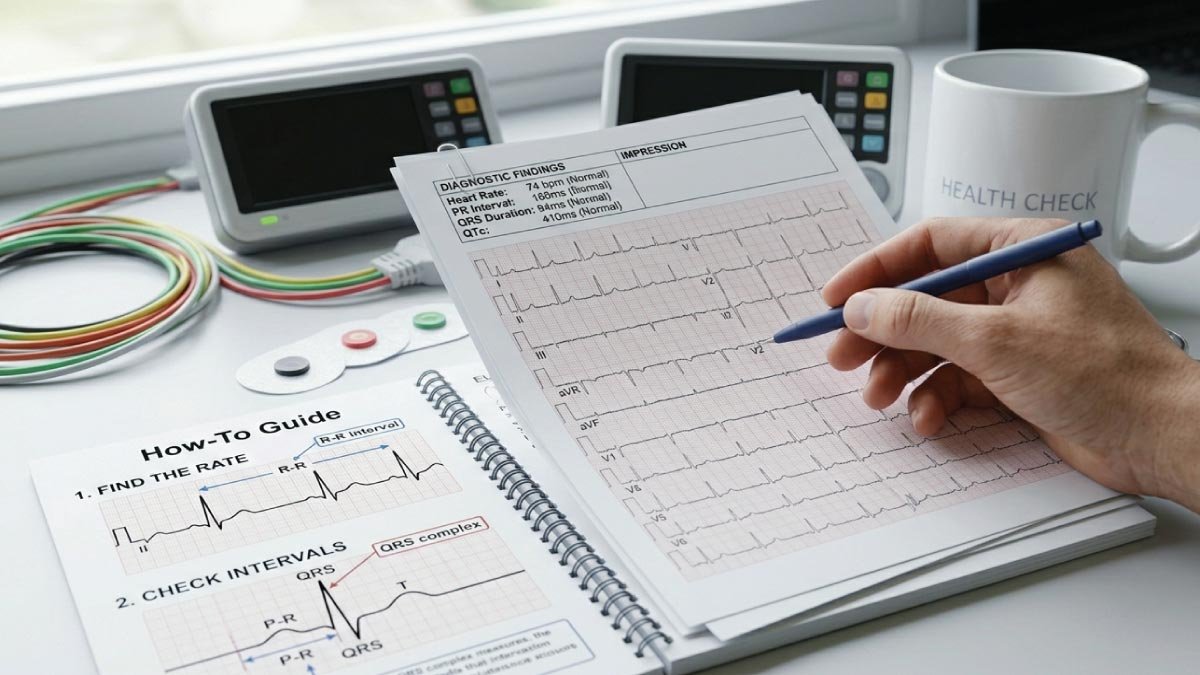
Understanding a medical report can feel overwhelming, especially when it involves the heart. An Electrocardiogram (ECG) is one of the most common and important tests used to evaluate heart health. The good news is that learning how to understand an ECG report is not as difficult as it seems. With a little guidance, you can confidently read the basics and know what your results mean.
In this complete beginner-friendly guide, you will learn how an ECG works, what the key components are, and how to interpret the results step by step.
What Is an Electrocardiogram (ECG)?
An Electrocardiogram (ECG) is a simple and painless test that records the electrical activity of your heart. Every time your heart beats, it produces electrical signals that control the rhythm and strength of contractions. The ECG machine captures these signals and displays them as waves on paper or a screen.
Doctors use ECG reports to detect heart problems such as:
- Irregular heartbeat (arrhythmia)
- Heart attack (past or present)
- Heart enlargement
- Poor blood flow to the heart
Why Understanding Your ECG Report Matters
Understanding your ECG report gives you confidence and awareness about your heart’s condition. Instead of feeling confused by medical terms, you become more informed and involved in your healthcare decisions. It helps you recognize changes over time and communicate clearly with your doctor for better treatment outcomes.
- Stay informed about your heart health
- Ask better questions during medical visits
- Detect early warning signs
- Reduce anxiety by knowing what the results mean
Even basic knowledge can make a big difference.
Basic Components of an ECG Report
Before jumping into interpretation, it’s important to understand the main parts of an ECG report. Each component reflects a specific electrical activity in the heart. By learning these basics, you can easily follow your report and identify whether your heart is functioning normally or needs further evaluation.
1. Heart Rate
Heart rate refers to how many times your heart beats per minute (BPM). It is one of the easiest and most important values to understand in an ECG report, as it quickly shows whether your heart is beating too fast, too slow, or within a healthy range.
- Normal range: 60–100 BPM
- Below 60 BPM: Bradycardia (slow heart rate)
- Above 100 BPM: Tachycardia (fast heart rate)
This value is usually clearly mentioned on the report.
2. Rhythm
The rhythm shows whether your heartbeat is regular or irregular. A consistent rhythm indicates that electrical signals are traveling properly through the heart, while an irregular rhythm may suggest disturbances that could require further medical evaluation or monitoring by a healthcare professional.
- Normal rhythm: Steady and consistent
- Irregular rhythm: May indicate arrhythmia
A normal ECG typically shows a “sinus rhythm,” meaning the heart is beating in a healthy pattern.
3. P Wave
The P wave represents the electrical activity of the atria (upper chambers of the heart). It shows how effectively the atria are sending signals to the ventricles. Careful observation of this wave can help identify early signs of atrial enlargement or conduction abnormalities.
- A normal P wave means proper atrial function
- Abnormal P waves may suggest atrial enlargement or other issues
4. QRS Complex
The QRS complex represents the electrical activity of the ventricles (lower chambers of the heart). Since the ventricles pump blood to the body, this part of the ECG is crucial. Any abnormality here may indicate problems with how electrical signals move through the heart.
- It is the most prominent part of the ECG
- A normal QRS is narrow and consistent
- A wide or abnormal QRS may indicate conduction problems
5. T Wave
The T wave shows the recovery phase of the ventricles after contraction. It reflects how well the heart resets electrically for the next beat. Changes in the T wave shape or direction can provide important clues about stress, electrolyte levels, or underlying heart conditions.
- Normal T wave: Smooth and upright
- Abnormal T wave: Could indicate stress, electrolyte imbalance, or heart disease
6. PR Interval
This interval measures the time between atrial and ventricular contraction. It indicates how quickly electrical signals travel from the atria to the ventricles. Monitoring this interval helps doctors identify delays or abnormalities in the heart’s electrical conduction system.
- Normal range: 0.12 to 0.20 seconds
- Longer or shorter intervals may indicate electrical conduction issues
7. ST Segment
The ST segment is very important for detecting heart attacks and reduced blood flow to the heart. It represents the period between ventricular contraction and recovery. Even slight changes in this segment can be clinically significant and should always be evaluated carefully.
- Normal ST: Flat and stable
- Elevated or depressed ST: May indicate serious heart problems
Also Read:
Step-by-Step Guide to Reading an ECG Report
Now let’s break it down into simple steps you can follow. By moving step by step, you can avoid confusion and focus on one part of the ECG at a time. This structured approach makes it easier to identify normal patterns and quickly spot any abnormalities.
Step 1: Check Patient Information
Always start by confirming the basic patient details on the report. This step may seem simple, but it is very important because reviewing the wrong report can lead to misunderstanding and unnecessary worry about your health condition.
- Name
- Age
- Date of test
This ensures you’re looking at the correct report.
Step 2: Look at the Heart Rate
Find the heart rate value on the report. This is usually clearly printed and gives you a quick overview of how fast the heart is beating. It is one of the first indicators doctors check when analyzing heart function.
- Is it within 60–100 BPM?
- Is it too fast or too slow?
This gives you the first clue about heart function.
Step 3: Assess the Rhythm
Look for consistency in the wave patterns across the ECG tracing. A steady rhythm means the electrical signals are working properly, while irregular spacing may suggest an arrhythmia that could require further evaluation or monitoring by a healthcare professional.
- Are the beats evenly spaced?
- Is there a repeating pattern?
A regular pattern usually indicates a normal rhythm.
Step 4: Examine the P Waves
Check the presence and pattern of P waves carefully. These waves show how electrical signals start in the atria. Proper P wave formation ensures that the upper chambers of the heart are functioning and coordinating correctly with the rest of the heart.
- P waves are present
- Each P wave is followed by a QRS complex
This shows proper coordination between atria and ventricles.
Step 5: Analyze the QRS Complex
Observe the QRS complex closely, as it represents ventricular activity, which is responsible for pumping blood throughout the body. Any change in its width or shape can indicate issues in the heart’s electrical conduction system.
- Width (narrow or wide)
- Shape consistency
A normal QRS complex means proper ventricular activity.
Step 6: Evaluate the ST Segment
This is a critical step because the ST segment provides important information about blood flow to the heart muscle. Even small changes in this segment can signal serious conditions, so it should always be reviewed carefully and not ignored.
- Flat ST segment: Normal
- Elevated or depressed ST: May indicate heart attack or ischemia
If you notice abnormalities here, it’s important to consult a doctor immediately.
Step 7: Review the T Waves
Look at the T waves to understand how the heart recovers after each beat. The shape and direction of these waves can reveal stress on the heart or imbalances in the body that may need medical attention.
- Smooth and upright shape
- Any inversion or flattening
Abnormal T waves can signal underlying issues.
Step 8: Check Intervals
Review the different intervals in the ECG, as they show how quickly electrical signals move through the heart. Abnormal timing may suggest delays or conduction problems that could affect overall heart performance.
- PR interval
- QRS duration
- QT interval
These help assess the timing of electrical signals.
Also Read:
Common ECG Findings and What They Mean
Here are some common terms you may see on an ECG report. Understanding these findings can help you quickly recognize whether the result is normal or if it may require further medical attention or follow-up testing.
1- Normal Sinus Rhythm
This is the ideal and most common ECG result, showing that the heart is functioning normally. The electrical signals are following the correct pathway, and the heartbeat is steady, regular, and within the normal range.
- Heart is beating normally
- No immediate concerns
2- Sinus Tachycardia
Sinus tachycardia means the heart is beating faster than normal. It is often temporary and can be caused by physical activity, stress, fever, or anxiety. In some cases, it may require further evaluation if it persists.
- Fast heart rate (above 100 BPM)
- May be caused by stress, fever, or exercise
3- Sinus Bradycardia
Sinus bradycardia refers to a slower-than-normal heart rate. It can be normal in healthy individuals, especially athletes, but in some cases, it may indicate an underlying issue if accompanied by symptoms like dizziness or fatigue.
- Slow heart rate (below 60 BPM)
- Can be normal in athletes
4- Atrial Fibrillation
Atrial fibrillation is an irregular and often rapid heart rhythm caused by disorganized electrical signals in the atria. It increases the risk of complications like stroke and usually requires proper medical management and monitoring.
- Irregular and chaotic rhythm
- Requires medical attention
5- ST Elevation
ST elevation is a serious finding that may indicate a heart attack or significant blockage in the coronary arteries. It requires immediate medical attention to prevent damage to the heart muscle and improve patient outcomes.
- Possible sign of a heart attack
- Needs urgent evaluation
6- Bundle Branch Block
This condition occurs when there is a delay or blockage in the electrical pathways that control heartbeats. It may be harmless in some cases but can also indicate underlying heart disease, depending on the patient’s overall condition.
- Delay in electrical conduction
- May or may not be serious
Also Read:
Types of ECG Tests
Understanding the type of ECG can help interpret results more accurately and guide proper diagnosis. Each ECG test is designed to monitor heart activity under different conditions, providing valuable insights into heart rhythm, function, and potential abnormalities.
1. Resting ECG
A resting ECG is performed while the patient lies still in a relaxed position, usually on a bed. It is the most common type of ECG used in routine checkups. This test records the heart’s electrical activity at rest and helps detect irregular rhythms or underlying heart conditions.
2. Stress ECG
A stress ECG, also known as an exercise ECG, is performed while the patient walks on a treadmill or pedals a stationary bike. It evaluates how the heart responds to physical activity. This test is useful for detecting blocked arteries, chest pain causes, or exercise-related heart problems.
3. Holter Monitor
A Holter monitor is a portable ECG device worn continuously for 24 to 48 hours during normal daily activities. It records ongoing heart activity over a longer period. This helps detect irregular heart rhythms that may not appear during a standard ECG test performed for a few minutes.
Tips to Understand Your ECG Report Easily
Here are some simple tips to make ECG reading easier. These practical suggestions help you stay focused on the most important aspects of the report without getting overwhelmed by medical terms. With regular practice, you can quickly recognize normal patterns and feel more confident reviewing your ECG results.
- Focus on basics first (rate, rhythm, waves)
- Don’t panic over small variations
- Compare with previous reports if available
- Always consider symptoms along with results
- Consult a doctor for final interpretation
Limitations of ECG Reports
While ECG is a powerful tool, it has some limitations. It provides a snapshot of your heart’s electrical activity at a specific moment, which means certain conditions may not always appear during the test. Understanding these limits helps you avoid relying solely on ECG results.
- It may not detect all heart problems
- Results can appear normal even with underlying issues
- Sometimes further tests (like echocardiogram) are needed
So, always rely on professional medical advice.
When Should You Be Concerned?
You should seek medical attention if your ECG report shows any unusual or alarming findings. Ignoring serious signs can lead to complications, so it’s important to act quickly. Paying attention to both the report and your physical symptoms can help you make safer health decisions.
- Severe irregular rhythm
- ST segment abnormalities
- Very high or very low heart rate
- Symptoms like chest pain, dizziness, or shortness of breath
Early action can prevent serious complications.
Example for Better Understanding
Understanding ECG reports becomes easier when you look at real-life examples. These examples help you connect theory with practical interpretation. By comparing normal and abnormal results, you can better recognize what a healthy ECG looks like and when medical attention might be needed.
Example 1: Normal ECG
- Heart rate: 85 BPM
- Rhythm: Regular
- P waves: Present
- QRS: Normal
- ST segment: Flat
This would generally indicate a normal ECG, meaning your heart is functioning well.
Example 2: Abnormal ECG
- Heart rate: 120 BPM
- Irregular rhythm
- Abnormal ST segment
This may require further medical evaluation.
Conclusion
Learning how to understand an Electrocardiogram (ECG) report easily is a valuable skill that helps you stay aware of your heart health. By focusing on key elements like heart rate, rhythm, waves, and intervals, you can get a clear basic understanding of what your report is showing.
Remember, an ECG is just one part of the bigger picture. Always combine it with your symptoms and consult a healthcare professional for accurate diagnosis and treatment.
With practice and awareness, ECG reports will no longer feel confusing—they will become a useful tool in managing your health confidently.
Disclaimer: This content is for informational purposes only and should not be considered medical advice. Always consult a qualified healthcare professional for diagnosis or treatment.
FAQs:
How can I understand my ECG report?
To understand your ECG report, check the heart rate, rhythm, and wave patterns like P, QRS, and T waves. Look for notes about abnormalities. Always compare results with normal ranges and consult a doctor for accurate interpretation and proper medical advice.
What is V1, V2, V3, V4, V5, V6 in ECG?
V1 to V6 are chest leads placed on specific areas of the chest during an ECG test. They record electrical activity from different angles of the heart, helping doctors evaluate heart function and detect issues in various regions of the heart muscle.
What are the 7 steps to interpret an ECG?
The 7 steps to interpret an ECG include checking heart rate, rhythm, electrical axis, P waves, PR interval, QRS complex, and ST segment. This structured approach helps healthcare professionals identify abnormalities, diagnose heart conditions, and understand overall cardiac function clearly and systematically.
What is the 10 second rule for ECG?
The 10 second rule in ECG means counting the number of QRS complexes in a 10 second strip and multiplying by six to estimate heart rate. This method provides a quick and simple way to calculate beats per minute accurately in clinical settings.
How to know if ECG is abnormal?
An ECG may be abnormal if there are irregular heart rhythms, unusual wave shapes, abnormal intervals, or signs of heart damage. Symptoms like chest pain or dizziness also matter. A doctor must review the report to confirm any abnormal findings accurately.
Can ChatGPT read my ECG?
ChatGPT can help explain general ECG concepts and guide you on understanding reports, but it cannot replace a doctor. It may assist with basic interpretation if details are provided, but accurate diagnosis and medical decisions should always be made by qualified healthcare professionals.

Zak is a dedicated medical and career writer specializing in sonography, healthcare education, and professional development. Through SonographerSalary.com, he shares in-depth insights on sonographer salaries, education pathways, and career tips to help readers build successful futures in medical imaging. His content combines accuracy with practical, easy-to-understand guidance, empowering students and professionals to make confident, informed career decisions.